Nancy Steinhardt - Böcker
Visar alla böcker från författaren Nancy Steinhardt. Handla med fri frakt och snabb leverans.
3 produkter
3 produkter
493 kr
Skickas inom 7-10 vardagar
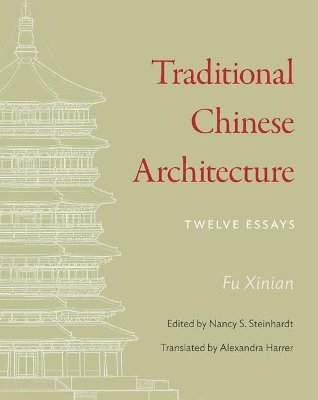
A groundbreaking book by one of the world's leading historians of Chinese architecture Translated by Alexandra Harrer Fu Xinian is considered by many to be the world's leading historian of Chinese architecture. He is an expert on every type of Chinese architecture from every period through the nineteenth century, and his work is at the cutting edge of the field. Traditional Chinese Architecture gathers together, for the first time in English, twelve seminal essays by Fu Xinian. This wide-ranging book pays special attention to the technical aspects of the building tradition since the first millennium BC, and Fu Xinian's signature drawings abundantly illustrate its nuances. The essays delve into the modular basis for individual structures, complexes, and cities; lateral and longitudinal building frames; the unity of sculpture and building to create viewing angles; the influence of Chinese construction on Japanese architecture; and the reliability of images to inform us about architecture.Organized chronologically, the book also examines such topics as the representation of architecture on vessels in the Warring States period, early Buddhist architecture, and the evolution of imperial architecture from the Tang to Ming dynasty. A biography of Fu Xinian and a detailed Chinese-English glossary are included. Bringing together some of the most groundbreaking scholarship in Chinese architectural history, Traditional Chinese Architecture showcases an uncontested master of the discipline.
614 kr
Skickas inom 7-10 vardagar
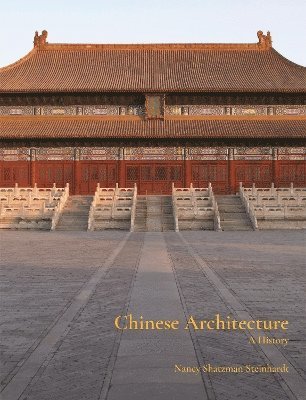
An unprecedented survey of the origins and evolution of Chinese architecture, from the last millennia BCE to todayThroughout history, China has maintained one of the world’s richest built civilizations. The nation’s architectural achievements range from its earliest walled cities and the First Emperor’s vision of city and empire, to bridges, pagodas, and the twentieth-century constructions of the Socialist state. In this beautifully illustrated book, Nancy Shatzman Steinhardt presents the first fully comprehensive survey of Chinese architecture in any language. With rich political and historical context, Steinhardt covers forty centuries of architecture, from the genesis of Chinese building through to the twenty-first century and the challenges of urban expansion and globalism.Steinhardt follows the extraordinary breadth of China’s architectural legacy—including excavation sites, gardens, guild halls, and relief sculpture—and considers the influence of Chinese architecture on Japan, Korea, Mongolia, and Tibet. Architectural examples from Chinese ethnic populations and various religions are examined, such as monasteries, mosques, observatories, and tombs. Steinhardt also shows that Chinese architecture is united by a standardized system of construction, applicable whether buildings are temples, imperial palaces, or shrines. Every architectural type is based on the models that came before it, and principles established centuries earlier dictate building practices. China’s unique system has allowed its built environment to stand as a profound symbol of Chinese culture.With unprecedented breadth united by a continuous chronological narrative, Chinese Architecture offers the best scholarship available on this remarkable subject for scholars, students, and general readers.
614 kr
Skickas inom 7-10 vardagar
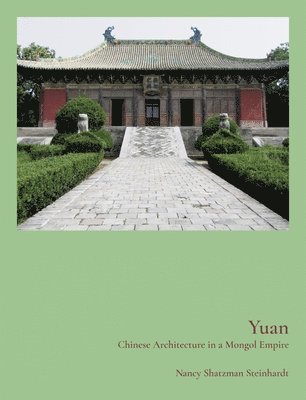
A monumental illustrated survey of the architecture of thirteenth- and fourteenth-century ChinaThe Yuan dynasty endured for a century, leaving behind an architectural legacy without equal, from palaces, temples, and pagodas to pavilions, tombs, and stages. With a history enlivened by the likes of Khubilai Khan and Marco Polo, this spectacular empire spanned the breadth of China and far, far beyond, but its rulers were Mongols. Yuan presents the first comprehensive study in English of the architecture of China under Mongol rule.In this richly illustrated book, Nancy Shatzman Steinhardt looks at cities such as the legendary Shangdu—inspiration for Samuel Taylor Coleridge’s Xanadu—as well as the architecture the Mongols encountered on their routes of conquest. She examines the buildings and monuments of diverse faiths in China during the period, from Buddhist and Daoist to Confucian, Islamic, and Christian, as well as unusual structures such as observatories, archways, stone and metal buildings, and sarcophaguses. Steinhardt dispels long-standing views of the Mongols as destroyers of cities and architecture across Asia, showing how the khans and their families built more than they tore down. She demonstrates that the stipulations of the Chinese building system were powerful and resilient enough to guide the architecture that rose under Mongolian rule.Drawing on Steinhardt’s groundbreaking textual research in numerous languages as well as her pioneering fieldwork at sites across East Asia, Yuan will become the standard reference on this critical period of cultural and artistic exchange.