Nancy Vansieleghem – författare
Visar alla böcker från författaren Nancy Vansieleghem. Handla med fri frakt och snabb leverans.
7 produkter
Education in the Age of the Screen
Possibilities and Transformations in Technology
Av Manuel Zahn, Joris Vlieghe m. fl.
E-bok, 2019
741 kr
Lägg i varukorg
This edited volume brings together experts from across the field of education to explore how traditional pedagogic and didactic forms and processes are changing, or even disappearing, as a result of new technologies being used for education and learning. Considering the use, opportunites and …
Education in the Age of the Screen
Possibilities and Transformations in Technology
Av Manuel Zahn, Joris Vlieghe m. fl.
E-bok, 2019
725 kr
Lägg i varukorg
This edited volume brings together experts from across the field of education to explore how traditional pedagogic and didactic forms and processes are changing, or even disappearing, as a result of new technologies being used for education and learning. Considering the use, opportunites and …
Education in the Age of the Screen
Possibilities and Transformations in Technology
Av Nancy Vansieleghem, Joris Vlieghe m. fl.
Häftad, 2021
629 kr
Lägg i varukorg
This edited volume brings together experts from across the field of education to explore how traditional pedagogic and didactic forms and processes are changing, or even disappearing, as a result of new technologies being used for education and learning. Considering the use, opportunites and …
Education in the Age of the Screen
Possibilities and Transformations in Technology
Av Nancy Vansieleghem, Joris Vlieghe m. fl.
Inbunden, 2019
2433 kr
Lägg i varukorg
This edited volume brings together experts from across the field of education to explore how traditional pedagogic and didactic forms and processes are changing, or even disappearing, as a result of new technologies being used for education and learning. Considering the use, opportunites and …
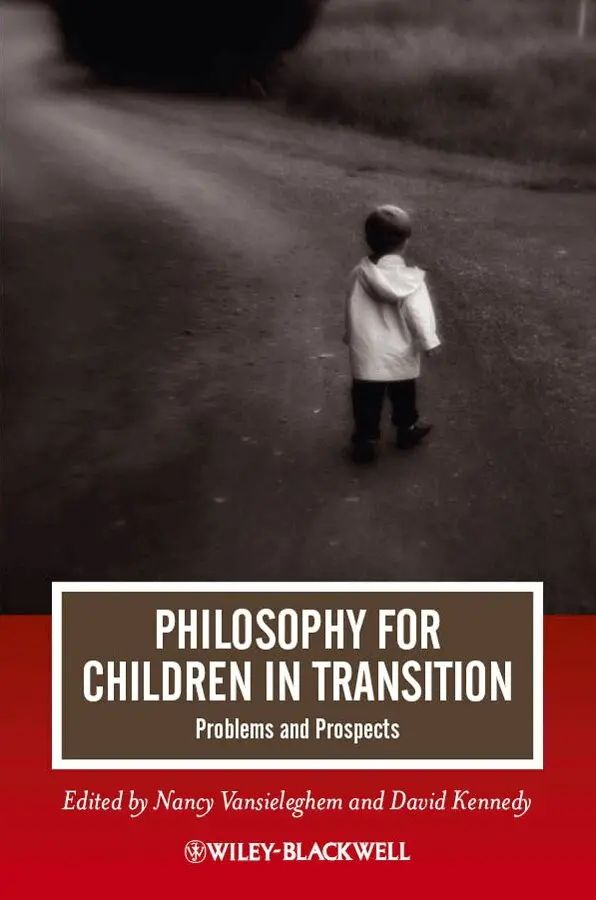
Philosophy for Children in Transition
Problems and Prospects
Av Nancy Vansieleghem, David Kennedy
E-bok, 2011
339 kr
Lägg i varukorg
Philosophy for Children in Transition presents a diverse collection of perspectives on the worldwide educational movement of philosophy for children. Educators and philosophers establish the relationship between philosophy and the child, and clarify the significance of that relationship for …
Philosophy for Children in Transition
Problems and Prospects
Av Nancy Vansieleghem, David Kennedy
E-bok, 2011
317 kr
Lägg i varukorg
Philosophy for Children in Transition presents a diverse collection of perspectives on the worldwide educational movement of philosophy for children. Educators and philosophers establish the relationship between philosophy and the child, and clarify the significance of that relationship for …
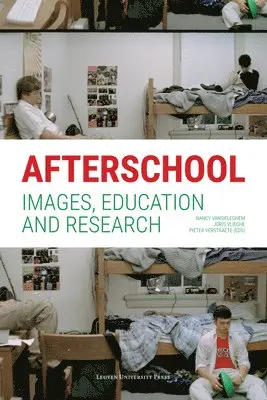
Afterschool
Images, Education and Research
Av Nancy Vansieleghem, Joris Vlieghe m. fl.
Häftad, 2015
301 kr
Tillfälligt slut
Tangible tension of omnipresent images in education. The intricate relation between images and education is an old issue that can easily be dated back to the rise of Modernity. Ever since, it has been argued that images on the one hand might assist teachers in educating the new generation, but on …