Narcís Serra - Böcker
Visar alla böcker från författaren Narcís Serra. Handla med fri frakt och snabb leverans.
4 produkter
4 produkter
1 757 kr
Skickas inom 5-8 vardagar
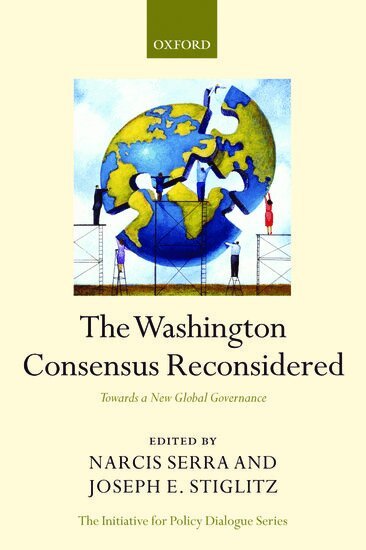
This volume brings together many of the leading international figures in development studies, such as Jose Antonio Ocampo, Paul Krugman, Dani Rodrik, Joseph Stiglitz, Daniel Cohen, Olivier Blanchard, Deepak Nayyar and John Williamson to reconsider and propose alternative development policies to the Washington Consensus. Covering a wide range of issues from macro-stabilization to trade and the future of global governance, this important volume makes a real contribution to this important and ongoing debate. The volume begins by introducing the Washington Consensus, discussing how it was originally formulated, what it left out, and how it was later interpreted, and sets the stage for a formulation of a new development framework in the post-Washington Consensus era. It then goes on to analyze and offer differing perspectives and potential solutions to a number of key development issues, some which were addressed by the Washington Consensus and others which were not. The volume concludes by looking toward formulating new policy frameworks and offers possible reforms to the current system of global governance.
726 kr
Skickas inom 7-10 vardagar
This volume brings together many of the leading international figures in development studies, such as Jose Antonio Ocampo, Paul Krugman, Dani Rodrik, Joseph Stiglitz, Daniel Cohen, Olivier Blanchard, Deepak Nayyar and John Williamson to reconsider and propose alternative development policies to the Washington Consensus. Covering a wide range of issues from macro-stabilization to trade and the future of global governance, this important volume makes a real contribution to this important and ongoing debate. The volume begins by introducing the Washington Consensus, discussing how it was originally formulated, what it left out, and how it was later interpreted, and sets the stage for a formulation of a new development framework in the post-Washington Consensus era. It then goes on to analyze and offer differing perspectives and potential solutions to a number of key development issues, some which were addressed by the Washington Consensus and others which were not. The volume concludes by looking toward formulating new policy frameworks and offers possible reforms to the current system of global governance.
2 155 kr
Skickas inom 10-15 vardagar
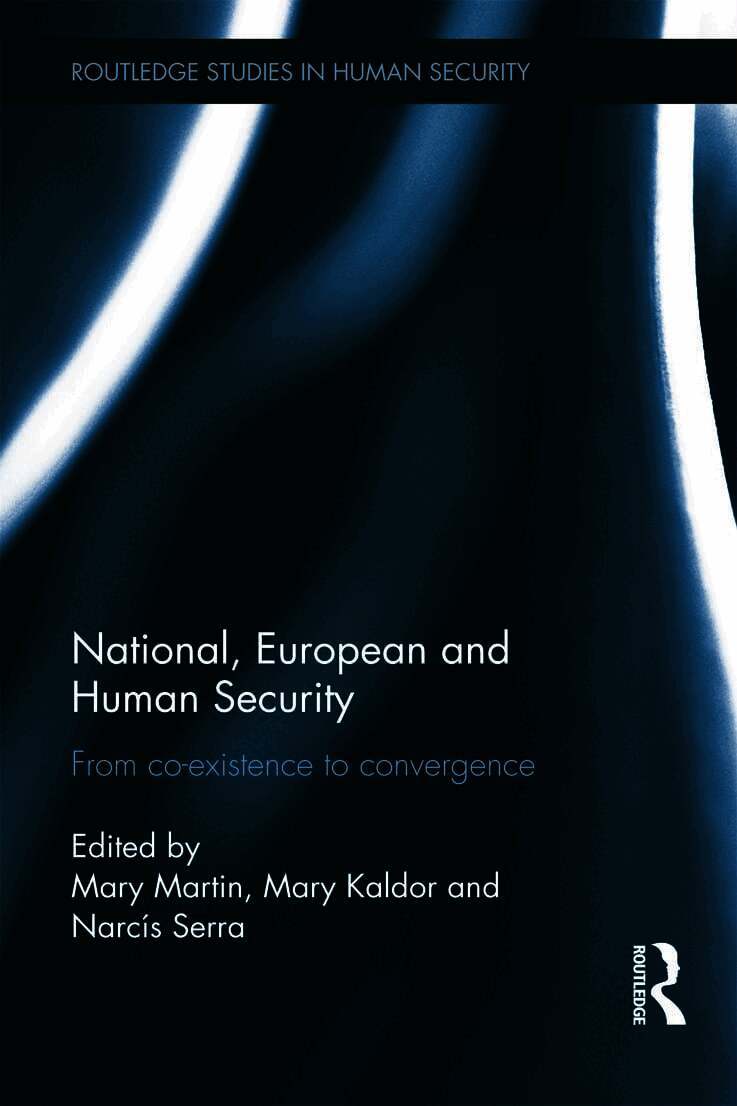
This book examines how national security strategies relate to an emerging common European or global vision of security, and to human security ideas.Human security and national security are often regarded as competing and mutually antagonistic; the former was proposed and has been operationalised in ways which represent a paradigm shift away from state-centric approaches and the dominance of national-security perspectives. This has led to human security being associated with a broadening of the security agenda to encompass not only physical security, the use of force and military capabilities, but also the provision of material well-being and dignity to vulnerable communities. This edited volume seeks to identify key concepts and themes in the national discourse of several European countries, addressing security at a meta-narrative and conceptual level, illustrating the changes taking place in approaches to security, and in particular, mapping moves away from a paradigm of ‘national security’ to one which might be called ‘human security’. It also enables an assessment of whether national security is currently converging at either European or global levels.This book will be of much interest to students of human security, European politics, discourse analysis, war and conflict studies, and IR/security studies in general.
671 kr
Skickas inom 10-15 vardagar
This book examines how national security strategies relate to an emerging common European or global vision of security, and to human security ideas.Human security and national security are often regarded as competing and mutually antagonistic; the former was proposed and has been operationalised in ways which represent a paradigm shift away from state-centric approaches and the dominance of national-security perspectives. This has led to human security being associated with a broadening of the security agenda to encompass not only physical security, the use of force and military capabilities, but also the provision of material well-being and dignity to vulnerable communities. This edited volume seeks to identify key concepts and themes in the national discourse of several European countries, addressing security at a meta-narrative and conceptual level, illustrating the changes taking place in approaches to security, and in particular, mapping moves away from a paradigm of ‘national security’ to one which might be called ‘human security’. It also enables an assessment of whether national security is currently converging at either European or global levels.This book will be of much interest to students of human security, European politics, discourse analysis, war and conflict studies, and IR/security studies in general.