Natalia Buier – författare
Visar alla böcker från författaren . Handla med fri frakt och snabb leverans.
4 produkter
4 produkter
Inbunden, Engelska, 2026
2 306 kr
Kommande
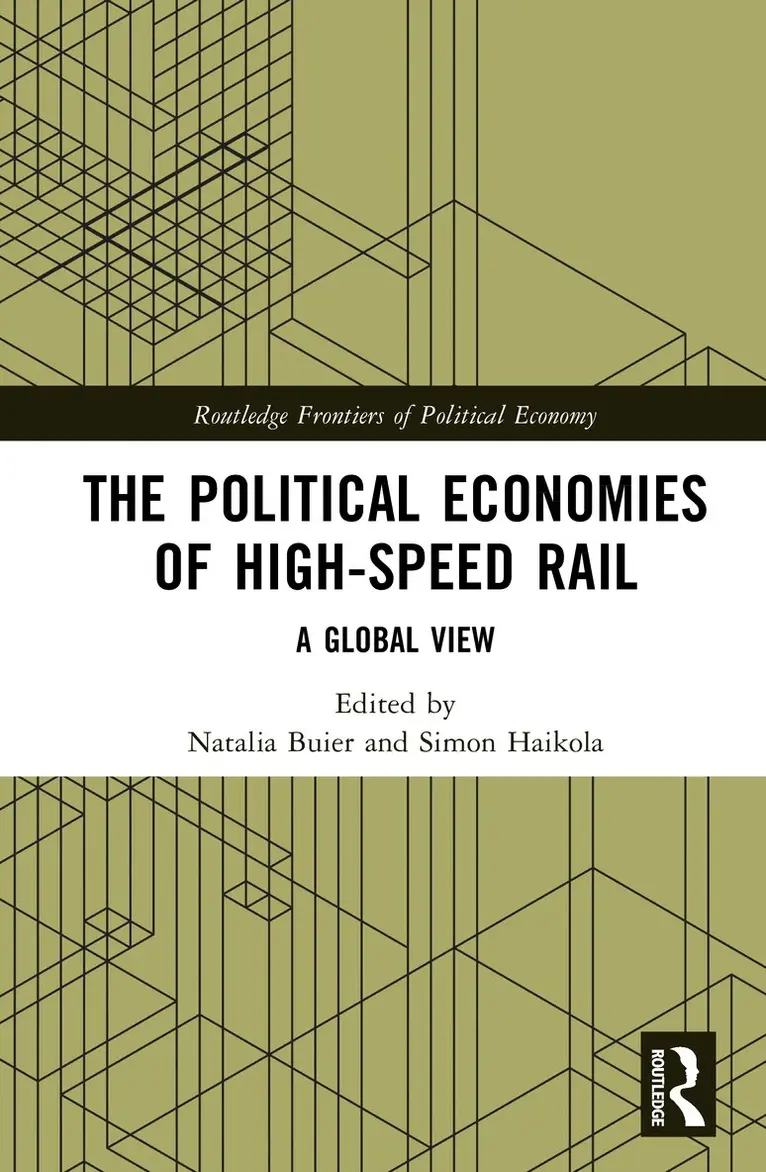
High-speed rail (HSR) is the object of conflicting assessments. It is simultaneously viewed as modern, backwards, progressive, conservative, green, unsustainable, disruptive and path-dependent.This volume takes as its starting point the heterogeneous appraisal of contemporary high speed rail development and unpacks it in order to reveal the diversity of processes and relations out of which HSR projects are born. Moving beyond narrow economic investigations, the broad range of national case studies – from France to China and the US to Morocco - situate HSR planning in the wider political-economic context within which it takes place. Each chapter provides an in-depth study of a national HSR project, placed within multiscalar historical-geographic configurations. The comparative view offered by this volume challenges inherited assumptions about the development of contemporary infrastructure and shows that the analysis of HSR can provide broader insights into state-led planning and market-based governance.The book is important reading for those interested in the political economy and financialisation of infrastructure, sustainable transition, critical geography and ethnography.
Del 42 - Dislocations
Frontiers of Appropriation
Spanish High-Speed Rail and Capitalist Environment-Making
Inbunden, Engelska, 2026
2 058 kr
Skickas inom 3-6 vardagar
High-speed trains are an icon of the green revolution in transport and mobility. For more than thirty years, AVE (Alta Velocidad Española, or Spanish HSR (High Speed Rail)) has been an instrument for transforming the public railway company, reshaping labor relations and advancing a model of regional development; yet Spain remains a car-dominated society. Frontiers of Appropriation delves into the history of Europe’s most advanced high-speed rail system to assess the transformations it has brought about. The towering yet marginal position of AVE in the Spanish transport market is not a paradox but an expression of the role of HSR in consolidating the hegemonic mobility paradigm.
Inbunden, Engelska, 2026
1 517 kr
Skickas inom 10-15 vardagar
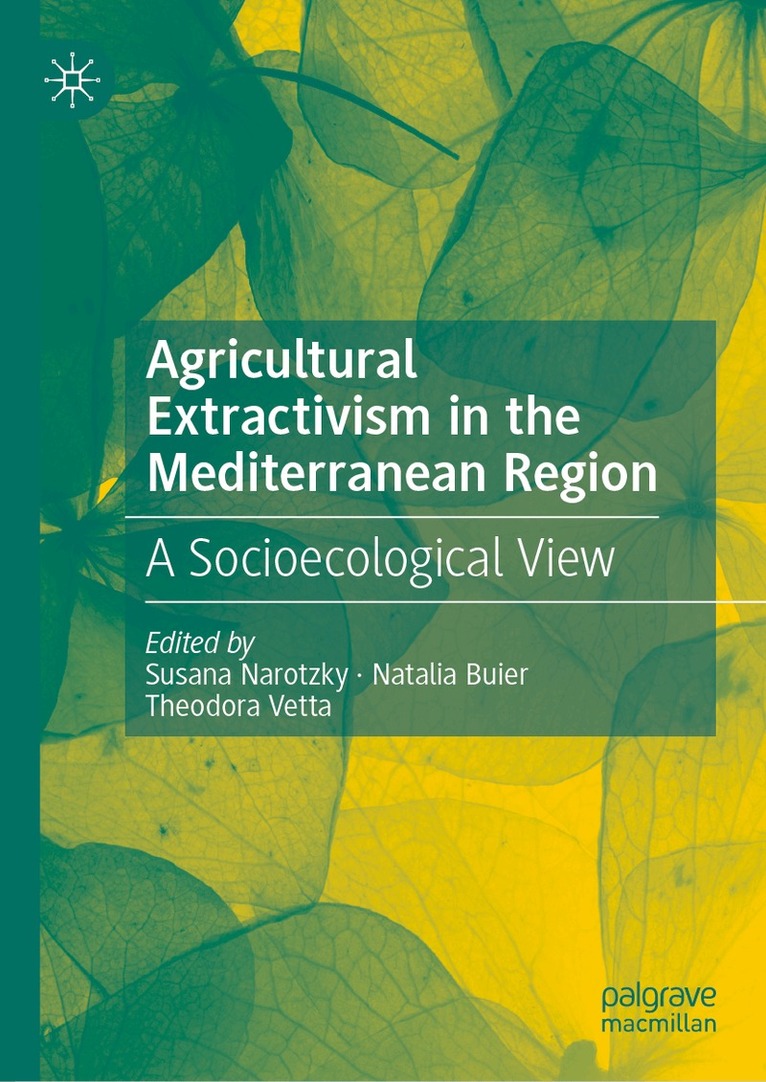
This book addresses the connections between food provisioning, natural resource extraction and the exploitation of human labor. Through a series of case studies, it tackles agricultural extractivist regimes in the Mediterranean, focusing on the socio-ecological and ideological practices that constrain or contribute to conflicting processes of social reproduction.The book is divided into two parts investigating the two faces of agricultural production and opening the field of their inter-connections: (1) labor, nature and capital in food production, and (2) agricultural projects for a sustainable future. The contributed chapters provide insights into how valuation processes of human and non-human resources are entangled with economic valorization and capital accumulation. Bringing together studies based on long-term ethnographic fieldwork, Agricultural Extractivism in the Mediterranean Region bridges macro-level analyses and micro-level perspectives by tracing how structural constraints express themselves in concrete social relations. The reliance on detailed case studies facilitates the introduction of advanced topics in an accessible and engaging format. This book will be of interest to scholars in economic and environmental anthropology, agrarian studies and the anthropology of work, as well as sociologists and human geographers working in related areas.
E-bok
Engelska, 20261 891 kr
Läs direkt efter köp
This book addresses the connections between food provisioning, natural resource extraction and the exploitation of human labor. Through a series of case studies, it tackles agricultural extractivist regimes in the Mediterranean, focusing on the socio-ecological and ideological practices that constrain or contribute to conflicting processes of social reproduction.The book is divided into two parts investigating the two faces of agricultural production and opening the field of their inter-connections: (1) labor, nature and capital in food production, and (2) agricultural projects for a sustainable future. The contributed chapters provide insights into how valuation processes of human and non-human resources are entangled with economic valorization and capital accumulation. Bringing together studies based on long-term ethnographic fieldwork, Agricultural Extractivism in the Mediterranean Region bridges macro-level analyses and micro-level perspectives by tracing how structural constraints express themselves in concrete social relations. The reliance on detailed case studies facilitates the introduction of advanced topics in an accessible and engaging format. This book will be of interest to scholars in economic and environmental anthropology, agrarian studies and the anthropology of work, as well as sociologists and human geographers working in related areas.