Nathalie Bernasconi-Osterwalder - Böcker
Visar alla böcker från författaren Nathalie Bernasconi-Osterwalder. Handla med fri frakt och snabb leverans.
4 produkter
4 produkter
1 937 kr
Skickas inom 5-8 vardagar
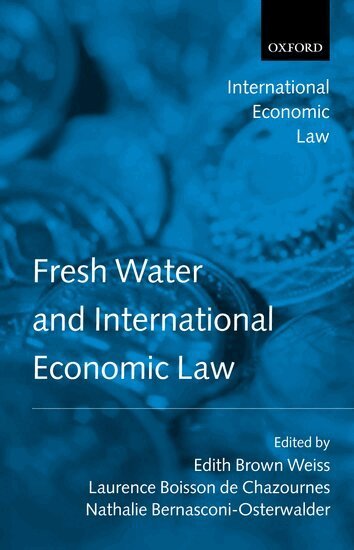
Fresh water resources are at the same time ecological, economic, social, and cultural goods and must be managed accordingly. However, efforts to manage these resources are complicated by tensions arising from possible clashes between the regimes favouring privatization, trade and investment liberalization, and domestic and international regimes governing water resources, environmental protection and human rights. The relationships between the international economic and legal framework on the one hand and fresh water resource management and protection on the other, are complex and multifaceted.This book addresses the key interdisciplinary issues that increasingly confront policy makers, tribunals, arbitration bodies and other institutions. It focuses primarily on law, but also includes perspectives from economics, political science and other disciplines. It examines such questions as are governments free to decide whether or not to export water resources? Can foreign investors sue host states for adopting measures to control water pollution? Can international trade rules be used to reduce or eliminate water related subsidies? Do rules on the liberalization of water services affect domestic and international human rights obligations relating to water supply? More generally, how do the procedural rights of states, individuals, affected communities and investors affect decisions regarding the right to drinking water, the rights of investors to exploit water resources, and the rights of governments to protect their lakes, rivers and groundwater?
619 kr
Skickas inom 10-15 vardagar
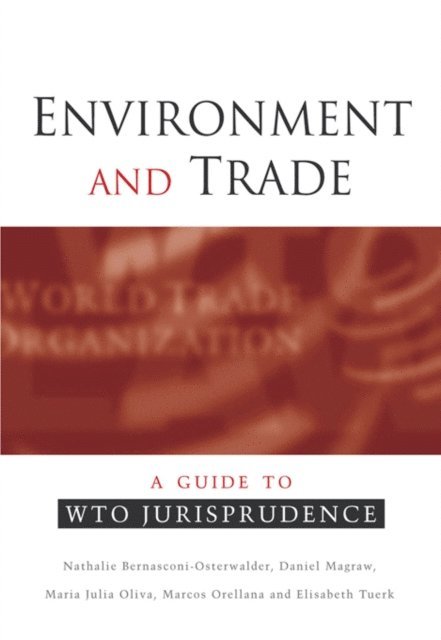
International trade rules have significant impacts on environmental law and policy, at the domestic, regional and global levels. At the World Trade Organization (WTO), dispute settlement tribunals are increasingly called to decide on environment- and health-related questions. Can governments treat products differently based on environmental considerations? Can they block the import of highly carcinogenic asbestos-containing products or genetically modified crops? Does the WTO allow governments to protect dolphins or endangered sea turtles through the use of import restrictions on certain products? How can civil society participate in WTO dispute settlement? This Guide, authored by five world leaders on international environmental and trade law at the Center for International Environmental Law (CIEL), is an accessible, comprehensive, one-of-a-kind compendium of environment and trade jurisprudence under the WTO. Providing an overview for both experts and non-experts of the major themes relevant to environment and trade, it also analyses how WTO tribunals have approached these themes in concrete disputes and provides selected excerpts of the most significant cases.
3 856 kr
Skickas inom 5-8 vardagar
The volume focuses on five cases, all of which remain cornerstone trade-environment cases of the WTO. The subject matter of these cases reflects five basic issues in the clash between trade and the environment: public health, air pollution/ozone depletion, food safety, destruction of endangered species, and biosafety. These five issues surface dramatically in international disputes over tobacco, reformulated gasoline, beef growth hormones, commercial fishing methods, and genetically modified organisms. In the second edition of this book, Nathalie Bernasconi-Osterwalder joins the original editors to update and contextualize the five case studies in new introductions to each section. These introductions provide an overview of developments since the first edition, including subsequent related cases. The second edition also includes updated bibliographic materials. In their penetrating analyses of these cases and their vast implications, the authors take into account the entire disciplines of both trade law and environmental law, noting especially the points of friction between the multilateral instruments in each field and the developing jurisprudence of the WTO Dispute Settlement with regard to the exceptions specified in Article XX of the GATT. The articulated standpoints of all partiesgovernments and NGOs on both sides of the controversyare probed for agendas, whether stated or unstated. No one involved in international trade or environmental activism can afford to ignore this vital publication. The information it provides (on WTO jurisprudence, on current and pending environmental initiatives, on the science behind the disputes), no less than the fresh and convincing analysis it holds forth, make it an essential tool for understanding some of the most crucial issues in international law today.
1 935 kr
Skickas inom 7-10 vardagar
International trade rules have significant impacts on environmental law and policy, at the domestic, regional and global levels. At the World Trade Organization (WTO), dispute settlement tribunals are increasingly called to decide on environment- and health-related questions. Can governments treat products differently based on environmental considerations? Can they block the import of highly carcinogenic asbestos-containing products or genetically modified crops? Does the WTO allow governments to protect dolphins or endangered sea turtles through the use of import restrictions on certain products? How can civil society participate in WTO dispute settlement? This Guide, authored by five world leaders on international environmental and trade law at the Center for International Environmental Law (CIEL), is an accessible, comprehensive, one-of-a-kind compendium of environment and trade jurisprudence under the WTO. Providing an overview for both experts and non-experts of the major themes relevant to environment and trade, it also analyses how WTO tribunals have approached these themes in concrete disputes and provides selected excerpts of the most significant cases.