Nathalie Pettorelli - Böcker
Visar alla böcker från författaren Nathalie Pettorelli. Handla med fri frakt och snabb leverans.
8 produkter
8 produkter
1 670 kr
Skickas inom 5-8 vardagar
The ability to anticipate the impacts of global environmental changes on natural resources is fundamental to designing appropriate and optimised adaptation and mitigation strategies. However, this requires the scientific community to have access to reliable, large-scale information on spatio-temporal changes in the distribution of abiotic conditions and on the distribution, structure, composition, and functioning of ecosystems. Satellite remote sensing can provide access to some of this fundamental data by offering repeatable, standardised, and verifiable information that is directly relevant to the monitoring and management of our natural capital. This book demonstrates how ecological knowledge and satellite-based information can be effectively combined to address a wide array of current natural resource management needs. By focusing on concrete applied examples in both the marine and terrestrial realms, it will help pave the way for developing enhanced levels of collaboration between the ecological and remote sensing communities, as well as shaping their future research directions. Satellite Remote Sensing and the Management of Natural Resources is primarily aimed at ecologists and remote sensing specialists, as well as policy makers and practitioners in the fields of conservation biology, biodiversity monitoring, and natural resource management.
1 039 kr
Skickas inom 3-6 vardagar
The ability to anticipate the impacts of global environmental changes on natural resources is fundamental to designing appropriate and optimised adaptation and mitigation strategies. However, this requires the scientific community to have access to reliable, large-scale information on spatio-temporal changes in the distribution of abiotic conditions and on the distribution, structure, composition, and functioning of ecosystems. Satellite remote sensing can provide access to some of this fundamental data by offering repeatable, standardised, and verifiable information that is directly relevant to the monitoring and management of our natural capital. This book demonstrates how ecological knowledge and satellite-based information can be effectively combined to address a wide array of current natural resource management needs. By focusing on concrete applied examples in both the marine and terrestrial realms, it will help pave the way for developing enhanced levels of collaboration between the ecological and remote sensing communities, as well as shaping their future research directions. Satellite Remote Sensing and the Management of Natural Resources is primarily aimed at ecologists and remote sensing specialists, as well as policy makers and practitioners in the fields of conservation biology, biodiversity monitoring, and natural resource management.
1 498 kr
Skickas inom 7-10 vardagar
There has been a recent surge of interest in remote sensing and its use in ecology and conservation but this is the first book to focus explicitly on the NDVI (Normalised Difference Vegetation Index), a simple numerical indicator and powerful tool that can be used to assess spatio-temporal changes in green vegetation. The NDVI opens the possibility of addressing questions on scales inaccessible to ground-based methods alone; it is mostly freely available with global coverage over several decades. This novel text provides an authoritative overview of the principles and possible applications of the NDVI in ecology, environmental and wildlife management, and conservation. NDVI data can provide valuable information about temporal and spatial changes in vegetation distribution, productivity, and dynamics; allowing monitoring of habitat degradation and fragmentation, or assessment of the ecological effects of climatic disasters such as drought or fire. The NDVI has also provided ecologists with a promising way to couple vegetation with animal distribution, abundance, movement, survival and reproductive parameters. Over the last few decades, numerous studies have highlighted the potential key role of satellite data and the NDVI in macroecology, plant ecology, animal population dynamics, environmental monitoring, habitat selection and habitat use studies, and paleoecology. The chapters are organised around two sections: the first detailing vegetation indices and the NDVI, the principles behind the NDVI, its correlation with climate, the available NDVI datasets, and the possible complications and errors associated with the use of this satellite-based vegetation index. The second section discusses the possible applications of the NDVI in ecology, environmental and wildlife management, and conservation. This practical handbook is suitable for terrestrial ecologists and conservation biologists working with remote sensing tools. It will also be of relevance and use to both graduate students in the biological and ecological sciences and specialists in the fields of conservation biology, biodiversity monitoring, and natural resource management.
586 kr
Skickas inom 7-10 vardagar
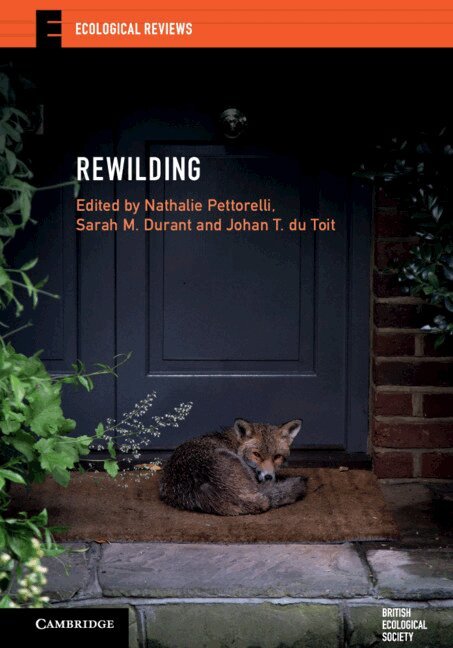
Through a global and interdisciplinary lens, this book discusses, analyzes and summarizes the novel conservation approach of rewilding. The volume introduces key rewilding definitions and initiatives, highlighting their similarities and differences. It reviews matches and mismatches between the current state of ecological knowledge and the stated aims of rewilding projects, and discusses the role of human action in rewilding initiatives. Collating current scholarship, the book also considers the merits and dangers of rewilding approaches, as well as the economic and socio-political realities of using rewilding as a conservation tool. Its interdisciplinary nature will appeal to a broad range of readers, from primary ecologists and conservation biologists to land managers, policy makers and conservation practitioners in NGOs and government departments. Written for a scientifically literate readership of academics, researchers, students, and managers, the book also acts as a key resource for advanced undergraduate and graduate courses.
1 521 kr
Skickas inom 7-10 vardagar
Through a global and interdisciplinary lens, this book discusses, analyzes and summarizes the novel conservation approach of rewilding. The volume introduces key rewilding definitions and initiatives, highlighting their similarities and differences. It reviews matches and mismatches between the current state of ecological knowledge and the stated aims of rewilding projects, and discusses the role of human action in rewilding initiatives. Collating current scholarship, the book also considers the merits and dangers of rewilding approaches, as well as the economic and socio-political realities of using rewilding as a conservation tool. Its interdisciplinary nature will appeal to a broad range of readers, from primary ecologists and conservation biologists to land managers, policy makers and conservation practitioners in NGOs and government departments. Written for a scientifically literate readership of academics, researchers, students, and managers, the book also acts as a key resource for advanced undergraduate and graduate courses.
624 kr
Skickas inom 7-10 vardagar
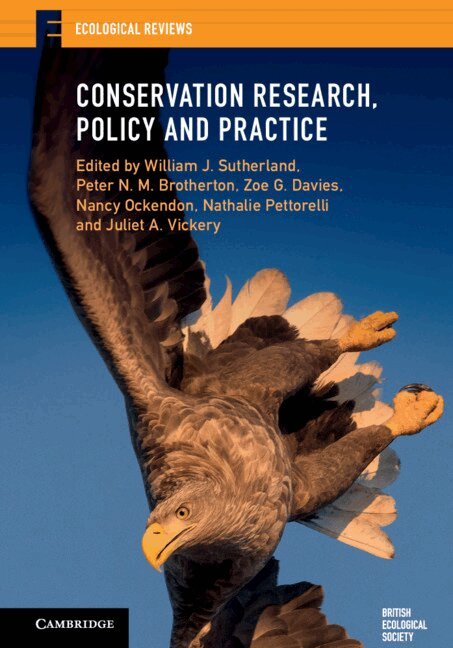
Conservation research is essential for advancing knowledge but to make an impact scientific evidence must influence conservation policies, decision making and practice. This raises a multitude of challenges. How should evidence be collated and presented to policymakers to maximise its impact? How can effective collaboration between conservation scientists and decision-makers be established? How can the resulting messages be communicated to bring about change? Emerging from a successful international symposium organised by the British Ecological Society and the Cambridge Conservation Initiative, this is the first book to practically address these questions across a wide range of conservation topics. Well-renowned experts guide readers through global case studies and their own experiences. A must-read for practitioners, researchers, graduate students and policymakers wishing to enhance the prospect of their work 'making a difference'. This title is also available as Open Access on Cambridge Core.
Biodiversity Monitoring and Conservation
Bridging the Gap Between Global Commitment and Local Action
Inbunden, Engelska, 2013
1 247 kr
Tillfälligt slut
As the impacts of anthropogenic activities increase in both magnitude and extent, biodiversity is coming under increasing pressure. Scientists and policy makers are frequently hampered by a lack of information on biological systems, particularly information relating to long-term trends. Such information is crucial to developing an understanding as to how biodiversity may respond to global environmental change. Knowledge gaps make it very difficult to develop effective policies and legislation to reduce and reverse biodiversity loss.This book explores the gap between global commitments to biodiversity conservation, and local action to track biodiversity change and implement conservation action. High profile international political commitments to improve biodiversity conservation, such as the targets set by the Convention on Biological Diversity, require innovative and rapid responses from both science and policy. This multi-disciplinary perspective highlights barriers to conservation and offers novel solutions to evaluating trends in biodiversity at multiple scales.
Biodiversity Monitoring and Conservation
Bridging the Gap Between Global Commitment and Local Action
Häftad, Engelska, 2013
707 kr
Skickas inom 7-10 vardagar
As the impacts of anthropogenic activities increase in both magnitude and extent, biodiversity is coming under increasing pressure. Scientists and policy makers are frequently hampered by a lack of information on biological systems, particularly information relating to long-term trends. Such information is crucial to developing an understanding as to how biodiversity may respond to global environmental change. Knowledge gaps make it very difficult to develop effective policies and legislation to reduce and reverse biodiversity loss.This book explores the gap between global commitments to biodiversity conservation, and local action to track biodiversity change and implement conservation action. High profile international political commitments to improve biodiversity conservation, such as the targets set by the Convention on Biological Diversity, require innovative and rapid responses from both science and policy. This multi-disciplinary perspective highlights barriers to conservation and offers novel solutions to evaluating trends in biodiversity at multiple scales.