Nathan Ross - Böcker
Visar alla böcker från författaren Nathan Ross. Handla med fri frakt och snabb leverans.
11 produkter
11 produkter
2 401 kr
Skickas inom 10-15 vardagar
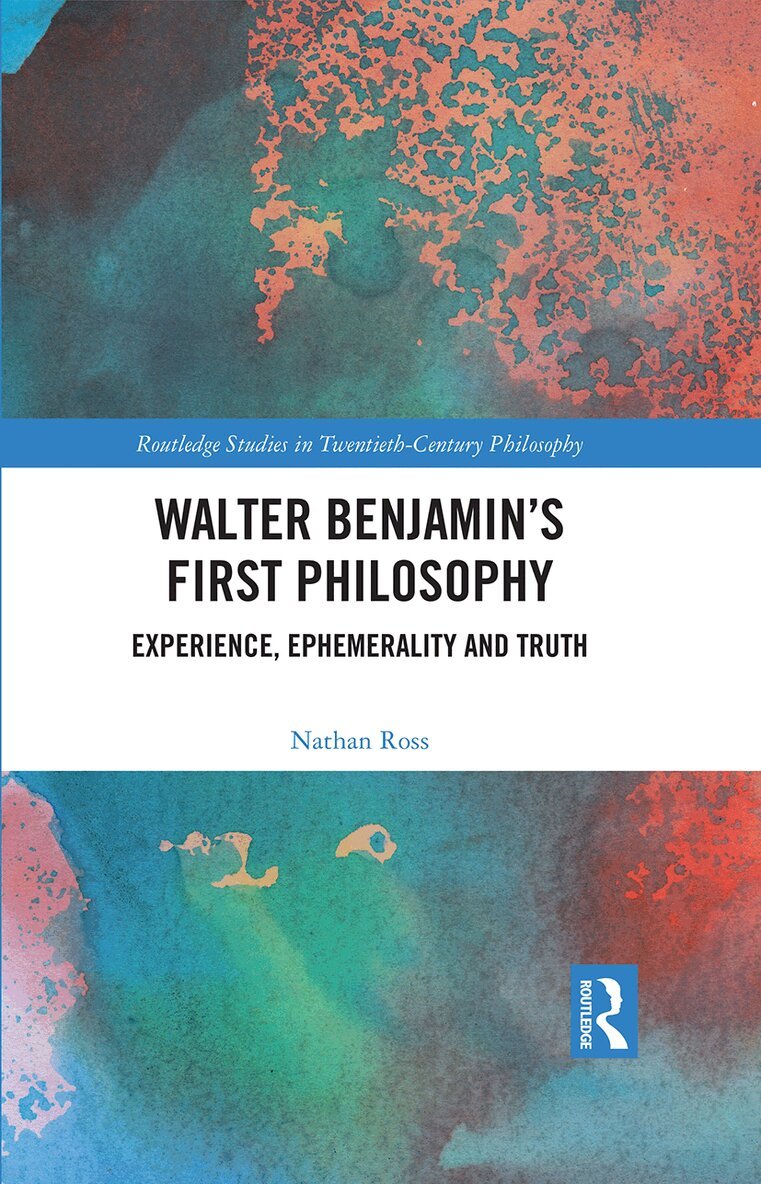
This book provides a study of Walter Benjamin’s first philosophy in two senses: it focuses on his early philosophy as a source of insight into his later works, and it explores his thinking about the nature of truth, method, experience, the relation of body and mind, and the limits of human knowledge.While most attention is paid to Benjamin’s later works, his writings from roughly 1914-1925 explore philosophical themes and develop a critical method. This book argues that this early work founds a series of original and lasting questions and insights. Benjamin understands experience as a broken continuum of diverse forms of spiritual expression, each of which is ephemeral. This leads Benjamin to a series of thought figures: the notion of language as a medium of experience; a philosophy of perception based in the natural history of the human body; an emphasis on mimesis as a faculty of creative assimilation; and a discovery of memory as a power for excavation of meaning in past experience. This book demonstrates that the need for a new understanding of the metaphysical structure of experience, as well as a new conception of truth, play a special role in shaping Benjamin’s subsequent work.Walter Benjamin’s First Philosophy will be of interest to scholars and advanced students working on the thought of Walter Benjamin, 20th-century Continental philosophy, comparative literature, and modern German thought.
662 kr
Skickas inom 10-15 vardagar
This book provides a study of Walter Benjamin’s first philosophy in two senses: it focuses on his early philosophy as a source of insight into his later works, and it explores his thinking about the nature of truth, method, experience, the relation of body and mind, and the limits of human knowledge.While most attention is paid to Benjamin’s later works, his writings from roughly 1914-1925 explore philosophical themes and develop a critical method. This book argues that this early work founds a series of original and lasting questions and insights. Benjamin understands experience as a broken continuum of diverse forms of spiritual expression, each of which is ephemeral. This leads Benjamin to a series of thought figures: the notion of language as a medium of experience; a philosophy of perception based in the natural history of the human body; an emphasis on mimesis as a faculty of creative assimilation; and a discovery of memory as a power for excavation of meaning in past experience. This book demonstrates that the need for a new understanding of the metaphysical structure of experience, as well as a new conception of truth, play a special role in shaping Benjamin’s subsequent work.Walter Benjamin’s First Philosophy will be of interest to scholars and advanced students working on the thought of Walter Benjamin, 20th-century Continental philosophy, comparative literature, and modern German thought.
756 kr
Skickas inom 10-15 vardagar
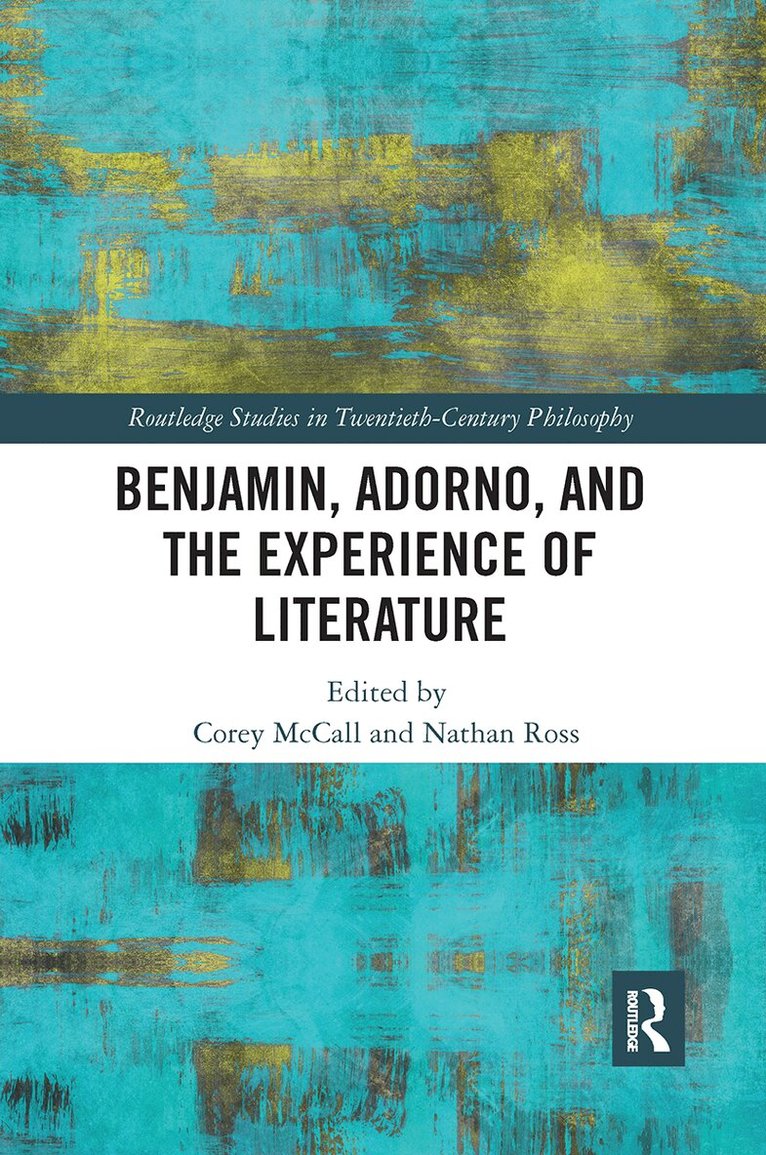
This collection features original essays that examine Walter Benjamin’s and Theodor Adorno’s essays and correspondence on literature. Taken together, the essays present the view that these two monumental figures of 20th-century philosophy were not simply philosophers who wrote about literature, but that they developed their philosophies in and through their encounters with literature.Benjamin, Adorno, and the Experience of Literature is divided into three thematic sections. The first section contains essays that directly demonstrate the ways in which literature enriched the thinking of Benjamin and Adorno. It explores themes that are recognized to be central to their thinking—mimesis, the critique of historical progress, and the loss and recovery of experience—through their readings of literary authors such as Baudelaire, Beckett, and Proust. The second section continues the trajectory of the first by bringing together four essays on Benjamin’s and Adorno’s reading of Kafka, whose work helped them develop a distinctive critique of and response to capitalism. The third and final section focuses more intently on the question of what it means to gain authentically critical insight into a literary work. The essays examine Benjamin’s response to specific figures, including Georg Büchner, Robert Walser, and Julien Green, whose work he sees as neglected, undigested, or misunderstood.This book offers a unique examination of two pivotal 20th-century philosophers through the lens of their shared experiences with literature. It will appeal to a wide range of scholars across philosophy, literature, and German studies.
807 kr
Skickas inom 10-15 vardagar
On Mechanism in Hegel's Social and Political Philosophy examines the role of the concept of mechanism in Hegel’s thinking about political and social institutions. It counters as overly simplistic the notion that Hegel has an ‘organic concept of society’. It examines the thought of Hegel’s peers and predecessors who critique modern political intuitions as ‘machine-like’, focusing on J.G. Herder, Friedrich Schlegel and Novalis. From here it examines the early writings of Hegel, in which Hegel makes a break with the Romantic way of thinking about ethical community. Ross argues that in this period, Hegel devises a new way of thinking about the integration of mechanistic and organic features within an organizational whole. This allows Hegel to offer an innovative theory of modern civil society as a component in ethical life. The second half of the book examines how Hegel develops this thought in his later works. It offers an in depth commentary on the chapter on mechanism in the Science of Logic, and it demonstrates the role of these thoughts in Hegel’s Philosophy of Right. On Mechanism in Hegel's Social and Political Philosophy offers a critical response to debates over communitarianism by arguing against one of the central figures used by scholars to associate Hegel with communitarian thought, namely the notion that society is organic. In addition, it argues that Hegel political theory is deeply informed by his formal ontology, as developed in the Science of Logic.
2 289 kr
Skickas inom 10-15 vardagar
On Mechanism in Hegel's Social and Political Philosophy examines the role of the concept of mechanism in Hegel’s thinking about political and social institutions. It counters as overly simplistic the notion that Hegel has an ‘organic concept of society’. It examines the thought of Hegel’s peers and predecessors who critique modern political intuitions as ‘machine-like’, focusing on J.G. Herder, Friedrich Schlegel and Novalis. From here it examines the early writings of Hegel, in which Hegel makes a break with the Romantic way of thinking about ethical community. Ross argues that in this period, Hegel devises a new way of thinking about the integration of mechanistic and organic features within an organizational whole. This allows Hegel to offer an innovative theory of modern civil society as a component in ethical life. The second half of the book examines how Hegel develops this thought in his later works. It offers an in depth commentary on the chapter on mechanism in the Science of Logic, and it demonstrates the role of these thoughts in Hegel’s Philosophy of Right. On Mechanism in Hegel's Social and Political Philosophy offers a critical response to debates over communitarianism by arguing against one of the central figures used by scholars to associate Hegel with communitarian thought, namely the notion that society is organic. In addition, it argues that Hegel political theory is deeply informed by his formal ontology, as developed in the Science of Logic.
2 401 kr
Skickas inom 10-15 vardagar
This collection features original essays that examine Walter Benjamin’s and Theodor Adorno’s essays and correspondence on literature. Taken together, the essays present the view that these two monumental figures of 20th-century philosophy were not simply philosophers who wrote about literature, but that they developed their philosophies in and through their encounters with literature.Benjamin, Adorno, and the Experience of Literature is divided into three thematic sections. The first section contains essays that directly demonstrate the ways in which literature enriched the thinking of Benjamin and Adorno. It explores themes that are recognized to be central to their thinking—mimesis, the critique of historical progress, and the loss and recovery of experience—through their readings of literary authors such as Baudelaire, Beckett, and Proust. The second section continues the trajectory of the first by bringing together four essays on Benjamin’s and Adorno’s reading of Kafka, whose work helped them develop a distinctive critique of and response to capitalism. The third and final section focuses more intently on the question of what it means to gain authentically critical insight into a literary work. The essays examine Benjamin’s response to specific figures, including Georg Büchner, Robert Walser, and Julien Green, whose work he sees as neglected, undigested, or misunderstood.This book offers a unique examination of two pivotal 20th-century philosophers through the lens of their shared experiences with literature. It will appeal to a wide range of scholars across philosophy, literature, and German studies.
1 833 kr
Skickas inom 10-15 vardagar
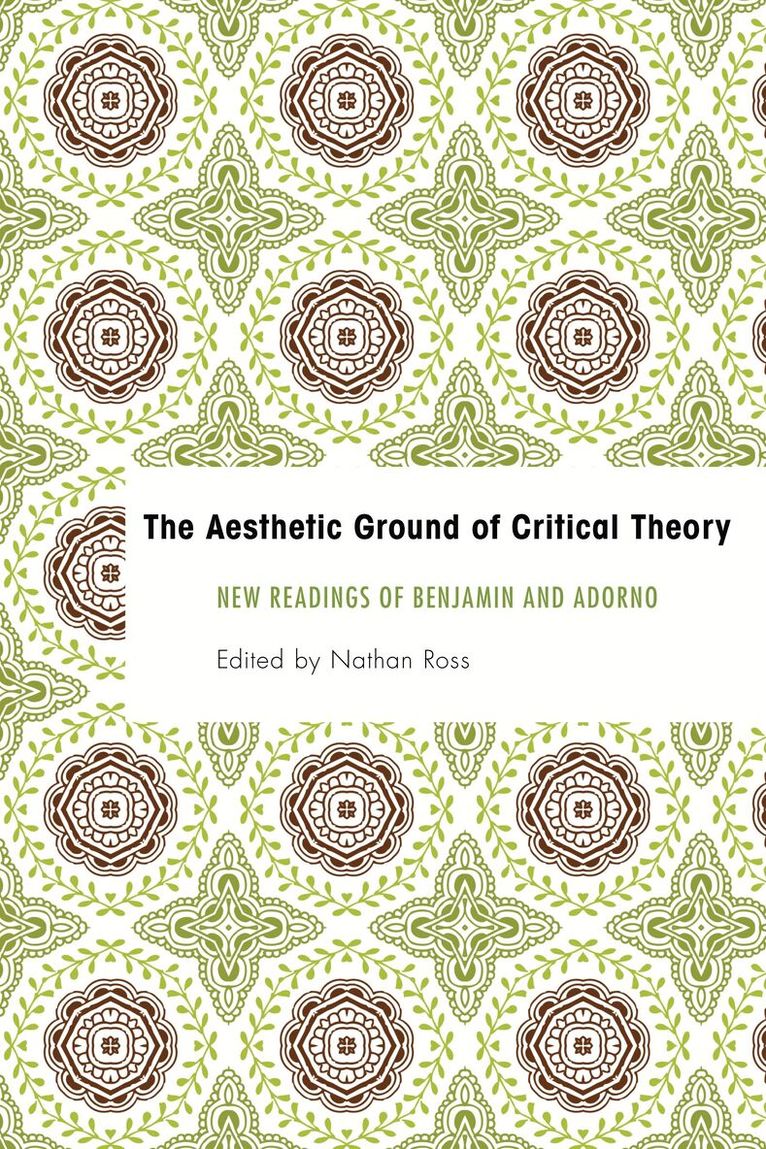
Walter Benjamin and Theodor W. Adorno are considered today to be the two most significant early theorists in founding critical theory. In their works and correspondence, both thinkers turn to art and the aesthetic as a vital way for understanding modern society and developing philosophical methods. This volume of original essays seeks to understand how they influenced each other and disagreed with each other on fundamental questions about art and the aesthetic. The books deals with a variety of key philosophical questions, such as: How does art involve distinctive modes of experience? What is the political significance of modern art?What does aesthetic experience teach us about the limitations of conceptual thought?How is aesthetic experience implicated in the very medium of thought, language? Ultimately the book presents a systematic argument for the foundational significance of the aesthetic in the development of the early critical theory movement.
675 kr
Skickas inom 10-15 vardagar
Walter Benjamin and Theodor W. Adorno are considered today to be the two most significant early theorists in founding critical theory. In their works and correspondence, both thinkers turn to art and the aesthetic as a vital way for understanding modern society and developing philosophical methods. This volume of original essays seeks to understand how they influenced each other and disagreed with each other on fundamental questions about art and the aesthetic. The books deals with a variety of key philosophical questions, such as: How does art involve distinctive modes of experience? What is the political significance of modern art?What does aesthetic experience teach us about the limitations of conceptual thought?How is aesthetic experience implicated in the very medium of thought, language? Ultimately the book presents a systematic argument for the foundational significance of the aesthetic in the development of the early critical theory movement.
2 875 kr
Skickas inom 7-10 vardagar
Walter Benjamin is one of the most influential authors in contemporary humanities, exerting a deep fascination for students and garnering scholarly interest in a variety of fields, such as history of philosophy, literature, film and media studies, political science, religion, architecture, art and history.
Philosophy and Politics of Aesthetic Experience
German Romanticism and Critical Theory
Inbunden, Engelska, 2017
1 064 kr
Skickas inom 10-15 vardagar
This book develops a philosophy of aesthetic experience through two socially significant philosophical movements: early German Romanticism and early critical theory.
Philosophy and Politics of Aesthetic Experience
German Romanticism and Critical Theory
Häftad, Engelska, 2018
1 064 kr
Skickas inom 10-15 vardagar
This book develops a philosophy of aesthetic experience through two socially significant philosophical movements: early German Romanticism and early critical theory.