Nathanael West – författare
135 kr
Skickas
174 kr
Skickas
61 kr
Läs direkt efter köp
100 kr
Läs direkt efter köp
282 kr
Skickas inom 3-6 vardagar
163 kr
Skickas inom 5-8 vardagar
105 kr
Läs direkt efter köp
42 kr
Läs direkt efter köp
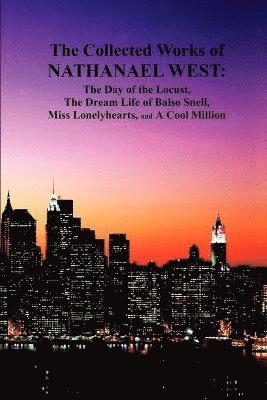
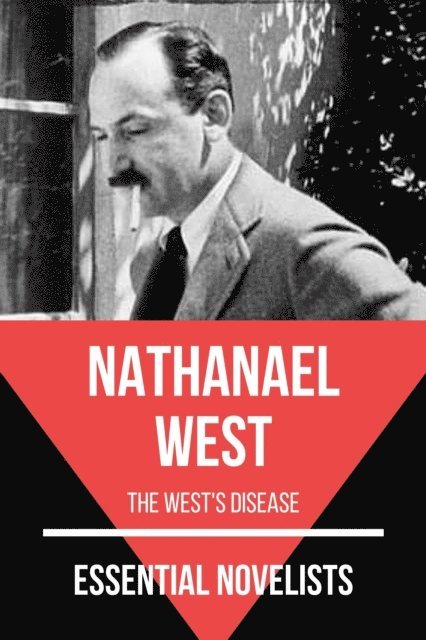
Nathanael West was born Nathan Weinstein in New York City on October 17th, 1903. Nathanel didn’t really appreciate the qualities of an academic education. He forged his high school transcript to gain admission to Tufts and to get into Brown University appropriated the transcript of a fellow Tufts student who, conveniently, was also named Nathan Weinstein. However he did read extensively; French surrealists and British and Irish poets of the 1890s with a focus on unusual literary styles and content. Moving to Paris for three months he changed his name to Nathanael West. With his family hit by financial problems in the late 1920s he returned home to a on off career in construction before becoming night manager of the Hotel Kenmore Hall in Manhattan. In 1931, Nathanael published The Dream Life of Balso Snell, a novel conceived in college. He was by now friendly with such writers as William Carlos Williams and Dashiell Hammett. Although West had been writing since college, it was only at this job that he found enough time to write. By 1933 he published Miss Lonelyhearts. In 1933, he was summoned to Hollywood as a contract scriptwriter for Columbia Pictures. With the advent of 1934 he published a third novel, A Cool Million. None of his works sold well and his finances were always under strain. He continued to work in Hollywood mainly on B Movies. Although the films were poor he was able to use the experiences to great effect for his classic tale The Day of the Locust. On December 22, 1940, West and his wife Eileen McKenney were returning to Los Angeles from a hunting trip in Mexico. West ran a stop sign in El Centro, California, resulting in a collision in which he and Eileen were both killed. Nathanael West was buried in Mount Zion Cemetery in Queens, New York, with his wife''s ashes placed in his coffin.
42 kr
Läs direkt efter köp
Nathanael West was born Nathan Weinstein in New York City on October 17th, 1903. Nathanael didn’t really appreciate the qualities of an academic education. He forged his high school transcript to gain admission to Tufts and to get into Brown University appropriated the transcript of a fellow Tufts student who, conveniently, was also named Nathan Weinstein. However he did read extensively; French surrealists and British and Irish poets of the 1890s with a focus on unusual literary styles and content. Since Jewish students were not allowed to join most fraternities, his main friend was his future brother-in-law S. J. Perelman, a soon to be comic genius. West, in spite of his lack of effort, dig graduate from Brown with a degree. Moving to Paris for three months he changed his name to Nathanael West. With his family hit by financial problems in the late 1920s he returned home to a on off career in construction before becoming night manager of the Hotel Kenmore Hall in Manhattan. In 1931, Nathanael published The Dream Life of Balso Snell, a novel conceived in college. He was by now friendly with such writers as William Carlos Williams and Dashiell Hammett. Although West had been writing since college, it was only at this job that he found enough time to write. By 1933 he published Miss Lonelyhearts. In 1933, he was summoned to Hollywood as a contract scriptwriter for Columbia Pictures. With the advent of 1934 he published a third novel, A Cool Million. None of his works sold well and his finances were always under strain. He continued to work in Hollywood mainly on B Movies. Although the films were poor he was able to use the experiences to great effect for his classic tale The Day of the Locust. In November 1939 he switched studios to work for RKO Radio Pictures and worked on a screenplay that was eventually assigned to Alfred Hitchcock and became Suspicion. But Hitchcock already had his own adaptation and the screenplay lapsed into obscurity. On December 22, 1940, West and his wife Eileen McKenney were returning to Los Angeles from a hunting trip in Mexico. West ran a stop sign in El Centro, California, resulting in a collision in which he and Eileen were both killed.
42 kr
Läs direkt efter köp
Nathanael West was born Nathan Weinstein in New York City on October 17th, 1903. Nathanael didn’t really appreciate the qualities of an academic education. He forged his high school transcript to gain admission to Tufts and to get into Brown University appropriated the transcript of a fellow Tufts student who, conveniently, was also named Nathan Weinstein. However he did read extensively; French surrealists and British and Irish poets of the 1890s with a focus on unusual literary styles and content. Since Jewish students were not allowed to join most fraternities, his main friend was his future brother-in-law S. J. Perelman, a soon to be comic genius. West, in spite of his lack of effort, dig graduate from Brown with a degree. Moving to Paris for three months he changed his name to Nathanael West. With his family hit by financial problems in the late 1920s he returned home to a on off career in construction before becoming night manager of the Hotel Kenmore Hall in Manhattan. In 1931, Nathanael published The Dream Life of Balso Snell, a novel conceived in college. He was by now friendly with such writers as William Carlos Williams and Dashiell Hammett. Although West had been writing since college, it was only at this job that he found enough time to write. By 1933 he published Miss Lonelyhearts. In 1933, he was summoned to Hollywood as a contract scriptwriter for Columbia Pictures. With the advent of 1934 he published a third novel, A Cool Million. None of his works sold well and his finances were always under strain. He continued to work in Hollywood mainly on B Movies. Although the films were poor he was able to use the experiences to great effect for his classic tale The Day of the Locust. In November 1939 he switched studios to work for RKO Radio Pictures and worked on a screenplay that was eventually assigned to Alfred Hitchcock and became Suspicion. But Hitchcock already had his own adaptation and the screenplay lapsed into obscurity. On December 22, 1940, West and his wife Eileen McKenney were returning to Los Angeles from a hunting trip in Mexico. West ran a stop sign in El Centro, California, resulting in a collision in which he and Eileen were both killed.
42 kr
Läs direkt efter köp
Nathanael West was born Nathan Weinstein in New York City on October 17th, 1903. Nathanael didn’t really appreciate the qualities of an academic education. He forged his high school transcript to gain admission to Tufts and to get into Brown University appropriated the transcript of a fellow Tufts student who, conveniently, was also named Nathan Weinstein. However he did read extensively; French surrealists and British and Irish poets of the 1890s with a focus on unusual literary styles and content. Since Jewish students were not allowed to join most fraternities, his main friend was his future brother-in-law S. J. Perelman, a soon to be comic genius. West, in spite of his lack of effort, dig graduate from Brown with a degree. Moving to Paris for three months he changed his name to Nathanael West. With his family hit by financial problems in the late 1920s he returned home to a on off career in construction before becoming night manager of the Hotel Kenmore Hall in Manhattan. In 1931, Nathanael published The Dream Life of Balso Snell, a novel conceived in college. He was by now friendly with such writers as William Carlos Williams and Dashiell Hammett. Although West had been writing since college, it was only at this job that he found enough time to write. By 1933 he published Miss Lonelyhearts. In 1933, he was summoned to Hollywood as a contract scriptwriter for Columbia Pictures. With the advent of 1934 he published a third novel, A Cool Million. None of his works sold well and his finances were always under strain. He continued to work in Hollywood mainly on B Movies. Although the films were poor he was able to use the experiences to great effect for his classic tale The Day of the Locust. In November 1939 he switched studios to work for RKO Radio Pictures and worked on a screenplay that was eventually assigned to Alfred Hitchcock and became Suspicion. But Hitchcock already had his own adaptation and the screenplay lapsed into obscurity. On December 22, 1940, West and his wife Eileen McKenney were returning to Los Angeles from a hunting trip in Mexico. West ran a stop sign in El Centro, California, resulting in a collision in which he and Eileen were both killed.
253 kr
Skickas inom 5-8 vardagar
108 kr
Skickas inom 5-8 vardagar
399 kr
Skickas inom 5-8 vardagar
253 kr
Skickas inom 5-8 vardagar
108 kr
Skickas inom 5-8 vardagar
35 kr
Läs direkt efter köp
"A horselaugh at a world that is too ugly and bitter to be dealt with in any other way." -The New York Times
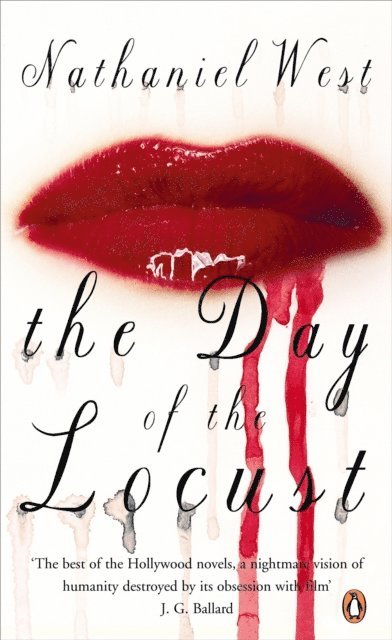
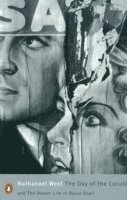
Widely regarded as one of the best English-language novels of the twentieth century, The Day of the Locust is about Hollywood and its corrupting touch - about the American dream turned into a sun-drenched California nightmare.
Nathanael West''s Hollywood is not the glamorous "home of the stars" but a seedy world of little people, all twisted by their own desires - from the ironically romantic artist narrator, to the hard-as-nails call girl would-be-star whom they all lust after. An unforgettable portrayal of a world that mocks the real and rewards the sham, turns its back on love to plunge into empty sex, and breeds a savage violence that is its own undoing.
Admired by F. Scott Fitzgerald, John Fante, Bob Dylan, Dorothy Parker, Harold Bloom, and Dashiell Hammett, and hailed as one of the "Best 100 English-language novels" by Time magazine, The Day of the Locust stands as a classic indictment of American life.
"Scenes of extraordinary power ... vividly drawn grotesques." - F. Scott Fitzgerald
"Los Angeles has been the subject of, and setting for, many fine novels yet The Day of the Locust still feels like the single best-achieved piece of fiction the city has inspired." -The Los Angeles Times
"By applying the magpie aesthetics of Surrealism and T.S. Eliot to the ''American Grain,'' by delving into the popular culture and emerging not with surrender or refusal but a razor-cool critique, West became the great precursor to Heller, Pynchon, Philip K. Dick, George Saunders, and so much else." -Jonathan Lethem
"[West''s] novels say more about the way we live now - and the things that brought us to our present pass - than any other work of fiction I can think of." - The New Yorker
About the author
Nathanael West published four novels during the thirty-six years of his life. The first, The Dream Life of Balso Snell, an experimental work written in the 1920s, was well-received but sales were poor. The second, the brilliant Miss Lonelyhearts, was published in 1933, a few months before his publisher went bankrupt. The third, A Cool Million, vanished into the depths of the Depression. It was at this point that West went to Hollywood to earn his living as a scriptwriter. From his Hollywood experience came The Day of the Locust. Publishing in 1939, the novel received very little recognition. The following year, on December 22nd, the day after his neighbour F. Scott Fitzgerald died of a heart attack, Nathanael West and his wife were killed in a California highway accident. Since his death, West has come to be recognised as one of the finest novelists, and The Day of the Locust has taken its place as a masterpiece.
35 kr
Läs direkt efter köp
''The most diabolical humor ... Nat''s best book is A Cool Million.'' - John Fante
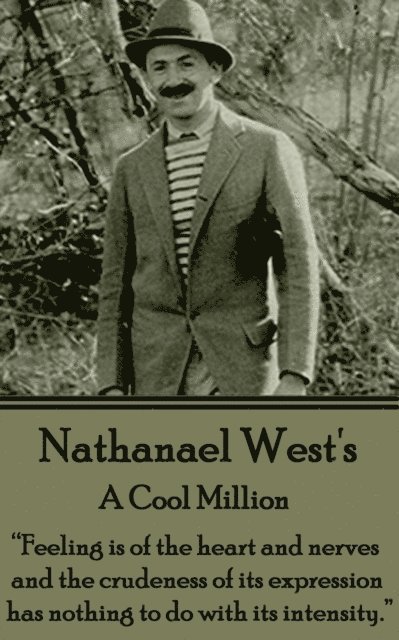
A Cool Million: or The Dismantling of Lemuel Pitkin is Nathanael West''s third novel, published in 1934. It is a brutal satire of eternal optimism.
A Cool Million, as its subtitle suggests, presents "the dismantling of Lemuel Pitkin," piece by piece. As a satire of the Horatio Alger myth of success, the novel is evocative of Voltaire''s Candide, which satirized the philosophical optimism of Gottfried Wilhelm Leibniz and Alexander Pope. Pitkin is a typical ''Schlemiel'', stumbling from one situation to the next; he gets robbed, cheated, unjustly arrested, frequently beaten and exploited. In a parallel plot Betty Prail, Pitkin''s love interest, is raped, abused, and sold into prostitution. Over the course of the novel Pitkin manages to lose an eye, his teeth, his thumb, his scalp and his leg, but nevertheless retains his optimism and gullibility to the inevitably bitter end.
Admired by F. Scott Fitzgerald, John Fante, Bob Dylan, Dorothy Parker, Harold Bloom, and Dashiell Hammett, West''s is a classic indictment of American life.
"Scenes of extraordinary power ... vividly drawn grotesques." - F. Scott Fitzgerald
"By applying the magpie aesthetics of Surrealism and T.S. Eliot to the ''American Grain,'' by delving into the popular culture and emerging not with surrender or refusal but a razor-cool critique, West became the great precursor to Heller, Pynchon, Philip K. Dick, George Saunders, and so much else." -Jonathan Lethem
"[West''s] novels say more about the way we live now - and the things that brought us to our present pass - than any other work of fiction I can think of." - The New Yorker
"Nathanael West''s stunning four novels are American tales, rooted in our transmogrifying soil. Morality plays they are, classified as comedies. They are indeed often funny. Funny as a crutch." -Elizabeth Hardwick, The New York Review of Books
''In its awareness of political technique, its devastatingly true analysis of unrestricted Capitalist method, its foreshadowing of Americianism turned into a possible Fascism, A Cool Million is brilliantly successful.'' - Alan Ross
About the author
Nathanael West published four novels during the thirty-six years of his life. The first, The Dream Life of Balso Snell, an experimental work written in the 1920s, was well-received but sales were poor. The second, the brilliant Miss Lonelyhearts, was published in 1933, a few months before his publisher went bankrupt. The third, A Cool Million, vanished into the depths of the Depression. It was at this point that West went to Hollywood to earn his living as a scriptwriter. From his Hollywood experience came The Day of the Locust. Publishing in 1939, the novel received very little recognition. The following year, on December 22nd, the day after his neighbour F. Scott Fitzgerald died of a heart attack, Nathanael West and his wife were killed in a California highway accident. When West died, at the age of thirty-seven, his originality and brilliance were little known outside an intensely admiring circle of fellow writers: William Carlos Williams, Edmund Wilson, S. J. Perelman, and others. Not until West''s four novels were reissued in the late 1950s was he acknowledged as one of the most gifted writers of his generation. His masterpieces blend manic farce and despairing compassion, and their vision of an America awash in its own mass-produced fantasies, read like a prophecy of much that was to come in American literature and life.

35 kr
Läs direkt efter köp
"West, a parodist with rancid genius, achieved his masterwork in Miss Lonelyhearts." - Harold Bloom
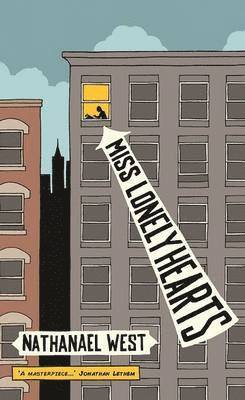
An American classic praised by great writers from Flannery O''Conner to Jonathan Lethem, Miss Lonelyhearts is an Expressionist black comedy set in New York City during the Great Depression.
The blackly comic energy of Nathanael West''s Miss Lonelyhearts - its caustic ebullience, the strange buoyancy of its suffering - is a remarkably American achievement, a kind of death-dance capered on the corpse of a vividly rendered early 1930s Manhattan. In the darkening curl of the Depression, misery is the fulcrum of national experience, a dismal engine that purrs especially for West''s titular protagonist. As a newspaper advice columnist, he is privy to the secret despair of an American chorus: the lost, the young, the deformed, the forgotten. A decidedly off-kilter, darkly comic tale.
"My favorite work of modern American fiction." - Harold Bloom
"In dark times, Miss Lonelyhearts shines the brightest light in the blackest places. For this reason West''s novel has never felt more alive than today." - The Daily Beast
''The most diabolical humor ...'' - John Fante
"Scenes of extraordinary power ... vividly drawn grotesques." - F. Scott Fitzgerald
"By applying the magpie aesthetics of Surrealism and T.S. Eliot to the ''American Grain,'' by delving into the popular culture and emerging not with surrender or refusal but a razor-cool critique, West became the great precursor to Heller, Pynchon, Philip K. Dick, George Saunders, and so much else." -Jonathan Lethem
"[West''s] novels say more about the way we live now - and the things that brought us to our present pass - than any other work of fiction I can think of." - The New Yorker
"Nathanael West''s stunning four novels are American tales, rooted in our transmogrifying soil. Morality plays they are, classified as comedies. They are indeed often funny. Funny as a crutch." - Elizabeth Hardwick, The New York Review of Books
Admired by F. Scott Fitzgerald, John Fante, Bob Dylan, Dorothy Parker, Harold Bloom, and Dashiell Hammett, West''s offers a classic indictment of American life.
About the author
Nathanael West published four novels during the thirty-six years of his life. The first, The Dream Life of Balso Snell, an experimental work written in the 1920s, was well-received but sales were poor. The second, the brilliant Miss Lonelyhearts, was published in 1933, a few months before his publisher went bankrupt. The third, A Cool Million, vanished into the depths of the Depression. It was at this point that West went to Hollywood to earn his living as a scriptwriter. From his Hollywood experience came The Day of the Locust. Publishing in 1939, the novel received very little recognition. The following year, on December 22nd, the day after his neighbour F. Scott Fitzgerald died of a heart attack, Nathanael West and his wife were killed in a California highway accident. When West died, at the age of thirty-seven, his originality and brilliance were little known outside an intensely admiring circle of fellow writers: William Carlos Williams, Edmund Wilson, S. J. Perelman, and others. Not until West''s four novels were reissued in the late 1950s was he acknowledged as one of the most gifted writers of his generation. His masterpieces blend manic farce and despairing compassion, and their vision of an America awash in its own mass-produced fantasies, read like a prophecy of much that was to come in American literature and life.
35 kr
Läs direkt efter köp
"The virtuoso performances of a sophisticated stylist ... compact, skilful, and hilarious." - Randall Reid
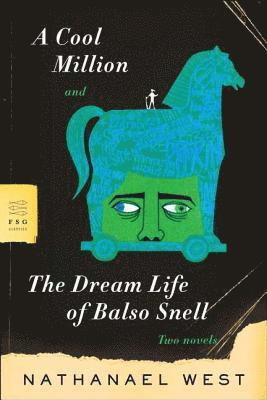
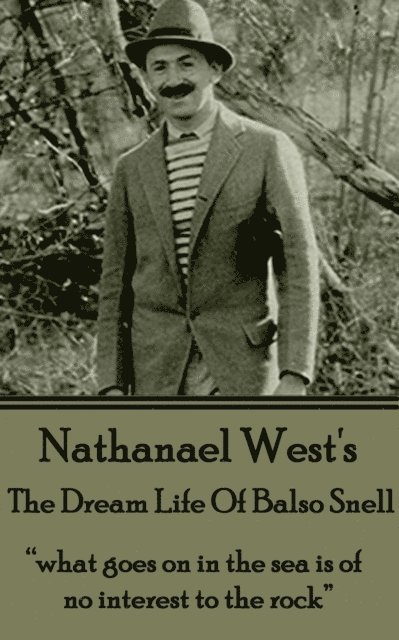
American modernist Nathanael West''s first novel, The Dream Life of Balso Snell, is an anti-künstleroman; it''s a portrait of a young artist discovering his powerlessness. The title character, a lyric poet, takes a nightmare tour through the bowels of the Trojan Horse, meeting a series of failed and frustrated writers along the way. Each surrealistic episode underscores the futility of the literary vocation and gleefully mocks the pipe dreams of amateurs who aspire to wealth and immortality. It was first published in 1931 in an edition of only 500 copies.
"West''s aesthetic sensibilities transform ugly material into a beautiful composition ... that, by its very artistry, celebrates that which it wishes to destroy" - Deborah Wyrick
"[Balso] undertakes not just a disavowal of high modernism and the idealism of its art-for-art''s sake aestheticism, but a critique of nothing less than the grand tradition of Western culture upon which it depends. That critique results in a thorough housecleaning, an operation that will dispense with everything from Plato to Picasso" - Jonathan Veitch
''Beneath this gloom that [West] was pouring at you, there was a streak of the most diabolical humor, you couldn''t imagine ...'' - John Fante
"Scenes of extraordinary power ... vividly drawn grotesques." - F. Scott Fitzgerald
"By applying the magpie aesthetics of Surrealism and T.S. Eliot to the ''American Grain,'' by delving into the popular culture and emerging not with surrender or refusal but a razor-cool critique, West became the great precursor to Heller, Pynchon, Philip K. Dick, George Saunders, and so much else." -Jonathan Lethem
"[West''s] novels say more about the way we live now - and the things that brought us to our present pass - than any other work of fiction I can think of." - The New Yorker
"Nathanael West''s stunning four novels are American tales, rooted in our transmogrifying soil. Morality plays they are, classified as comedies. They are indeed often funny. Funny as a crutch." - Elizabeth Hardwick, The New York Review of Books
About the author
Nathanael West published four novels during the thirty-six years of his life. The first, The Dream Life of Balso Snell, an experimental work written in the 1920s, was well-received but sales were poor. The second, the brilliant Miss Lonelyhearts, was published in 1933, a few months before his publisher went bankrupt. The third, A Cool Million, vanished into the depths of the Depression. It was at this point that West went to Hollywood to earn his living as a scriptwriter. From his Hollywood experience came The Day of the Locust. Publishing in 1939, the novel received very little recognition. The following year, on December 22nd, the day after his neighbour F. Scott Fitzgerald died of a heart attack, Nathanael West and his wife were killed in a California highway accident. When West died, at the age of thirty-seven, his originality and brilliance were little known outside an intensely admiring circle of fellow writers: William Carlos Williams, Edmund Wilson, S. J. Perelman, and others. Not until West''s four novels were reissued in the late 1950s was he acknowledged as one of the most gifted writers of his generation. His masterpieces blend manic farce and despairing compassion, and their vision of an America awash in its own mass-produced fantasies, read like a prophecy of much that was to come in American literature and life.
95 kr
Läs direkt efter köp
95 kr
Läs direkt efter köp
23 kr
Läs direkt efter köp
213 kr
Skickas inom 5-8 vardagar
71 kr
Läs direkt efter köp
259 kr
Skickas inom 5-8 vardagar
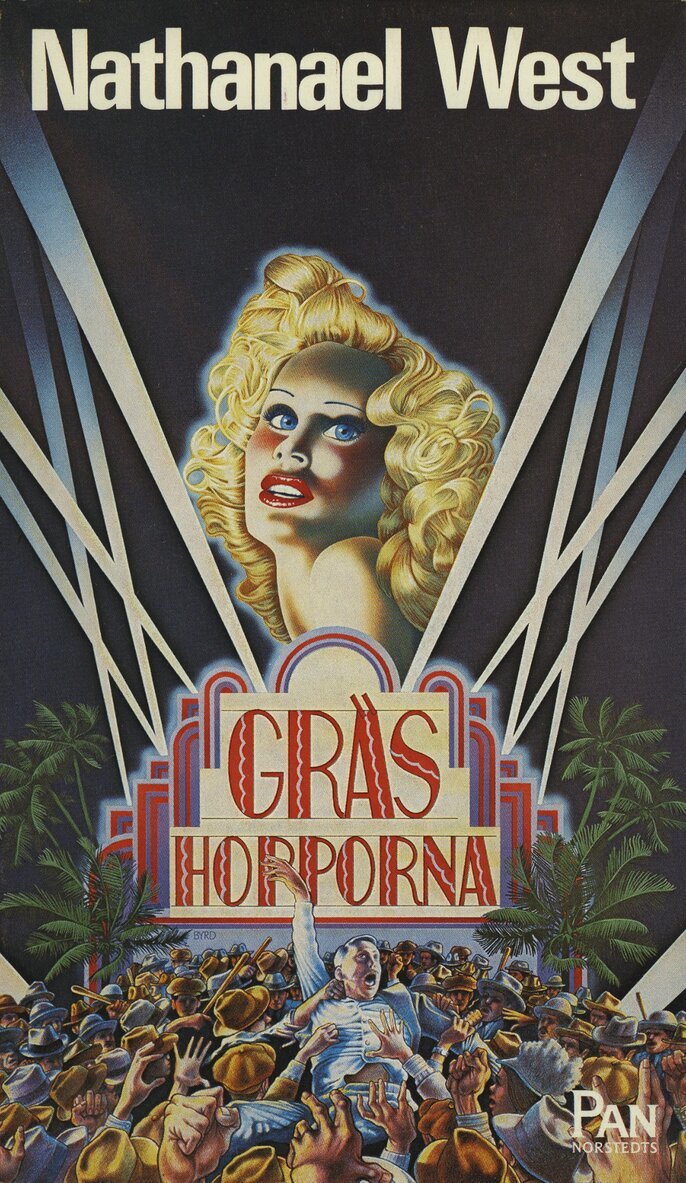
"Det var nästan tid att gå för dagen när Tod Hackett hörde ett förfärligt oväsen på vägen utanför kontoret."Gräshopporna (1939) är en roman om Hollywood, men inte om det glamorösa Hollywood, rampljusets och stjärnornas värld, utan om de bländande kulissernas baksida. Gräshopporna, det är den hord av udda, tragikomiska och patetiska existenser som lever i kulissernas skuggsida och som livnär sig på den falska drömmen om rampljus och stjärnroller: det är armén av statister, ett brokigt och färggrant proletariat som dras som flugor till ateljéernas strålkastarljus. I denna miljö utspelas ett drama som utgör den verkliga kontrasten till drömfabrikens happy ends, och som är både gripande och fängslande i sin tragiska obönhörlighet.
29 kr
Läs direkt efter köp
223 kr
Skickas inom 5-8 vardagar
189 kr
Skickas inom 5-8 vardagar
310 kr
Skickas inom 5-8 vardagar