Nathaniel J. Pallone - Böcker
Visar alla böcker från författaren Nathaniel J. Pallone. Handla med fri frakt och snabb leverans.
10 produkter
10 produkter
617 kr
Skickas inom 10-15 vardagar
In exploring a series of problems associated with privacy and the First Amendment, Bloustein defines individual and group privacy, distinguishing them from each other and related concepts. He also identifies the public interest in individual privacy as individual integrity or liberty, and that of group privacy as the integrity of social structure. The legal protection afforded each of these forms of privacy is illustrated at length, as is the clash between them and the constitutional guarantees of the First Amendment and the citizen's general right to know. In his final essay, Bloustein insists that the concept of group privacy is essential to a properly functioning social structure, and warns that it would be disastrous if this principle were neglected as part of an overreaction to the misuse of group confidences that characterized the Nixon era.
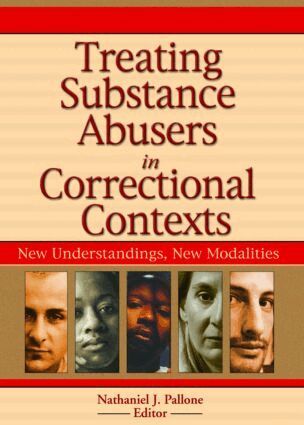
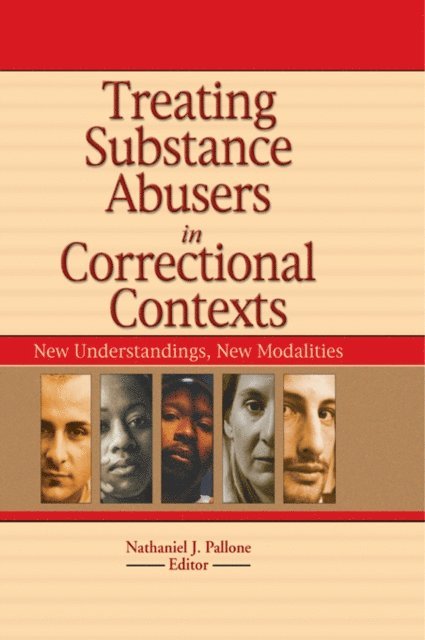
Treating Substance Abusers in Correctional Contexts
New Understandings, New Modalities
Inbunden, Engelska, 2004
2 088 kr
Skickas inom 10-15 vardagar
Get the latest information on new and emerging modalities for treating drug-involved offenders!Treating Substance Abusers in Correctional Contexts: New Understandings, New Modalities analyzes the shift in policy and attitude away from two decades of the harsh punishment that characterized the war on drugs toward a more treatment-oriented medicalization of the problem. Edited by Dr. Nathaniel J. Pallone, editor of the Journal of Offender Rehabilitation (Haworth), the book presents an overview of new and emerging models for treatment of drug-involved offenders in a variety of settings. An international panel of authors examines the rather treat than fight approach to the war on drugs proposed by the voters of California, the Governor and criminal court judges of New York, and Gen. Barry McCaffrey, former Director of the White House Office of National Drug Control Policy.Treating Substance Abusers in Correctional Contexts looks at treatment modalities available to offenders inside and outside correctional institutions, with community organizations and mental health and social service agencies enlisted in a continuum of care as the courts and criminal justice system provide oversightand often, funding. The book explores types of treatment that operate under the surveillance of courts and the criminal justice system, ranging from in-house programs for offenders under confinement in prisons and jails to residential substance abuse treatment (RSAT) and substance abuse treatment (SAT) programs in the community. Through qualitative, exploratory, and descriptive studies, outcome assessments, event-history analysis, and intensive interviews, the book examines recovery relapse prevention, rehabilitation, diversion, therapeutic justice, and the impact of prison-based substance abuse treatment programs.Treating Substance Abusers in Correctional Contexts also examines:the impact of deterrence versus rehabilitation on recidivism in the Drug Treatment Alternative-to-Incarceration Program (DTAP) in a major metropolitan area criminal violence and drug use in residential treatment facilities Residential Substance Abuse Treatment (RSAT) programs for young offenders the long-term effectiveness of an adult drug court program illicit drug and injecting equipment markets inside English prisons and a clinical case report on children exposed in utero to crack cocaineTreating Substance Abusers in Correctional Contexts: New Understandings, New Modalities is must reading for graduate and undergraduate courses in criminal justice, corrections, offender rehabilitation, and substance abuse. The book is equally valuable as a primary textbook for continuing education coursework for counselors, psychologists, social workers, corrections officers, correctional administrators, and policymakers.
Treating Substance Abusers in Correctional Contexts
New Understandings, New Modalities
Häftad, Engelska, 2004
547 kr
Tillfälligt slut
Get the latest information on new and emerging modalities for treating drug-involved offenders!Treating Substance Abusers in Correctional Contexts: New Understandings, New Modalities analyzes the shift in policy and attitude away from two decades of the harsh punishment that characterized the war on drugs toward a more treatment-oriented medicalization of the problem. Edited by Dr. Nathaniel J. Pallone, editor of the Journal of Offender Rehabilitation (Haworth), the book presents an overview of new and emerging models for treatment of drug-involved offenders in a variety of settings. An international panel of authors examines the rather treat than fight approach to the war on drugs proposed by the voters of California, the Governor and criminal court judges of New York, and Gen. Barry McCaffrey, former Director of the White House Office of National Drug Control Policy.Treating Substance Abusers in Correctional Contexts looks at treatment modalities available to offenders inside and outside correctional institutions, with community organizations and mental health and social service agencies enlisted in a continuum of care as the courts and criminal justice system provide oversightand often, funding. The book explores types of treatment that operate under the surveillance of courts and the criminal justice system, ranging from in-house programs for offenders under confinement in prisons and jails to residential substance abuse treatment (RSAT) and substance abuse treatment (SAT) programs in the community. Through qualitative, exploratory, and descriptive studies, outcome assessments, event-history analysis, and intensive interviews, the book examines recovery relapse prevention, rehabilitation, diversion, therapeutic justice, and the impact of prison-based substance abuse treatment programs.Treating Substance Abusers in Correctional Contexts also examines:the impact of deterrence versus rehabilitation on recidivism in the Drug Treatment Alternative-to-Incarceration Program (DTAP) in a major metropolitan area criminal violence and drug use in residential treatment facilities Residential Substance Abuse Treatment (RSAT) programs for young offenders the long-term effectiveness of an adult drug court program illicit drug and injecting equipment markets inside English prisons and a clinical case report on children exposed in utero to crack cocaineTreating Substance Abusers in Correctional Contexts: New Understandings, New Modalities is must reading for graduate and undergraduate courses in criminal justice, corrections, offender rehabilitation, and substance abuse. The book is equally valuable as a primary textbook for continuing education coursework for counselors, psychologists, social workers, corrections officers, correctional administrators, and policymakers.
2 557 kr
Skickas inom 10-15 vardagar
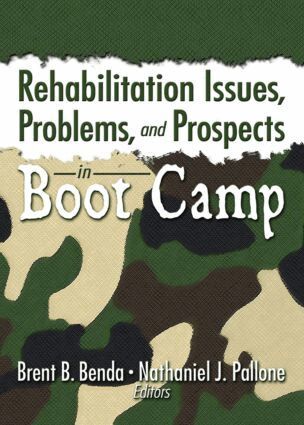
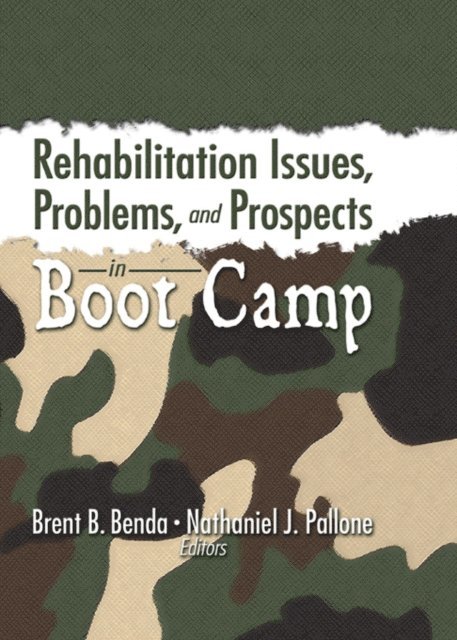
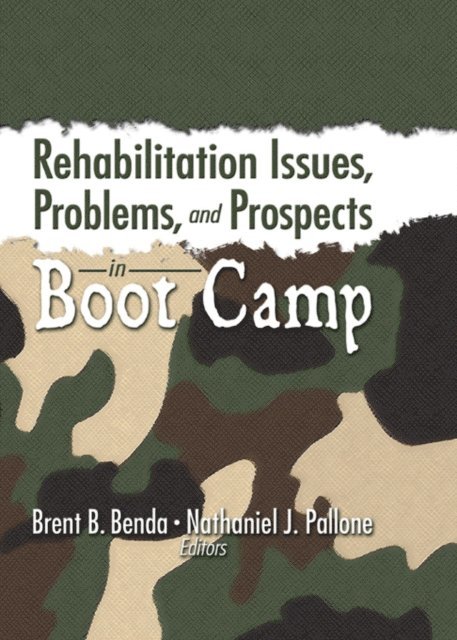
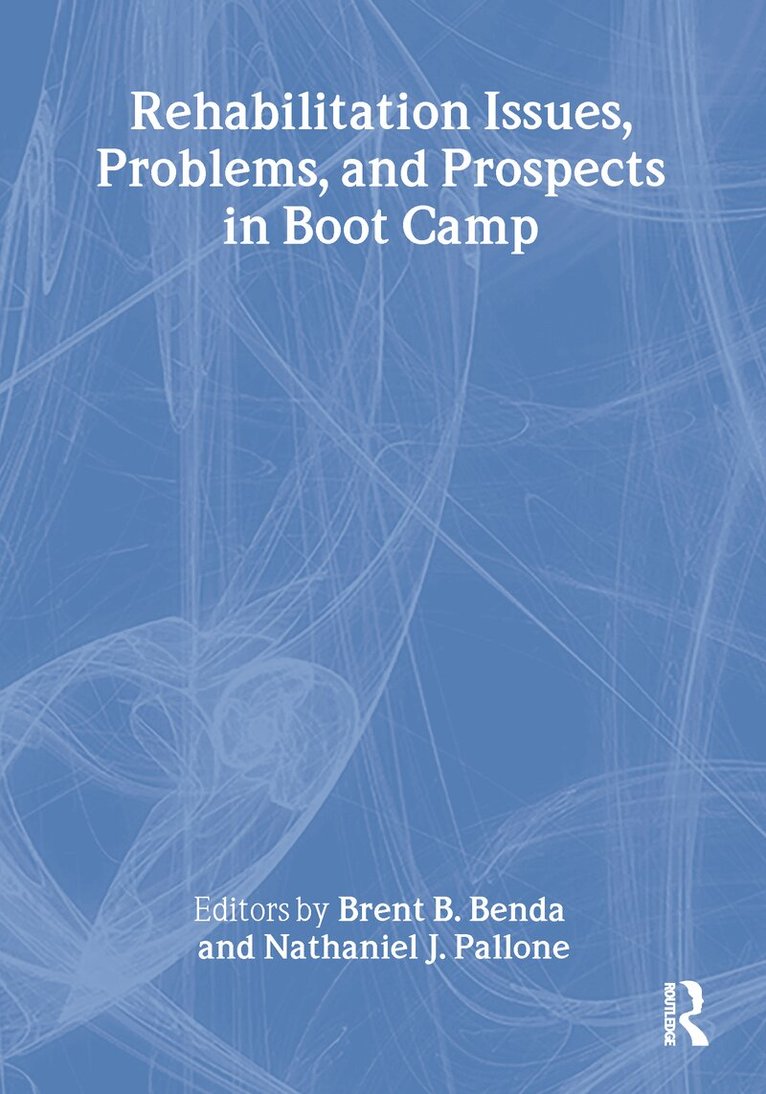
Boot camps-what are their effects on criminal behavior?Public and political support for boot camps as alternative correctional facilities has rarely faltered since their inception decades ago, though their efficacy remains uncertain. Rehabilitation Issues, Problems, and Prospects in Boot Camp explores all facets of the controversial issue, from the attitudes and perceptions of the public, to the political motivations in maintaining them, on to the latest research on the camps and their graduates. Respected authorities discuss boot camps’ effectiveness on diverse groups according to age, gender, race, and correctional facility. Cost factors between boot camps and other correctional institutions are compared, along with the latest criminal recidivism data. Boot camps provide inmates with an uncomfortable, paramilitary-style environment with an eye toward shorter incarceration time, lower costs, and more positive effects on criminal behavior. Does this correctional model work as anticipated? Rehabilitation Issues, Problems, and Prospects in Boot Camp gives you the facts, revealing the public and political arguments for and against boot camps as well as the research on the theoretical predictors of criminal recidivism and the differing attitudes of attendees toward the facilities according to gender and race. Critical policy issues are identified and discussed in-depth, with particular emphasis given to the positive and negative aspects of rehabilitation possibilities of boot camps. Helpful tables clearly illustrate statistics while extensive references provide opportunities for further insight.Rehabilitation Issues, Problems, and Prospects in Boot Camp explores questions such as:criminal recidivism—what are the theoretical predictors? what effect does gender have on criminal recidivism? what is the effect of this hypermasculine paramilitary prison environment have on males— and females? what are the differences between Native American and non-Native American perceptions of boot camp? is the perceived severity of boot camp different for gender? what is the process for policymaking in creating and maintaining boot camps? what role does politics play in the continuation of boot camps? what corrections to boot camp facilities should be made based upon evidence and research? Rehabilitation Issues, Problems, and Prospects in Boot Camp is a thorough examination of the social and political issues about boot camps that makes essential reading for educators, students, sociologists, criminologists, psychologists, counselors, and criminal justice professionals.
521 kr
Tillfälligt slut
Boot camps-what are their effects on criminal behavior?Public and political support for boot camps as alternative correctional facilities has rarely faltered since their inception decades ago, though their efficacy remains uncertain. Rehabilitation Issues, Problems, and Prospects in Boot Camp explores all facets of the controversial issue, from the attitudes and perceptions of the public, to the political motivations in maintaining them, on to the latest research on the camps and their graduates. Respected authorities discuss boot camps’ effectiveness on diverse groups according to age, gender, race, and correctional facility. Cost factors between boot camps and other correctional institutions are compared, along with the latest criminal recidivism data. Boot camps provide inmates with an uncomfortable, paramilitary-style environment with an eye toward shorter incarceration time, lower costs, and more positive effects on criminal behavior. Does this correctional model work as anticipated? Rehabilitation Issues, Problems, and Prospects in Boot Camp gives you the facts, revealing the public and political arguments for and against boot camps as well as the research on the theoretical predictors of criminal recidivism and the differing attitudes of attendees toward the facilities according to gender and race. Critical policy issues are identified and discussed in-depth, with particular emphasis given to the positive and negative aspects of rehabilitation possibilities of boot camps. Helpful tables clearly illustrate statistics while extensive references provide opportunities for further insight.Rehabilitation Issues, Problems, and Prospects in Boot Camp explores questions such as:criminal recidivism—what are the theoretical predictors? what effect does gender have on criminal recidivism? what is the effect of this hypermasculine paramilitary prison environment have on males— and females? what are the differences between Native American and non-Native American perceptions of boot camp? is the perceived severity of boot camp different for gender? what is the process for policymaking in creating and maintaining boot camps? what role does politics play in the continuation of boot camps? what corrections to boot camp facilities should be made based upon evidence and research? Rehabilitation Issues, Problems, and Prospects in Boot Camp is a thorough examination of the social and political issues about boot camps that makes essential reading for educators, students, sociologists, criminologists, psychologists, counselors, and criminal justice professionals.
Rehabilitating Criminal Sexual Psychopaths
Legislative Mandates, Clinical Quandaries
Inbunden, Engelska, 1990
1 045 kr
Tillfälligt slut
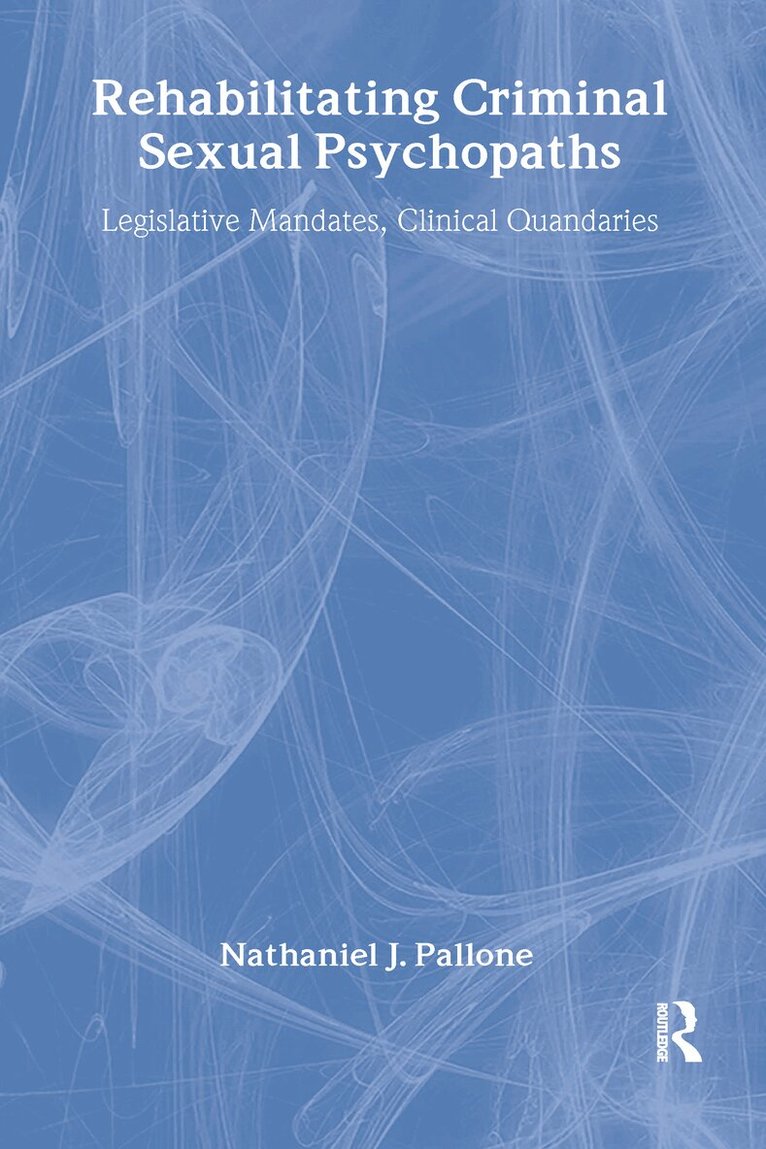
More than half the states in this country have legislation on sex offenders that distinguishes between those whose offense is incidental to other offenses ("felony" sexual offenders), and those who engage in "repetitive, habitual, or compulsive" sex offenses ("criminal sexual psychopaths"). This second category is the subject of this book.The legislation specifies that criminal sexual psychopaths must be treated, not punished. But treatment is problematic; the literature on various approaches finds uncertainty about the effectiveness of treatment. Pallone asks the difficult question of whether there is a prospective right to effective treatment, and notes the political and ethical questions involved in potentially more effective Clockwork Orange approaches. The ethical burden on mental health clinicians is heavy; despite the fact that the category "sexual psychopath" is essentially a legal, not a psychiatric category, judges tend to follow professional recommendations as to categorization.Pallone emerges with some surprising but convincing conclusions. If the distinction between felony and psychopathic sexual offender is essentially empty, as the profession feels it is, it should be abandoned. All criminal sexual offenders should be punished, except those who opt for treatment and who are certified by mental health professionals as likely to benefit. And for those few so identified, society should be prepared to commit significant resources to their treatment.This speculation on the past, present, and future of criminal sexual deviation comes from a psychologists with a broad command of the literature and deep professional experience in the area. Combining a broad-ranging overview of the legal, criminological, and psychiatric literature on these questions, Rehabilitating Criminal Sexual Psychopaths raises important questions. Legal experts, criminologists, mental health professionals, and all those concerned with public policy will find it significant.
1 921 kr
Skickas inom 10-15 vardagar
In exploring a series of problems associated with privacy and the First Amendment, Bloustein defines individual and group privacy, distinguishing them from each other and related concepts. He also identifies the public interest in individual privacy as individual integrity or liberty, and that of group privacy as the integrity of social structure. The legal protection afforded each of these forms of privacy is illustrated at length, as is the clash between them and the constitutional guarantees of the First Amendment and the citizen's general right to know. In his final essay, Bloustein insists that the concept of group privacy is essential to a properly functioning social structure, and warns that it would be disastrous if this principle were neglected as part of an overreaction to the misuse of group confidences that characterized the Nixon era.
Sex Offender Treatment
Biological Dysfunction, Intrapsychic Conflict, Interpersonal Violence
Häftad, Engelska, 2016
705 kr
Skickas inom 10-15 vardagar
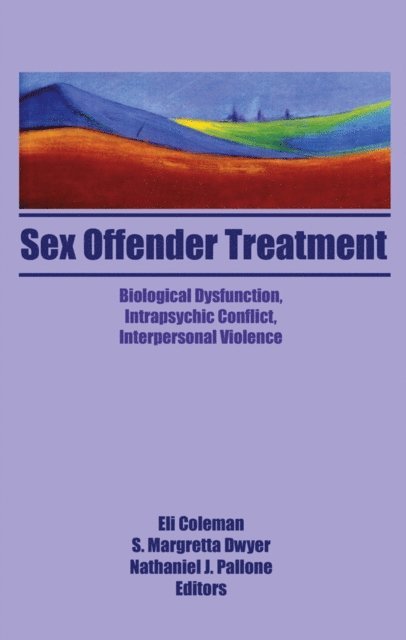
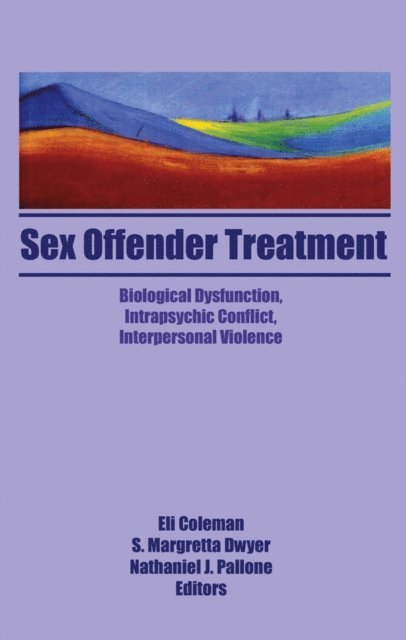
Sex Offender Treatment: Biological Dysfunction, Intrapsychic Conflict, Interpersonal Violence assists sex therapists, counselors, psychiatrists, and psychologists working in sex offender treatment in providing more effective services. You’ll gain timely knowledge of sex offending behavior and treatment approaches that will stimulate your thinking and help you improve your research and treatment methodologies. From Sex Offender Treatment, you’ll acquire valuable insight and a cross-cultural viewpoint as you explore chapters written by international scholars who have set the standards of care for sex offender treatment. Contributors aim to improve the effectiveness of sex offender treatment throughout the world by challenging you to conduct more research that will provide a better understanding of sex offenders and improve treatment approaches. Authors presented their contributions at the Third International Congress on the Treatment of Sex Offenders held in Minneapolis, Minnesota. The book begins with a Standards of Care for the Treatment of Sex Offenders. This guides you in increasing the effectiveness of the treatment you provide to sex offenders. The Standards of Care helps you analyze new data and gain a basis for successful sex offender treatment. Following chapters probe into the nature of interpersonal violence and aggression and a further understanding of pedophilia and exhibitionism. You will begin to more thoroughly understand sex offending behavior as you read about:motives contributing to sexual aggression and the confluence model of sexual aggression the background and clinical characteristics of paraphilic individuals and sex offenders a case study of sex offenders, victims, and their families the “abuse to abuser hypothesis” in regard to pedaphilia assessment, psychosexual profiling, and treatment of exhibitionist behavior the treatment of sex offenders with mental retardation the relationship between sex offender treatment success and learning difficulties incest offender perceptions of treatment as used to generate an explanatory theory of the sexual abuse treatment process.Chapters in Sex Offender Treatment emphasize the importance of good assessment techniques, issues affecting victims and families of sex offenders, why treatment does not work for some sex offenders, medical problems associated with sex offenders, and working with special populations of sex offenders. Counselors, researchers, educators, sex offender treatment personnel, forensic psychologists and psychiatrists, and sex therapists will find Sex Offender Treatment crucial for gaining insight into sex offenders’motives and behaviors. You can then use these perspectives to more effectively interact with sex offenders and to more accurately analyze sex offending behavior.
Rehabilitating Criminal Sexual Psychopaths
Legislative Mandates, Clinical Quandaries
Häftad, Engelska, 2018
441 kr
Skickas inom 10-15 vardagar
More than half the states in the US have legislation on sex offenders that distinguishes between those whose offense is incidental to other offenses ("felony" sexual offenders), and those who engage in "repetitive, habitual, or compulsive" sex offenses ("criminal sexual psychopaths"). This second category is the subject of this book. The legislation specifies that criminal sexual psychopaths must be treated, not punished. But treatment is problematic; the literature on various approaches finds uncertainty about the effectiveness of treatment. Pallone asks the difficult question of whether there is a prospective right to effective treatment, and notes the political and ethical questions involved in potentially more effective "Clockwork Orange" approaches. The ethical burden on mental health clinicians is heavy; despite the fact that the category "sexual psychopath" is essentially a legal, not a psychiatric, category, judges tend to follow professional recommendations as to categorization. Pallone emerges with some surprising but convincing conclusions. If the distinction between felony and psychopathic sexual offending is essentially empty, as the profession feels it is, it should be abandoned. All criminal sexual offenders should be punished, except those who opt for treatment and who are certified by mental health professionals as likely to benefit. And for those few so identified, society should be prepared to commit significant resources to their treatment. This speculation on the past, present, and future of criminal sexual deviation comes from a psychologist with a broad command of the literature and deep professional experience in the area. Combining a broad-ranging overview of the legal, criminological, and psychiatric literature on these questions, Rehabilitating Criminal Sexual Psychopaths raises important questions. Legal experts, criminologists, mental health professionals, and all those concerned with public policy will find it significant.
Sex Offender Treatment
Biological Dysfunction, Intrapsychic Conflict, Interpersonal Violence
Inbunden, Engelska, 1996
1 572 kr
Skickas inom 10-15 vardagar
Sex Offender Treatment: Biological Dysfunction, Intrapsychic Conflict, Interpersonal Violence assists sex therapists, counselors, psychiatrists, and psychologists working in sex offender treatment in providing more effective services. You’ll gain timely knowledge of sex offending behavior and treatment approaches that will stimulate your thinking and help you improve your research and treatment methodologies. From Sex Offender Treatment, you’ll acquire valuable insight and a cross-cultural viewpoint as you explore chapters written by international scholars who have set the standards of care for sex offender treatment. Contributors aim to improve the effectiveness of sex offender treatment throughout the world by challenging you to conduct more research that will provide a better understanding of sex offenders and improve treatment approaches. Authors presented their contributions at the Third International Congress on the Treatment of Sex Offenders held in Minneapolis, Minnesota. The book begins with a Standards of Care for the Treatment of Sex Offenders. This guides you in increasing the effectiveness of the treatment you provide to sex offenders. The Standards of Care helps you analyze new data and gain a basis for successful sex offender treatment. Following chapters probe into the nature of interpersonal violence and aggression and a further understanding of pedophilia and exhibitionism. You will begin to more thoroughly understand sex offending behavior as you read about:motives contributing to sexual aggression and the confluence model of sexual aggression the background and clinical characteristics of paraphilic individuals and sex offenders a case study of sex offenders, victims, and their families the “abuse to abuser hypothesis” in regard to pedaphilia assessment, psychosexual profiling, and treatment of exhibitionist behavior the treatment of sex offenders with mental retardation the relationship between sex offender treatment success and learning difficulties incest offender perceptions of treatment as used to generate an explanatory theory of the sexual abuse treatment process.Chapters in Sex Offender Treatment emphasize the importance of good assessment techniques, issues affecting victims and families of sex offenders, why treatment does not work for some sex offenders, medical problems associated with sex offenders, and working with special populations of sex offenders. Counselors, researchers, educators, sex offender treatment personnel, forensic psychologists and psychiatrists, and sex therapists will find Sex Offender Treatment crucial for gaining insight into sex offenders’motives and behaviors. You can then use these perspectives to more effectively interact with sex offenders and to more accurately analyze sex offending behavior.