National Park Service – författare
282 kr
Skickas inom 11-20 vardagar
437 kr
Läs direkt efter köp
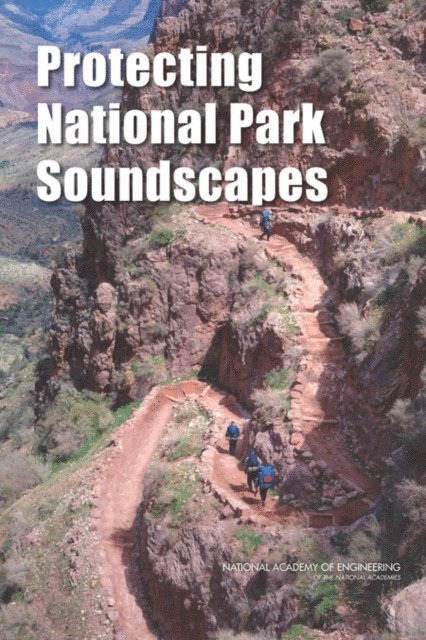
America''s national parks provide a wealth of experiences to millions of people every year. What visitors see—landscapes, wildlife, cultural activities—often lingers in memory for life. And what they hear adds a dimension that sight alone cannot provide. Natural sounds can dramatically enhance visitors'' experience of many aspects of park environments. In some settings, such as the expanses of Yellowstone National Park, they can even be the best way to enjoy wildlife, because animals can be heard at much greater distances than they can be seen. Sounds can also be a natural complement to natural scenes, whether the rush of water over a rocky streambed or a ranger''s explanation of a park''s history. In other settings, such as the New Orleans Jazz National Historical Park, sounds are the main reason for visiting a park.
The acoustical environment is also important to the well-being of the parks themselves. Many species of wildlife depend on their hearing to find prey or avoid predators. If they cannot hear, their survival is jeopardized—and the parks where they live may in turn lose part of their natural heritage. For all these reasons it is important to be aware of noise (defined as unwanted sound, and in this case usually generated by humans or machinery), which can degrade the acoustical environment, or soundscape, of parks. Just as smog smudges the visual horizon, noise obscures the listening horizon for both visitors and wildlife. This is especially true in places, such as remote wilderness areas, where extremely low sound levels are common. The National Park Service (NPS) has determined that park facilities, operations, and maintenance activities produce a substantial portion of noise in national parks and thus recognizes the need to provide park managers with guidance for protecting the natural soundscape from such noise. Therefore, the focus of the workshop was to define what park managers can do to control noise from facilities, operations, and maintenance, and not on issues such as the effects of noise on wildlife, noise metrics, and related topics.
To aid in this effort, NPS joined with the National Academy of Engineering (NAE) and with the US Department of Transportation''s John A. Volpe National Transportation Systems Center to hold a workshop to examine the challenges and opportunities facing the nation''s array of parks. Entitled "Protecting National Park Soundscapes: Best Available Technologies and Practices for Reducing Park- Generated Noise," the workshop took place October 3-4, 2012, at NPS''s Natural Resource Program Center in Fort Collins, Colorado. Protecting National Park Soundscapes is a summary of the workshop.
365 kr
Skickas inom 5-8 vardagar
199 kr
Skickas inom 5-8 vardagar
167 kr
Skickas inom 5-8 vardagar
290 kr
Skickas inom 5-8 vardagar
213 kr
Skickas inom 5-8 vardagar
262 kr
Skickas inom 5-8 vardagar
376 kr
Skickas inom 5-8 vardagar
153 kr
Skickas inom 5-8 vardagar
187 kr
Skickas inom 5-8 vardagar
300 kr
Skickas inom 5-8 vardagar
285 kr
Skickas inom 5-8 vardagar
352 kr
Skickas inom 5-8 vardagar
266 kr
Skickas inom 5-8 vardagar
596 kr
Skickas inom 5-8 vardagar
489 kr
Skickas inom 5-8 vardagar
666 kr
Skickas inom 5-8 vardagar
454 kr
Skickas inom 5-8 vardagar
422 kr
Skickas inom 5-8 vardagar
324 kr
Skickas inom 5-8 vardagar
536 kr
Skickas inom 5-8 vardagar
275 kr
Skickas inom 5-8 vardagar
829 kr
Skickas inom 5-8 vardagar
331 kr
Skickas inom 5-8 vardagar
129 kr
Skickas inom 5-8 vardagar
649 kr
Skickas inom 5-8 vardagar
585 kr
Skickas inom 5-8 vardagar
683 kr
Skickas inom 5-8 vardagar
340 kr
Skickas inom 5-8 vardagar