Natsuko Tsujimura - Böcker
Visar alla böcker från författaren Natsuko Tsujimura. Handla med fri frakt och snabb leverans.
7 produkter
7 produkter
14 446 kr
Skickas inom 10-15 vardagar
Traditionally, linguistic research has focused on the Indo-European language family - particularly English - and languages like Japanese and Chinese have not been pursued in theoretical developments. However, once scholars started to pay more attention to Japanese, its similarities to and differences from Indo-European languages not only revealed a great deal of typological variation, but also helped to provide a more accurate picture of the fundamental properties of human language. For the past four decades, linguistic research on the Japanese language has made remarkable progress, contributing to the intellectual and scientific exploration of the linguistic and cognitive sciences, synchronic and diachronic sociocultural developments, and to the humanities more generally. This three-volume collection, compiled of published articles that are considered seminal in the development of Japanese linguistic research, represents a variety of formal and functional approaches to a broad range of areas of linguistics. The collection also includes articles from journals and chapters taken from monographs and edited volumes.
2 667 kr
Skickas inom 7-10 vardagar
This Handbook brings together major aspects of Japanese linguistics, presenting overviews, current concerns and future directions of each topic. The areas included are phonology, syntax, semantics, morphology, language acquisition, sentence processing, pragmatics, and sociolinguistics. This Handbook is for those who are familiar with the topic at the basic level and wish to investigate it in more detail, but it also can be used as a language-specific and typological reference. Written by leading scholars in the field Provides a unique and authoritative survey of Japanese linguistics Each chapter presents an overview of the topic and discusses current concerns and future directions
780 kr
Skickas inom 7-10 vardagar
This Handbook brings together major aspects of Japanese linguistics, presenting overviews, current concerns and future directions of each topic. The areas included are phonology, syntax, semantics, morphology, language acquisition, sentence processing, pragmatics, and sociolinguistics. This Handbook is for those who are familiar with the topic at the basic level and wish to investigate it in more detail, but it also can be used as a language-specific and typological reference. Written by leading scholars in the field Provides a unique and authoritative survey of Japanese linguistics Each chapter presents an overview of the topic and discusses current concerns and future directions
1 237 kr
Skickas inom 10-15 vardagar
In Expressing Silence: Where Language and Culture Meet in Japanese, Natsuko Tsujimura discusses how silence is conceptualized and linguistically represented in Japanese. Languages differ widely in the specific linguistic and rhetorical modes through which vivid depictions of silence are achieved. In Japanese, sounds in nature evoke silence, and onomatopoeia plays an important role in simulating silent scenes. These linguistic mechanisms mediate the perception of the symbiotic relationship between sound and silence, a perception deeply embedded in the Japanese cultural experience. Expressing Silence brings the tools of both linguistic and cultural analysis in examining the remarkably rich array of representations of silence in Japanese language and culture, finding that depictions of silence through language cannot be understood without exploring what sound or silence mean to the speakers.
499 kr
Skickas inom 10-15 vardagar
In Expressing Silence: Where Language and Culture Meet in Japanese, Natsuko Tsujimura discusses how silence is conceptualized and linguistically represented in Japanese. Languages differ widely in the specific linguistic and rhetorical modes through which vivid depictions of silence are achieved. In Japanese, sounds in nature evoke silence, and onomatopoeia plays an important role in simulating silent scenes. These linguistic mechanisms mediate the perception of the symbiotic relationship between sound and silence, a perception deeply embedded in the Japanese cultural experience. Expressing Silence brings the tools of both linguistic and cultural analysis in examining the remarkably rich array of representations of silence in Japanese language and culture, finding that depictions of silence through language cannot be understood without exploring what sound or silence mean to the speakers.
1 276 kr
Skickas inom 10-15 vardagar
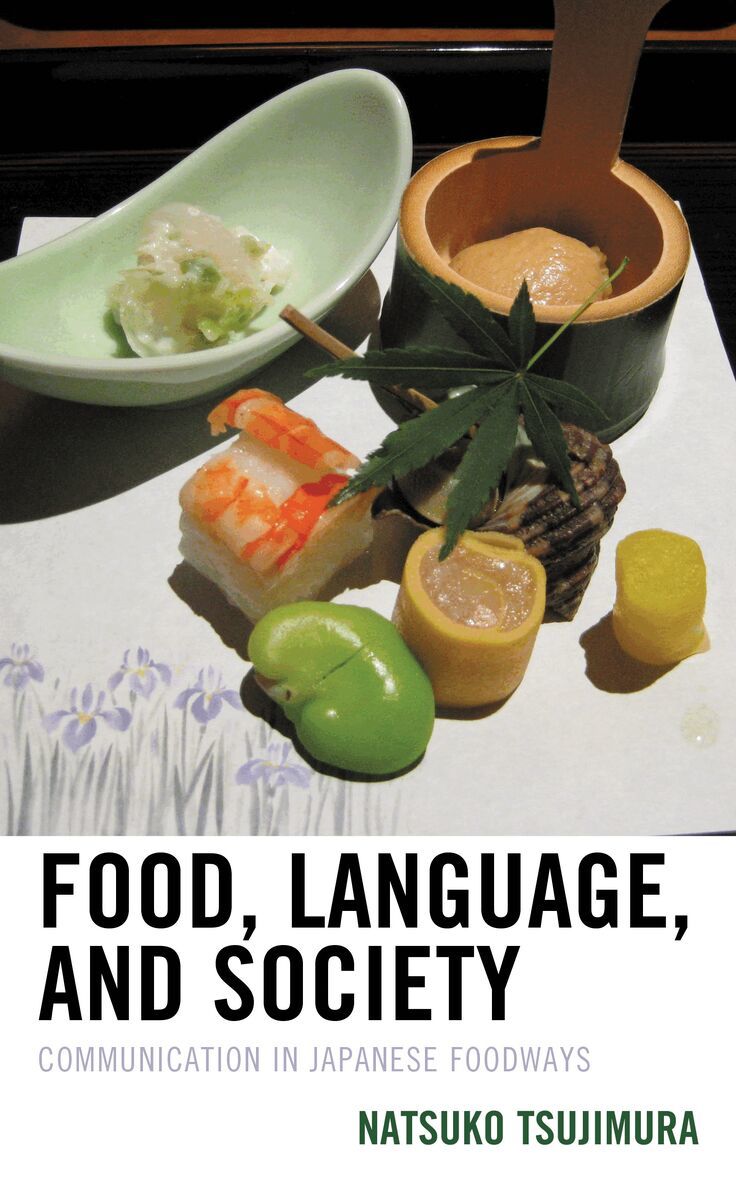
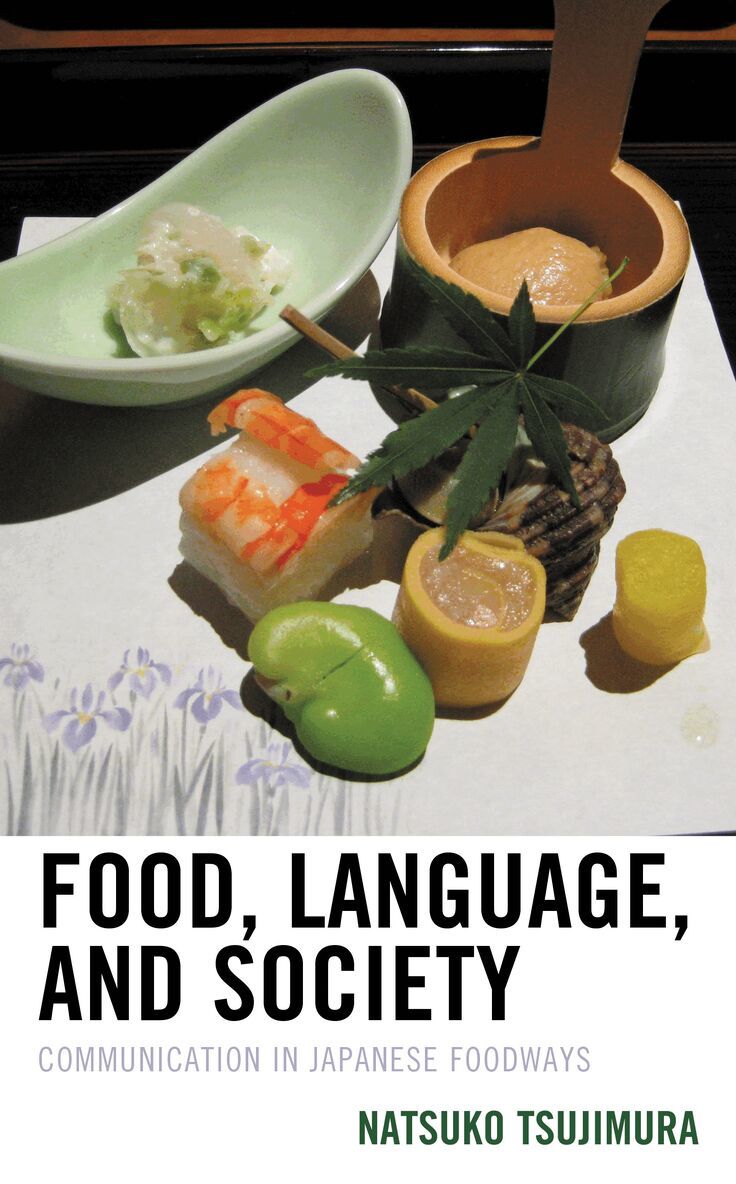
Food, Language, and Society: Communication in Japanese Foodways examines the language of food in Japanese through the lens of cognitive science and cultural studies to explore intriguing ways in which language, food, and culture interact in the fabric of Japanese society. The questions of how, where, and by whom food and food experiences are described provide abundant opportunities for investigating relationships between language and culture from multi-disciplinary perspectives. Linguistic analysis of the language of food enables us to understand cognitive information that motivates and influences people’s rhetorical choices on foodways. Detailed discussions reveal that loanwords, mimetics, cooking terms, and metaphors serve as lynchpins to enrich the expressive power of the language of food. Food discourse situated in broader social and cultural contexts also reflect social norms and cultural practices deeply embedded within and beyond our gustatory and culinary life. Food narratives as in cookbooks and advertisements are an informative means for virtual interpersonal communication where individual and group identity is indexed, providing a platform for reexamination of gender and other social norms as response to changes in society. Examined from the interaction of linguistic and sociocultural perspectives, Food, Language, and Society illuminates the form, use, and social meaning of the language of food.
475 kr
Skickas inom 10-15 vardagar
Food, Language, and Society: Communication in Japanese Foodways examines the language of food in Japanese through the lens of cognitive science and cultural studies to explore intriguing ways in which language, food, and culture interact in the fabric of Japanese society. The questions of how, where, and by whom food and food experiences are described provide abundant opportunities for investigating relationships between language and culture from multi-disciplinary perspectives. Linguistic analysis of the language of food enables us to understand cognitive information that motivates and influences people’s rhetorical choices on foodways. Detailed discussions reveal that loanwords, mimetics, cooking terms, and metaphors serve as lynchpins to enrich the expressive power of the language of food. Food discourse situated in broader social and cultural contexts also reflect social norms and cultural practices deeply embedded within and beyond our gustatory and culinary life. Food narratives as in cookbooks and advertisements are an informative means for virtual interpersonal communication where individual and group identity is indexed, providing a platform for reexamination of gender and other social norms as response to changes in society. Examined from the interaction of linguistic and sociocultural perspectives, Food, Language, and Society illuminates the form, use, and social meaning of the language of food.