Naurang L. Saini - Böcker
Visar alla böcker från författaren Naurang L. Saini. Handla med fri frakt och snabb leverans.
2 produkter
2 produkter
2 115 kr
Skickas inom 10-15 vardagar
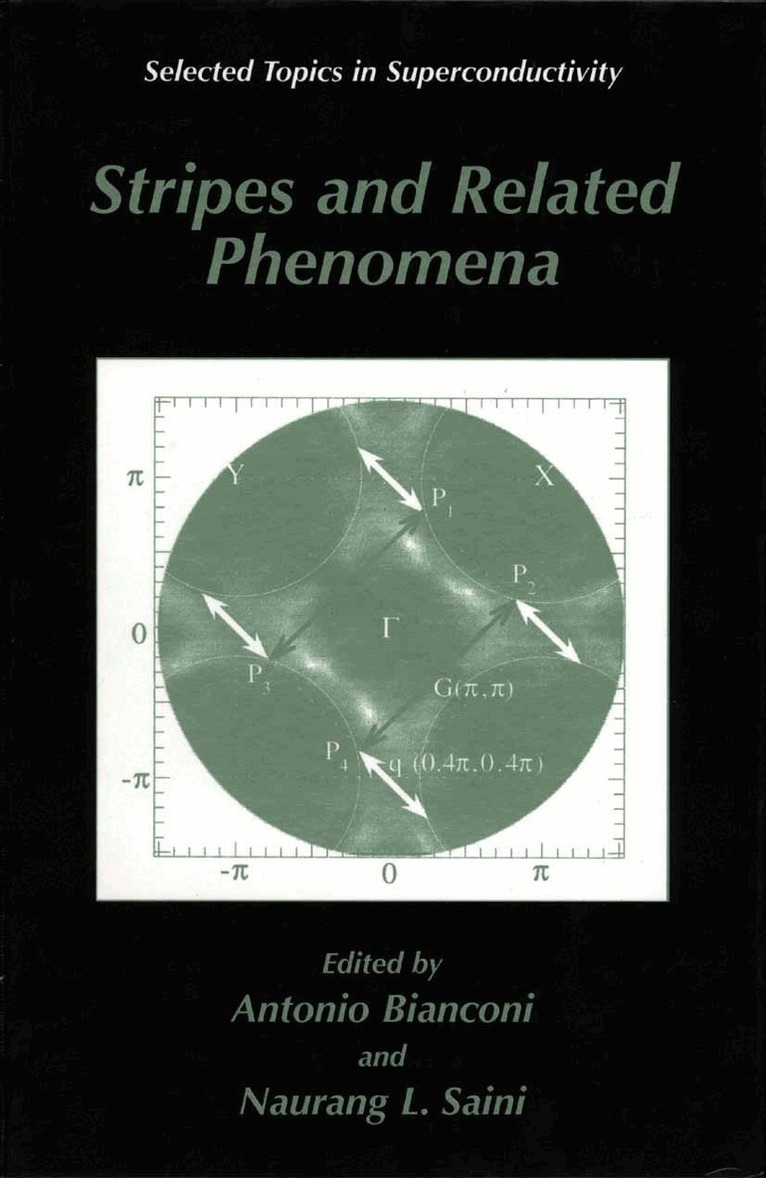
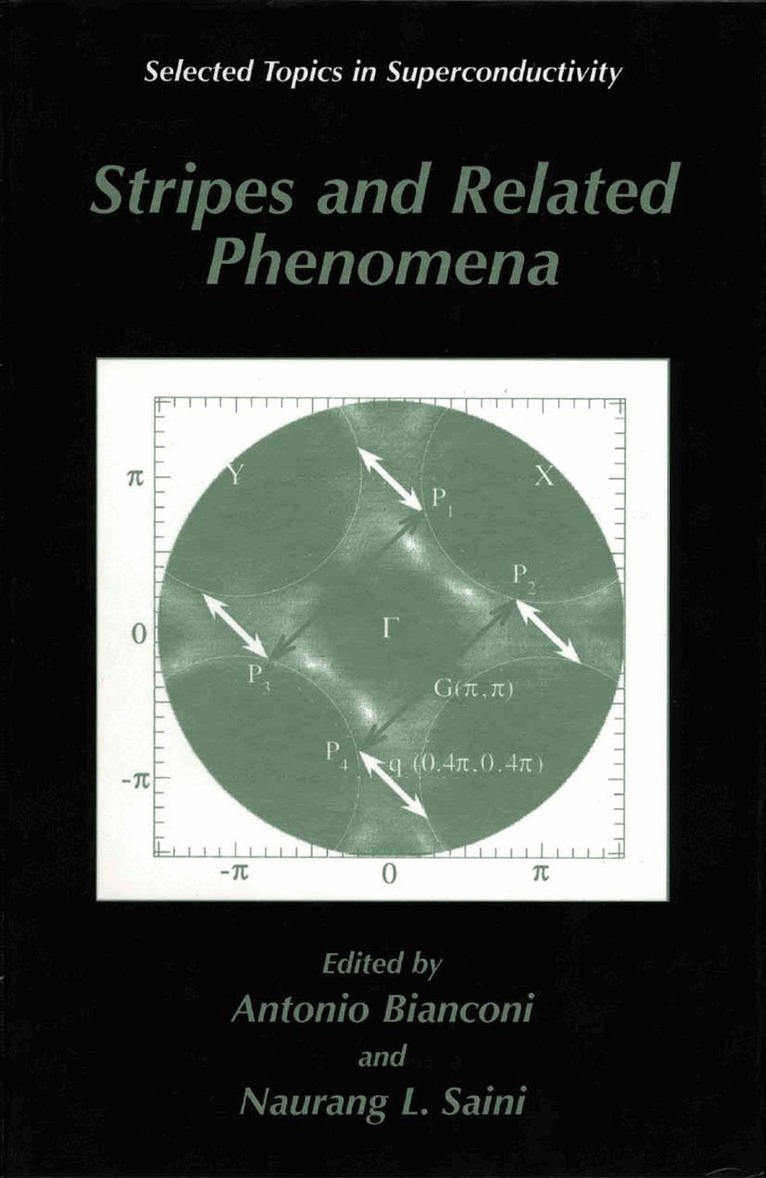
This book is a collection of papers in the field of stripes and high Tc superconductivity. The most relevant theoretical and experimental contributions from experts in the field of stripes, presented at the "Second International Conference on Stripes and High Tc Superconductivity", are selected for publication. The book includes contributions on other stripe phases observed in manganites, nikelates, spin ladders, and heterostructures. Since a large stream of research in a growing community is converging towards the stripe scenario, this book serves as an important reference in the field of striped phases and high Tc superconductivity. The problem of high Tc superconductors has been a central issue in solid-state physics since 1987. After the discovery of high Tc superconductivity (HTSC) in doped perovskites, it was realized that HTSC appears in an unknown complex electronic phase of condensed matter. In the early years, all theories of HTSC were focused on the physics of a homogeneous 2D metal with large electron--electron correlations or on a 2D polaron gas. Only after 1990 a novel paradigm started to emerge in which this 2D metallic phase is described as an inhomogeneous metal.This was the outcome of several experimental evidences of phase separation at low doping. Following the discovery by the Rome Group in 1992 that "the changes move freely mainly in one direction like the water running in the grooves in corrugated iron foil", a new scenario for understanding superconductivity in high Tc superconductors was opened. Since the charges move like rivers, the physics of these materials shifts towards the physics of novel mesoscopic heterostructures and complex electronic solids. Therefore, understanding the striped phases in the perovskites not only provides an opportunity to understand the anomalous metallic state of cuprate superconductors, but also suggests a way to design new materials of technological importance. The stripes are begetting a field of general scientific interest.
2 115 kr
Skickas inom 10-15 vardagar
The problem of superconductors has been a central issue in Solid State Physics since 1987. After the discovery of superconductivity (HTSC) in doped perovskites, it was realized that the HTSC appears in an unknown complex electronic phase of c- densed matter. In the early years, all theories of HTSC were focused on the physics of a homogeneous 2D metal with large electron–electron correlations or on a 2D polaron gas. Only after 1990, a novel paradigm started to grow where this 2D metallic phase is described as an inhomogeneous metal. This was the outcome of several experimental evidences of phase separation at low doping. Since 1992, a series of conferences on phase separation were organized to allow scientists to get together to discuss the phase separation and related issues. Following the discovery by the Rome group in 1992 that “the charges move freely mainly in one direction like the water running in the grooves in the corrugated iron foil,” a new scenario to understand superconductivity in the superconductors was open. Because the charges move like rivers, the physics of these materials shifts toward the physics of novel mesoscopic heterostructures and complex electronic solids. Therefore, understanding the striped phases in the perovskites not only provides an opportunity to understand the anomalous metallic state of cuprate superconductors, but also suggests a way to design new materials of technological importance. Indeed, the stripes are becoming a field of general scientific interest.