Navroz K. Dubash - Böcker
Visar alla böcker från författaren Navroz K. Dubash. Handla med fri frakt och snabb leverans.
4 produkter
4 produkter
495 kr
Skickas inom 5-8 vardagar
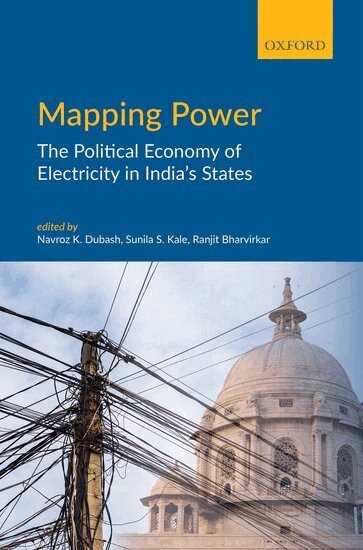
Despite several decades of reform, India's electricity sector remains marked by the twin problems of financial indebtedness and inability to provide universal, high quality electricity for all. Although political obstacles to reform are frequently invoked in electricity policy debates, Mapping Power provides the first thorough analysis of the political economy of electricity in Indian states. Through narratives of the electricity sectors in fifteen major states, this book argues that a historically-rooted political economy analysis provides the most useful means to understand the past and identify reforms for the future. The book begins with an analytic framework to understand how the political economy of power both shapes and is shaped by a given state's larger political economy. The book concludes with a synthetic account of the political economy of electricity that is animated by insights from the state-level empirical materials. The volume shows that attempts to depoliticize the sector are misplaced. Instead, successful reform efforts should aim at a positive dynamic between electricity reform and electoral success.
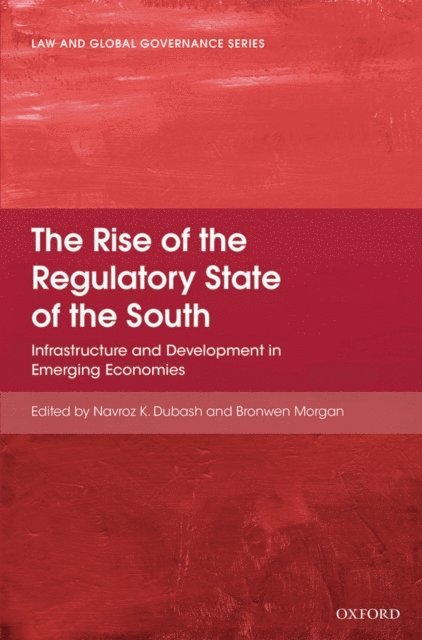
The Rise of the Regulatory State of the South
Infrastructure and Development in Emerging Economies
Inbunden, Engelska, 2013
1 253 kr
Skickas inom 7-10 vardagar
The 1990s and 2000s have witnessed a spurt of energetic institution-building in the developing world, as regulatory agencies emerge to take over the role of the executive in key sectors. This rise of the regulatory state of the south is barely noticed both by scholars of regulation and of development, let alone adequately documented and theorized. Yet the consequences for the role of the state and modalities of governance in the south are substantial, as politically charged decisions are handed over to formally technocratic agencies, creating new arenas and forms of contestation over the gains and losses from development decisions. Moreover, this shift in the developing world comes at a time when the regulatory state in the north is under considerable stress from the global financial crisis. Understanding the regulatory state of the south, and particularly forms of accommodation to political pressures, could stimulate a broader conversation around the role of the regulatory state in both north and south.This volume seeks to provoke such a discussion by empirically exploring the emergence of regulatory agencies of a range of developing countries across Asia, Africa, and Latin America. The cases focus on telecommunications, electricity, and water: sectors that have often been at the frontlines of this transition. The central question for the volume is: Are there distinctive features of the regulatory state of the South, shaped by the political-economic context of the global south in the last two decades? To assist in exploring this question, the volume includes brief commentaries on the case studies from a range of disciplines: development economics, law and regulation, development sociology, and comparative politics. Collectively, the volume seeks to shape the contours of a productive inter-disciplinary conversation on the emergence of a significant empirical phenomenon - the rise of regulatory agencies in the developing world - with implications both for the study of regulation and the study of development.
898 kr
Skickas inom 10-15 vardagar
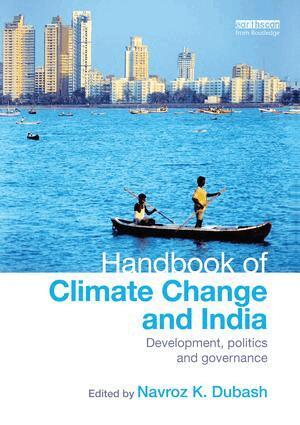
How do policymakers, businesses and civil society in India approach the challenge of climate change? What do they believe global climate negotiations will achieve and how? And how are Indian political and policy debates internalizing climate change? Relatively little is known globally about internal climate debate in emerging industrializing countries, but what happens in rapidly growing economies like India’s will increasingly shape global climate change outcomes. This Handbook brings together prominent voices from India, including policymakers, politicians, business leaders, civil society activists and academics, to build a composite picture of contemporary Indian climate politics and policy. One section lays out the range of positions and substantive issues that shape Indian views on global climate negotiations. Another delves into national politics around climate change. A third looks at how climate change is beginning to be internalized in sectoral policy discussions over energy, urbanization, water, and forests. The volume is introduced by an essay that lays out the critical issues shaping climate politics in India, and its implications for global politics.The papers show that, within India, climate change is approached primarily as a developmental challenge and is marked by efforts to explore how multiple objectives of development, equity and climate mitigation can simultaneously be met. In addition, Indian perspectives on climate negotiations are in a state of flux. Considerations of equity across countries and a focus on the primary responsibility for action of wealthy countries continue to be central, but there are growing voices of concern on the impacts of climate change on India. How domestic debates over climate governance are resolved in the coming years, and the evolution of India’s global negotiation stance are likely to be important inputs toward creating shared understandings across countries in the years ahead, and identify ways forward. This volume on the Indian experience with climate change and development is a valuable contribution to both purposes.
3 315 kr
Skickas inom 10-15 vardagar
How do policymakers, businesses and civil society in India approach the challenge of climate change? What do they believe global climate negotiations will achieve and how? And how are Indian political and policy debates internalizing climate change? Relatively little is known globally about internal climate debate in emerging industrializing countries, but what happens in rapidly growing economies like India’s will increasingly shape global climate change outcomes. This Handbook brings together prominent voices from India, including policymakers, politicians, business leaders, civil society activists and academics, to build a composite picture of contemporary Indian climate politics and policy. One section lays out the range of positions and substantive issues that shape Indian views on global climate negotiations. Another delves into national politics around climate change. A third looks at how climate change is beginning to be internalized in sectoral policy discussions over energy, urbanization, water, and forests. The volume is introduced by an essay that lays out the critical issues shaping climate politics in India, and its implications for global politics.The papers show that, within India, climate change is approached primarily as a developmental challenge and is marked by efforts to explore how multiple objectives of development, equity and climate mitigation can simultaneously be met. In addition, Indian perspectives on climate negotiations are in a state of flux. Considerations of equity across countries and a focus on the primary responsibility for action of wealthy countries continue to be central, but there are growing voices of concern on the impacts of climate change on India. How domestic debates over climate governance are resolved in the coming years, and the evolution of India’s global negotiation stance are likely to be important inputs toward creating shared understandings across countries in the years ahead, and identify ways forward. This volume on the Indian experience with climate change and development is a valuable contribution to both purposes.