Nazila Ghanea-Hercock – författare
Visar alla böcker från författaren Nazila Ghanea-Hercock. Handla med fri frakt och snabb leverans.
2 produkter
2 produkter
Häftad, Engelska, 2003
539 kr
Skickas inom 10-15 vardagar
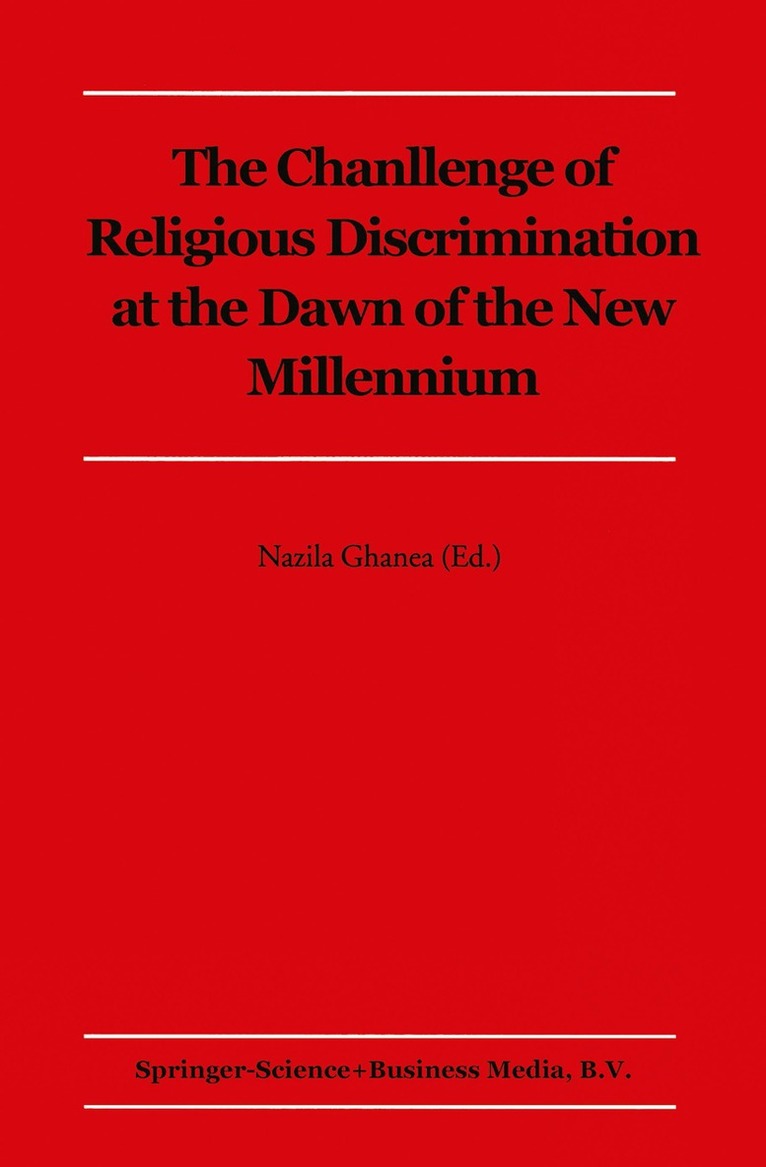
The themes and issues explored in this book - religion, human rights, politics and society could not be more relevant to the post 11 September 2001 world. They lie at the heart of global political debate today.The collection explores these issues after the passing of just over two decades from the adoption of the United Nations Declaration on the Elimination of all Forms of Intolerance and Discrimination based on Religion or Belief. That declaration set out minimum international standards for the elimination of such discrimination. Sadly the challenge of intolerance on the basis of religion or belief continues to plague us, and tackling it seems to have become increasingly entrenched.The complexity of this phenomenon requires expertise from different quarters. This collection draws from diplomatic, activist and theological quarters and benefits from the analysis of scholars of law, history, religious studies and sociology.The ten chapters of this collection examine the relationship between human rights, law and religion; offer a typology for the study of religious persecution; problematise the consequences flowing from religious establishment in religiously plural society; analyse the implications of the directions being taken by the jurisprudence of the European Court of Human Rights and the protections offered by the European Commission council Directive 2000/43/EC outlawing workplace discrimination; study the 1981 Declaration and its promotion through the work of the UN Special Rapporteur on Freedom of Religion or Belief; and explore the intricacies of this freedom in detail from within the context of the United Kingdom and The Netherlands.
Del 5 - Studies in Religion, Secular Beliefs and Human Rights
Does God Believe in Human Rights?
Essays on Religion and Human Rights
Inbunden, Engelska, 2007
2 341 kr
Skickas inom 3-6 vardagar
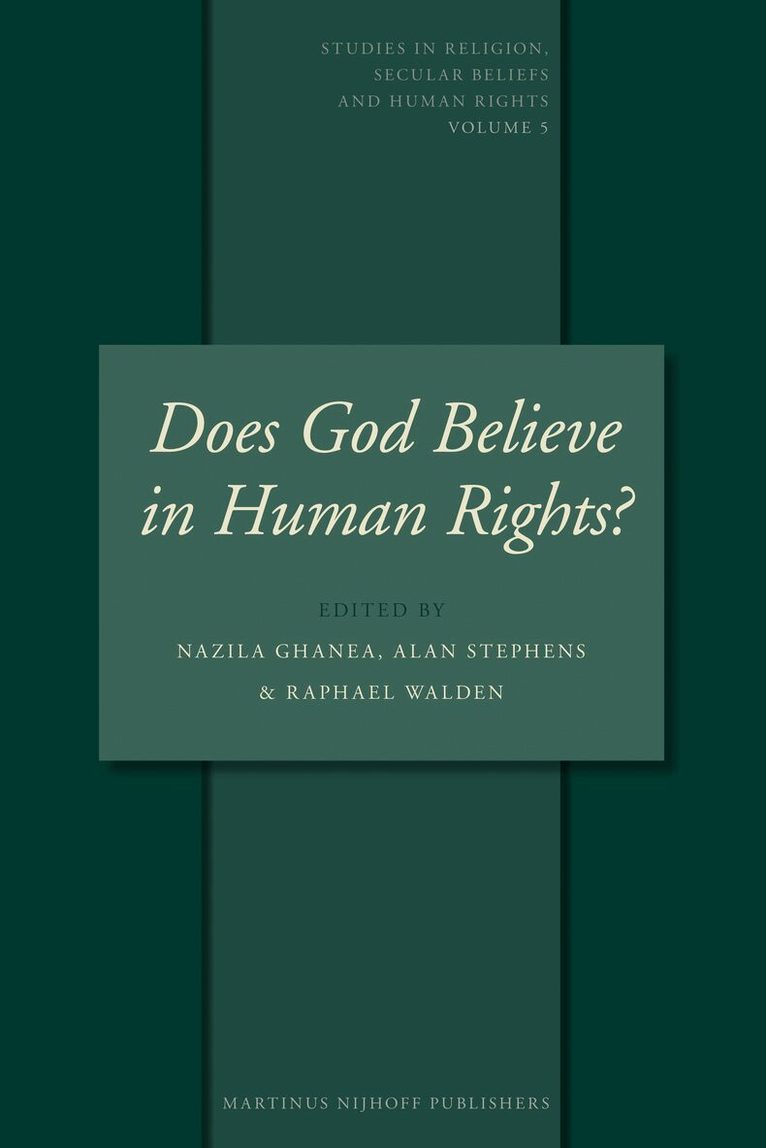
Where can religions find sources of legitimacy for human rights? How do, and how should, religious leaders and communities respond to human rights as defined in modern International Law? When religious precepts contradict human rights standards - for example in relation to freedom of expression or in relation to punishments - which should trump the other, and why? Can human rights and religious teachings be interpreted in a manner which brings reconciliation closer? Do the modern concept and system of human rights undermine the very vision of society that religions aim to impart? Is a reference to God in the discussion of human rights misplaced? Do human fallibilities with respect to interpretation, judicial reasoning and the understanding of human oneness and dignity provide the key to the undeniable and sometimes devastating conflicts that have arisen between, and within, religions and the human rights movement?In this volume, academics and lawyers tackle these most difficult questions head-on, with candour and creativity, and the collection is rendered unique by the further contributions of a remarkable range of other professionals, including senior religious leaders and representatives, journalists, diplomats and civil servants, both national and international. Most notably, the contributors do not shy away from the boldest question of all - summed up in the book's title.The thoroughly edited and revised papers which make up this collection were originally prepared for a ground-breaking conference organised by the Clemens Nathan Research Centre, the University of London Institute of Commonwealth Studies and Martinus Nijhoff/Brill.