
Nazim S. Gruda – författare
Visar alla böcker från författaren . Handla med fri frakt och snabb leverans.
3 produkter
3 produkter

Häftad, Engelska, 2026
895 kr
Kommande
The Syntax of Research is a teaching-oriented textbook that shows how scientific writing can move beyond a technical obligation to become a disciplined and thoughtful craft. Drawing on experience as an author, peer reviewer, handling editor, and editor-in-chief, the book explains how clarity, brevity, and structure shape trust between authors, reviewers, and editors. It offers a clear and accessible framework for turning research results into credible, publishable scientific papers.

Inbunden, Engelska, 2026
1 856 kr
Kommande
The Syntax of Research is a teaching-oriented textbook that shows how scientific writing can move beyond a technical obligation to become a disciplined and thoughtful craft. Drawing on experience as an author, peer reviewer, handling editor, and editor-in-chief, the book explains how clarity, brevity, and structure shape trust between authors, reviewers, and editors. It offers a clear and accessible framework for turning research results into credible, publishable scientific papers.
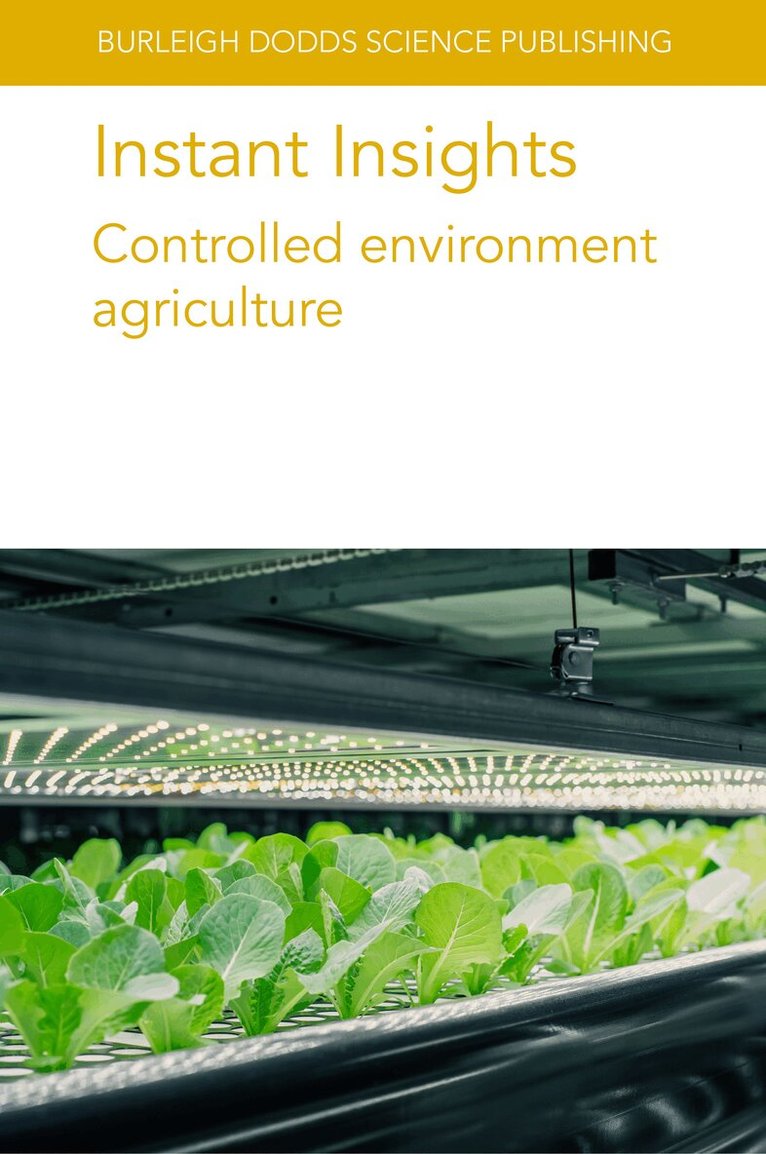
Del 116 - Burleigh Dodds Science: Instant Insights
Instant Insights: Controlled Environment Agriculture
Häftad, Engelska, 2025
689 kr
Skickas inom 5-8 vardagar
This book features five peer-reviewed reviews on controlled environment agriculture.The first chapter summarises rapid improvements in the technology used for plant factories with artificial lighting (PFALs), including developments in automation, lighting, climate control, sensors and algorithms.The second chapter briefly discusses the sustainability of indoor vertical farms (IVF) and details best practices for conducting an environmental sustainability assessment of IVFs using the life cycle assessment methodology.The third chapter reviews the advent of soilless culture systems (SCSs) and their role in supporting the transition to a more sustainable agriculture. The chapter considers the range and variety of horticultural crops which can be grown in SCSs.The fourth chapter details recent advances in screenhouse design for protected cultivation and describes the common types of structures and materials used by growers. The chapter also addresses whether increasing water-use efficiency in screenhouses is possible.The final chapter provides an overview of the ornamentals industry and the technological advances improving its efficiency and sustainability, such as the implementation of light-emitting diode (LED) lighting systems to manipulate plant growth and development.