Ne-Zheng Sun – författare
Visar alla böcker från författaren Ne-Zheng Sun. Handla med fri frakt och snabb leverans.
8 produkter
8 produkter
Del 6 - Theory and Applications of Transport in Porous Media
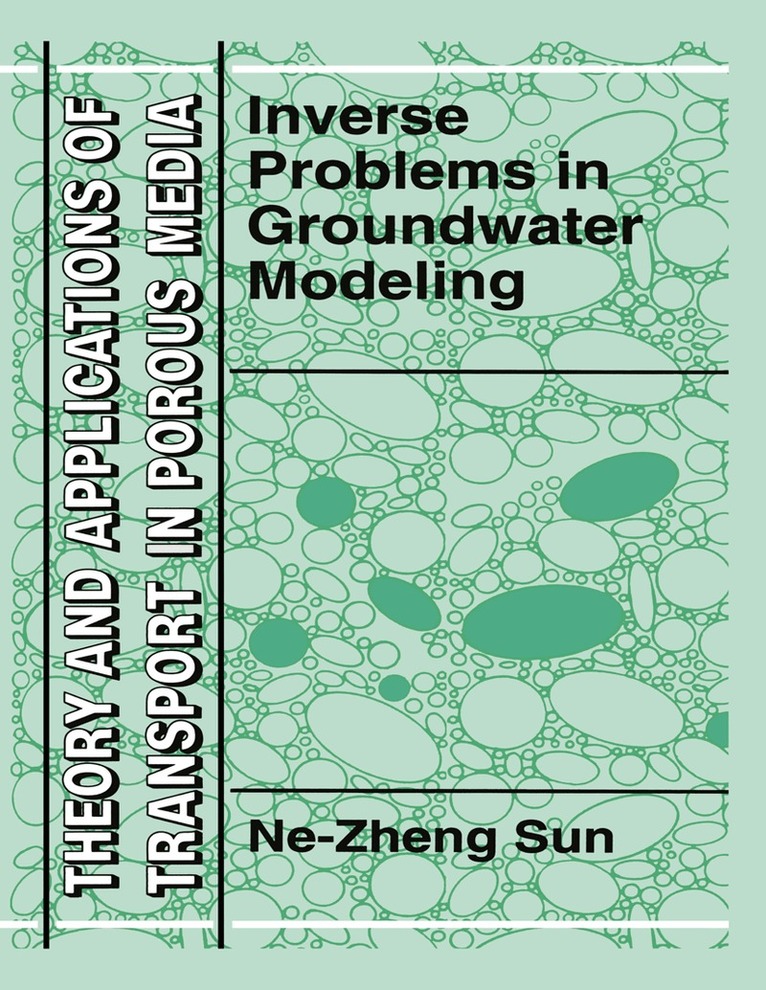
Inverse Problems in Groundwater Modeling
Inbunden, Engelska, 1994
2 389 kr
Skickas inom 10-15 vardagar
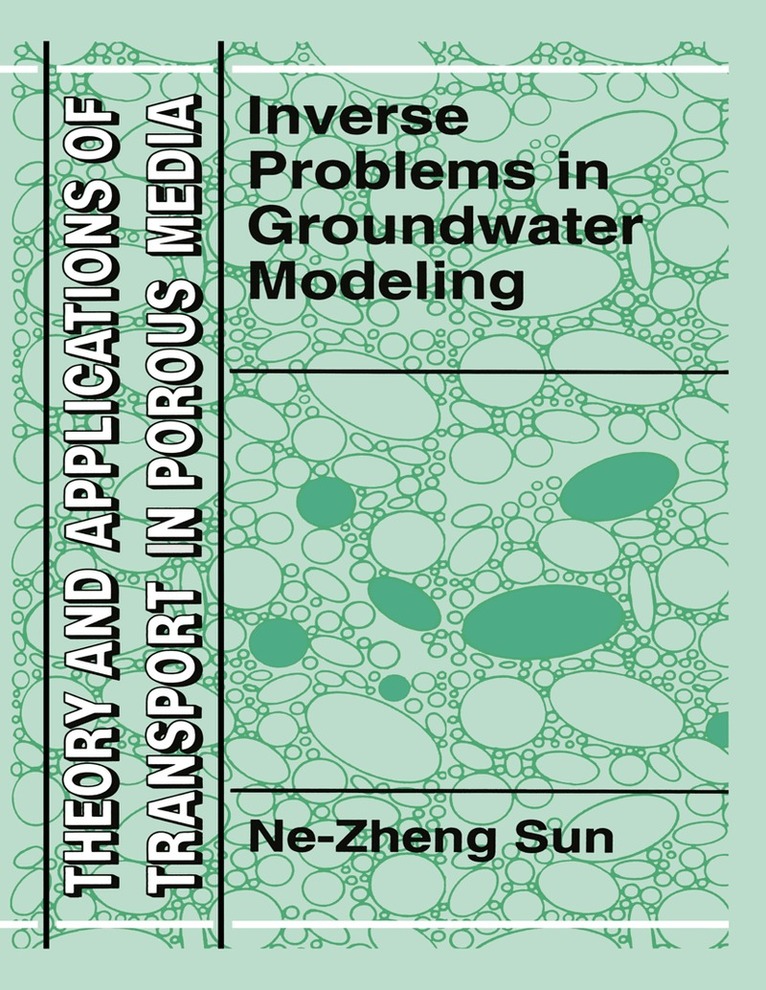
... A diskette with the updated programme of Appendix C and examples is available through the author at a small fee. email: nezheng@ucla.edu fax: 1--310--825--5435 ... This book systematically discusses basic concepts, theory, solution methods and applications of inverse problems in groundwater modeling. It is the first book devoted to this subject. The inverse problem is defined and solved in both deterministic and statistic frameworks. Various direct and indirect methods are discussed and compared. As a useful tool, the adjoint state method and its applications are given in detail. For a stochastic field, the maximum likelihood estimation and co-kriging techniques are used to estimate unknown parameters. The ill-posed problem of inverse solution is highlighted through the whole book. The importance of data collection strategy is specially emphasized. Besides the classical design criteria, the relationships between decision making, prediction, parameter identification and experimental design are considered from the point of view of extended identifiabilities. The problem of model structure identification is also considered. This book can be used as a textbook for graduate students majoring in hydrogeology or related subjects. It is also a reference book for hydrogeologists, petroleum engineers, environmental engineers, mining engineers and applied mathematicians.
E-bok
PDF, Engelska, 2014687 kr
Läs direkt efter köp
Groundwater is one of the most important resources in the world. In many areas, water supplies for industrial, domestic, and agricultural uses are de pendent on groundwater. As an "open" system, groundwater may exchange mass and energy with its neighboring systems (soil, air, and surface water) through adsorption, ion-exchange, infiltration, evaporation, inflow, outflow, and other exchange forms. Consequently, both the quantity and quality of groundwater may vary with environmental changes and human activities. Due to population growth, and industrial and agricultural development, more and more groundwater is extracted, especially in arid areas. If the groundwater management problem is not seriously considered, over extraction may lead to groundwater mining, salt water intrusion, and land subsidence. In fact, the quality of groundwater is gradually deteriorating throughout the world. The problem of groundwater pollution has appeared, not only in developed countries, but also in developing countries. Ground water pollution is a serious environmental problem that may damage human health, destroy the ecosystem, and cause water shortage.
Häftad, Engelska, 2012
548 kr
Skickas inom 10-15 vardagar
Groundwater is one of the most important resources in the world. In many areas, water supplies for industrial, domestic, and agricultural uses are de pendent on groundwater. As an "open" system, groundwater may exchange mass and energy with its neighboring systems (soil, air, and surface water) through adsorption, ion-exchange, infiltration, evaporation, inflow, outflow, and other exchange forms. Consequently, both the quantity and quality of groundwater may vary with environmental changes and human activities. Due to population growth, and industrial and agricultural development, more and more groundwater is extracted, especially in arid areas. If the groundwater management problem is not seriously considered, over extraction may lead to groundwater mining, salt water intrusion, and land subsidence. In fact, the quality of groundwater is gradually deteriorating throughout the world. The problem of groundwater pollution has appeared, not only in developed countries, but also in developing countries. Ground water pollution is a serious environmental problem that may damage human health, destroy the ecosystem, and cause water shortage.
Inbunden, Engelska, 2015
1 631 kr
Skickas inom 10-15 vardagar
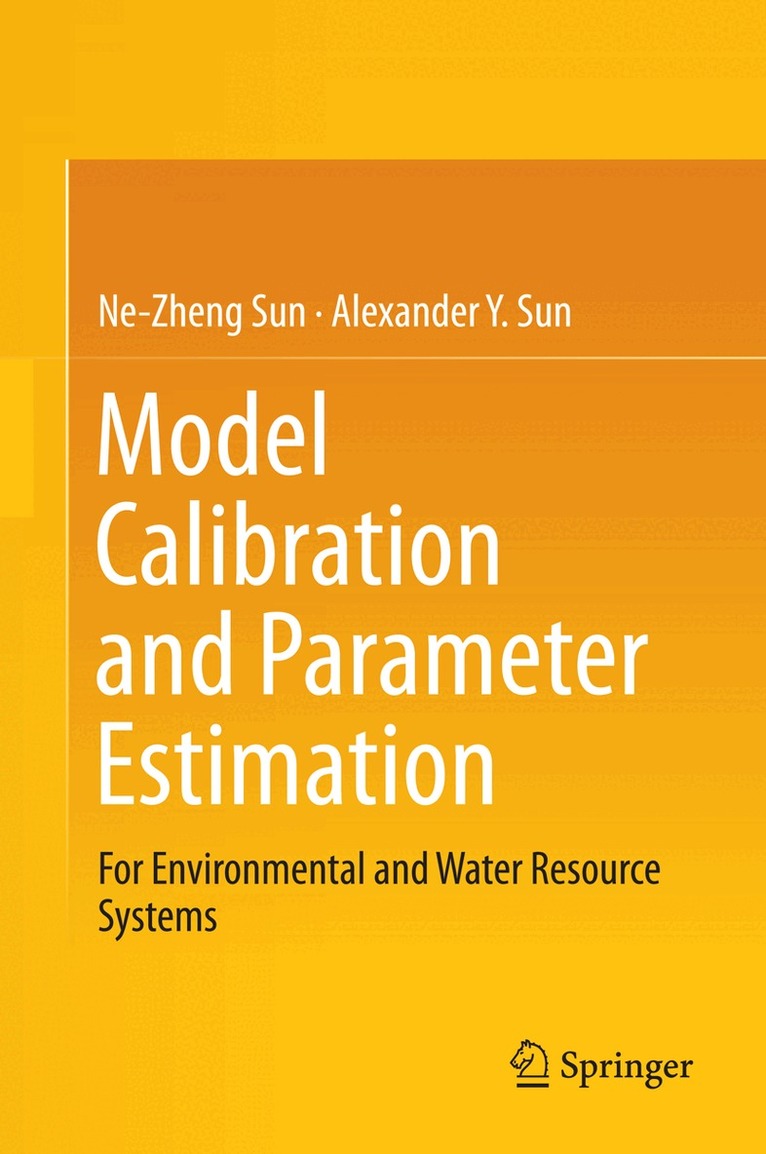
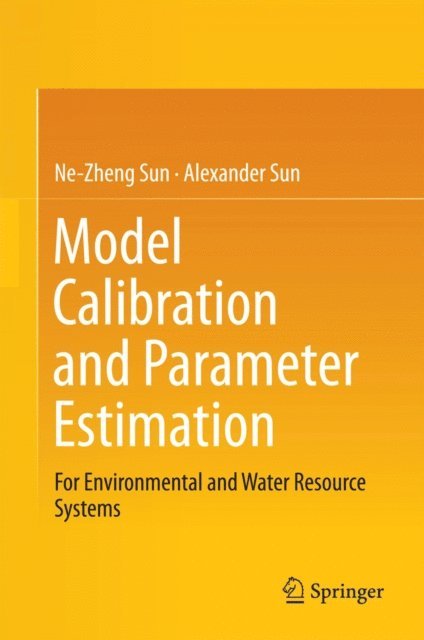
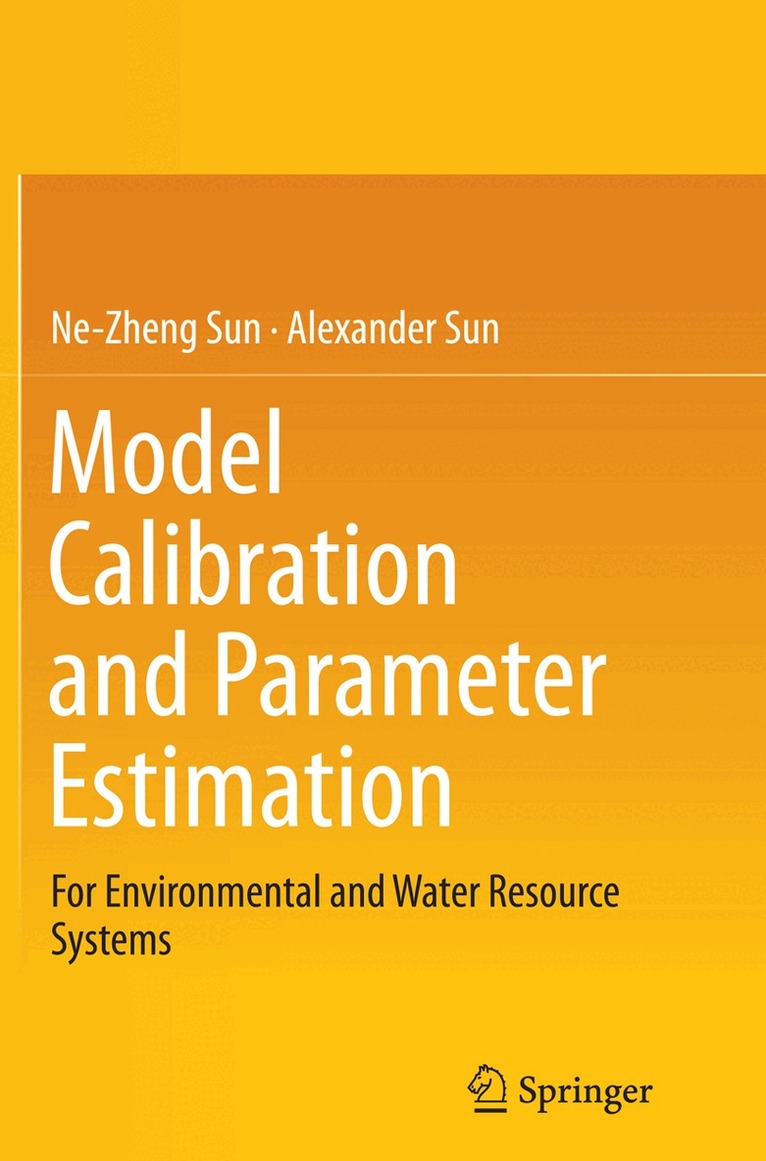
This three-part book provides a comprehensive and systematic introduction to these challenging topics such as model calibration, parameter estimation, reliability assessment, and data collection design. Part 1 covers the classical inverse problem for parameter estimation in both deterministic and statistical frameworks, Part 2 is dedicated to system identification, hyperparameter estimation, and model dimension reduction, and Part 3 considers how to collect data and construct reliable models for prediction and decision-making. For the first time, topics such as multiscale inversion, stochastic field parameterization, level set method, machine learning, global sensitivity analysis, data assimilation, model uncertainty quantification, robust design, and goal-oriented modeling, are systematically described and summarized in a single book from the perspective of model inversion, and elucidated with numerical examples from environmental and water resources modeling. Readers of this book will not only learn basic concepts and methods for simple parameter estimation, but also get familiar with advanced methods for modeling complex systems. Algorithms for mathematical tools used in this book, such as numerical optimization, automatic differentiation, adaptive parameterization, hierarchical Bayesian, metamodeling, Markov chain Monte Carlo, are covered in details. This book can be used as a reference for graduate and upper level undergraduate students majoring in environmental engineering, hydrology, and geosciences. It also serves as an essential reference book for professionals such as petroleum engineers, mining engineers, chemists, mechanical engineers, biologists, biology and medical engineering, applied mathematicians, and others who perform mathematical modeling.
E-bok
PDF, Engelska, 20151 977 kr
Läs direkt efter köp
This three-part book provides a comprehensive and systematic introduction to these challenging topics such as model calibration, parameter estimation, reliability assessment, and data collection design. Part 1 covers the classical inverse problem for parameter estimation in both deterministic and statistical frameworks, Part 2 is dedicated to system identification, hyperparameter estimation, and model dimension reduction, and Part 3 considers how to collect data and construct reliable models for prediction and decision-making. For the first time, topics such as multiscale inversion, stochastic field parameterization, level set method, machine learning, global sensitivity analysis, data assimilation, model uncertainty quantification, robust design, and goal-oriented modeling, are systematically described and summarized in a single book from the perspective of model inversion, and elucidated with numerical examples from environmental and water resources modeling. Readers of this book will not only learn basic concepts and methods for simple parameter estimation, but also get familiar with advanced methods for modeling complex systems. Algorithms for mathematical tools used in this book, such as numerical optimization, automatic differentiation, adaptive parameterization, hierarchical Bayesian, metamodeling, Markov chain Monte Carlo, are covered in details. This book can be used as a reference for graduate and upper level undergraduate students majoring in environmental engineering, hydrology, and geosciences. It also serves as an essential reference book for professionals such as petroleum engineers, mining engineers, chemists, mechanical engineers, biologists, biology and medical engineering, applied mathematicians, and others who perform mathematical modeling.
Häftad, Engelska, 2016
1 631 kr
Skickas inom 10-15 vardagar
This three-part book provides a comprehensive and systematic introduction to these challenging topics such as model calibration, parameter estimation, reliability assessment, and data collection design. Part 1 covers the classical inverse problem for parameter estimation in both deterministic and statistical frameworks, Part 2 is dedicated to system identification, hyperparameter estimation, and model dimension reduction, and Part 3 considers how to collect data and construct reliable models for prediction and decision-making. For the first time, topics such as multiscale inversion, stochastic field parameterization, level set method, machine learning, global sensitivity analysis, data assimilation, model uncertainty quantification, robust design, and goal-oriented modeling, are systematically described and summarized in a single book from the perspective of model inversion, and elucidated with numerical examples from environmental and water resources modeling. Readers of this book will not only learn basic concepts and methods for simple parameter estimation, but also get familiar with advanced methods for modeling complex systems. Algorithms for mathematical tools used in this book, such as numerical optimization, automatic differentiation, adaptive parameterization, hierarchical Bayesian, metamodeling, Markov chain Monte Carlo, are covered in details. This book can be used as a reference for graduate and upper level undergraduate students majoring in environmental engineering, hydrology, and geosciences. It also serves as an essential reference book for professionals such as petroleum engineers, mining engineers, chemists, mechanical engineers, biologists, biology and medical engineering, applied mathematicians, and others who perform mathematical modeling.
Del 6 - Theory and Applications of Transport in Porous Media
Inverse Problems in Groundwater Modeling
Häftad, Engelska, 2010
2 389 kr
Skickas inom 10-15 vardagar
... A diskette with the updated programme of Appendix C and examples is available through the author at a small fee. email: nezheng@ucla.edu fax: 1--310--825--5435 ... This book systematically discusses basic concepts, theory, solution methods and applications of inverse problems in groundwater modeling. It is the first book devoted to this subject. The inverse problem is defined and solved in both deterministic and statistic frameworks. Various direct and indirect methods are discussed and compared. As a useful tool, the adjoint state method and its applications are given in detail. For a stochastic field, the maximum likelihood estimation and co-kriging techniques are used to estimate unknown parameters. The ill-posed problem of inverse solution is highlighted through the whole book. The importance of data collection strategy is specially emphasized. Besides the classical design criteria, the relationships between decision making, prediction, parameter identification and experimental design are considered from the point of view of extended identifiabilities. The problem of model structure identification is also considered. This book can be used as a textbook for graduate students majoring in hydrogeology or related subjects. It is also a reference book for hydrogeologists, petroleum engineers, environmental engineers, mining engineers and applied mathematicians.
E-bok
PDF, Engelska, 20133 046 kr
Läs direkt efter köp
... A diskette with the updated programme of Appendix C and examples is available through the author at a small fee. email: nezheng@ucla.edu fax: 1--310--825--5435 ... This book systematically discusses basic concepts, theory, solution methods and applications of inverse problems in groundwater modeling. It is the first book devoted to this subject. The inverse problem is defined and solved in both deterministic and statistic frameworks. Various direct and indirect methods are discussed and compared. As a useful tool, the adjoint state method and its applications are given in detail. For a stochastic field, the maximum likelihood estimation and co-kriging techniques are used to estimate unknown parameters. The ill-posed problem of inverse solution is highlighted through the whole book. The importance of data collection strategy is specially emphasized. Besides the classical design criteria, the relationships between decision making, prediction, parameter identification and experimental design are considered from the point of view of extended identifiabilities. The problem of model structure identification is also considered. This book can be used as a textbook for graduate students majoring in hydrogeology or related subjects. It is also a reference book for hydrogeologists, petroleum engineers, environmental engineers, mining engineers and applied mathematicians.