
383 kr
Skickas inom 5-8 vardagar
383 kr
Skickas inom 5-8 vardagar
468 kr
Läs direkt efter köp
Organizations can make data science a repeatable, predictable tool, which business professionals use to get more value from their data
Enterprise data and AI projects are often scattershot, underbaked, siloed, and not adaptable to predictable business changes. As a result, the vast majority fail. These expensive quagmires can be avoided, and this book explains precisely how.
Data science is emerging as a hands-on tool for not just data scientists, but business professionals as well. Managers, directors, IT leaders, and analysts must expand their use of data science capabilities for the organization to stay competitive. Smarter Data Science helps them achieve their enterprise-grade data projects and AI goals. It serves as a guide to building a robust and comprehensive information architecture program that enables sustainable and scalable AI deployments.
When an organization manages its data effectively, its data science program becomes a fully scalable function that’s both prescriptive and repeatable. With an understanding of data science principles, practitioners are also empowered to lead their organizations in establishing and deploying viable AI. They employ the tools of machine learning, deep learning, and AI to extract greater value from data for the benefit of the enterprise.
By following a ladder framework that promotes prescriptive capabilities, organizations can make data science accessible to a range of team members, democratizing data science throughout the organization. Companies that collect, organize, and analyze data can move forward to additional data science achievements:
Improving time-to-value with infused AI models for common use cases Optimizing knowledge work and business processes Utilizing AI-based business intelligence and data visualization Establishing a data topology to support general or highly specialized needs Successfully completing AI projects in a predictable manner Coordinating the use of AI from any compute node. From inner edges to outer edges: cloud, fog, and mist computingWhen they climb the ladder presented in this book, businesspeople and data scientists alike will be able to improve and foster repeatable capabilities. They will have the knowledge to maximize their AI and data assets for the benefit of their organizations.
468 kr
Läs direkt efter köp
Organizations can make data science a repeatable, predictable tool, which business professionals use to get more value from their data
Enterprise data and AI projects are often scattershot, underbaked, siloed, and not adaptable to predictable business changes. As a result, the vast majority fail. These expensive quagmires can be avoided, and this book explains precisely how.
Data science is emerging as a hands-on tool for not just data scientists, but business professionals as well. Managers, directors, IT leaders, and analysts must expand their use of data science capabilities for the organization to stay competitive. Smarter Data Science helps them achieve their enterprise-grade data projects and AI goals. It serves as a guide to building a robust and comprehensive information architecture program that enables sustainable and scalable AI deployments.
When an organization manages its data effectively, its data science program becomes a fully scalable function that’s both prescriptive and repeatable. With an understanding of data science principles, practitioners are also empowered to lead their organizations in establishing and deploying viable AI. They employ the tools of machine learning, deep learning, and AI to extract greater value from data for the benefit of the enterprise.
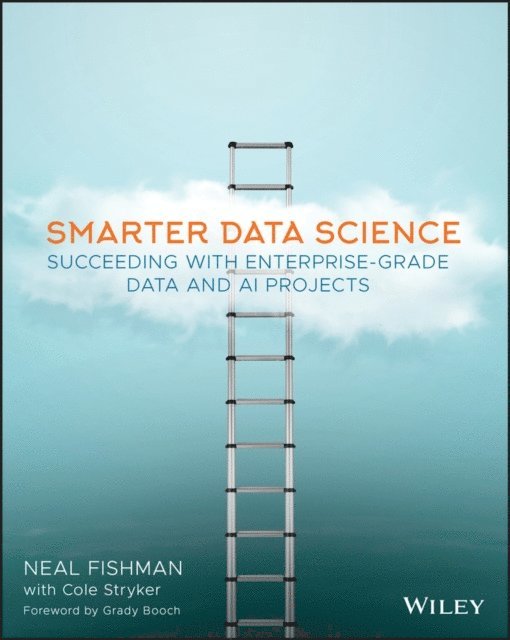
By following a ladder framework that promotes prescriptive capabilities, organizations can make data science accessible to a range of team members, democratizing data science throughout the organization. Companies that collect, organize, and analyze data can move forward to additional data science achievements:
Improving time-to-value with infused AI models for common use cases Optimizing knowledge work and business processes Utilizing AI-based business intelligence and data visualization Establishing a data topology to support general or highly specialized needs Successfully completing AI projects in a predictable manner Coordinating the use of AI from any compute node. From inner edges to outer edges: cloud, fog, and mist computingWhen they climb the ladder presented in this book, businesspeople and data scientists alike will be able to improve and foster repeatable capabilities. They will have the knowledge to maximize their AI and data assets for the benefit of their organizations.
570 kr
Skickas
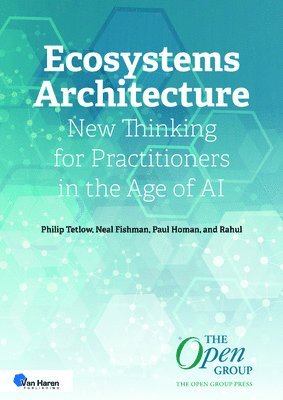
'Today, modern business is adrift in a sea of connectivity and potential. Where once an organizations IT needs could be met from within its four walls, we now see many mission-critical systems reaching out beyond an enterprises traditional boundaries. This is pushing solutions design well beyond the comfort zone of Enterprise Architecture and out into a world of hyper-enterprise systems.
This is a world of complexity and scale, where the changing status quo demands that organizations keep up or die. To survive, their IT systems must also evolve as the context of their environment(s) ebbs and flows. The result is a dynamic, interconnected web of critical business advantage, balanced against uncertainty and risk, and infused with AI. This is the world of Ecosystems Architecture.
This book will introduce you to the challenges of designing hyper-enterprise IT systems and the tools you will need as the era of Ecosystems Architecture dawns. It explains the proximity of new thinking to long-held architectural tenets and outlines how and why thinking has moved on. It also reviews existing frameworks and explains how and why they fit into the broader landscape of architectural thinking.
About The Open Group Press
The Open Group Press is an imprint of The Open Group for advancing knowledge of information technology by publishing works from individual authors within The Open Group membership that are relevant to advancing The Open Group mission of Boundaryless Information Flow. The key focus of The Open Group Press is to publish high-quality monographs, as well as introductory technology books intended for the general public, and act as a complement to The Open Group Standards, Guides, and White Papers. The views and opinions expressed in this book are those of the authors, and do not necessarily reflect the consensus position of The Open Group members or staff.
383 kr
Skickas inom 5-8 vardagar
468 kr
Läs direkt efter köp
Organizations can make data science a repeatable, predictable tool, which business professionals use to get more value from their data
Enterprise data and AI projects are often scattershot, underbaked, siloed, and not adaptable to predictable business changes. As a result, the vast majority fail. These expensive quagmires can be avoided, and this book explains precisely how.
Data science is emerging as a hands-on tool for not just data scientists, but business professionals as well. Managers, directors, IT leaders, and analysts must expand their use of data science capabilities for the organization to stay competitive. Smarter Data Science helps them achieve their enterprise-grade data projects and AI goals. It serves as a guide to building a robust and comprehensive information architecture program that enables sustainable and scalable AI deployments.
When an organization manages its data effectively, its data science program becomes a fully scalable function that’s both prescriptive and repeatable. With an understanding of data science principles, practitioners are also empowered to lead their organizations in establishing and deploying viable AI. They employ the tools of machine learning, deep learning, and AI to extract greater value from data for the benefit of the enterprise.
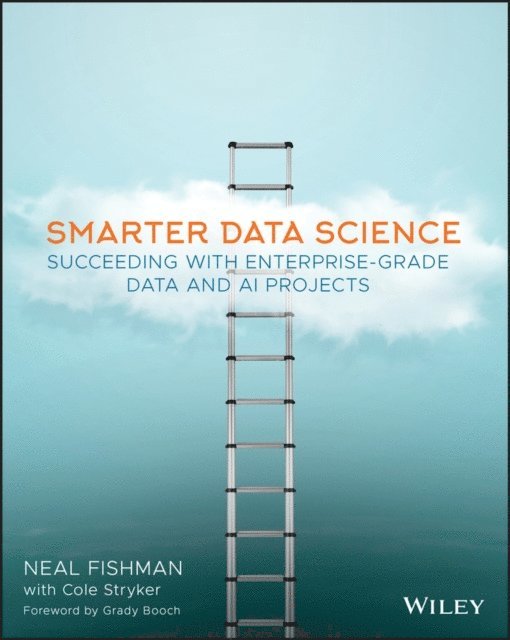
By following a ladder framework that promotes prescriptive capabilities, organizations can make data science accessible to a range of team members, democratizing data science throughout the organization. Companies that collect, organize, and analyze data can move forward to additional data science achievements:
Improving time-to-value with infused AI models for common use cases Optimizing knowledge work and business processes Utilizing AI-based business intelligence and data visualization Establishing a data topology to support general or highly specialized needs Successfully completing AI projects in a predictable manner Coordinating the use of AI from any compute node. From inner edges to outer edges: cloud, fog, and mist computingWhen they climb the ladder presented in this book, businesspeople and data scientists alike will be able to improve and foster repeatable capabilities. They will have the knowledge to maximize their AI and data assets for the benefit of their organizations.
468 kr
Läs direkt efter köp
Organizations can make data science a repeatable, predictable tool, which business professionals use to get more value from their data
Enterprise data and AI projects are often scattershot, underbaked, siloed, and not adaptable to predictable business changes. As a result, the vast majority fail. These expensive quagmires can be avoided, and this book explains precisely how.
Data science is emerging as a hands-on tool for not just data scientists, but business professionals as well. Managers, directors, IT leaders, and analysts must expand their use of data science capabilities for the organization to stay competitive. Smarter Data Science helps them achieve their enterprise-grade data projects and AI goals. It serves as a guide to building a robust and comprehensive information architecture program that enables sustainable and scalable AI deployments.
When an organization manages its data effectively, its data science program becomes a fully scalable function that’s both prescriptive and repeatable. With an understanding of data science principles, practitioners are also empowered to lead their organizations in establishing and deploying viable AI. They employ the tools of machine learning, deep learning, and AI to extract greater value from data for the benefit of the enterprise.
By following a ladder framework that promotes prescriptive capabilities, organizations can make data science accessible to a range of team members, democratizing data science throughout the organization. Companies that collect, organize, and analyze data can move forward to additional data science achievements:
Improving time-to-value with infused AI models for common use cases Optimizing knowledge work and business processes Utilizing AI-based business intelligence and data visualization Establishing a data topology to support general or highly specialized needs Successfully completing AI projects in a predictable manner Coordinating the use of AI from any compute node. From inner edges to outer edges: cloud, fog, and mist computingWhen they climb the ladder presented in this book, businesspeople and data scientists alike will be able to improve and foster repeatable capabilities. They will have the knowledge to maximize their AI and data assets for the benefit of their organizations.
570 kr
Skickas
'Today, modern business is adrift in a sea of connectivity and potential. Where once an organizations IT needs could be met from within its four walls, we now see many mission-critical systems reaching out beyond an enterprises traditional boundaries. This is pushing solutions design well beyond the comfort zone of Enterprise Architecture and out into a world of hyper-enterprise systems.
This is a world of complexity and scale, where the changing status quo demands that organizations keep up or die. To survive, their IT systems must also evolve as the context of their environment(s) ebbs and flows. The result is a dynamic, interconnected web of critical business advantage, balanced against uncertainty and risk, and infused with AI. This is the world of Ecosystems Architecture.
This book will introduce you to the challenges of designing hyper-enterprise IT systems and the tools you will need as the era of Ecosystems Architecture dawns. It explains the proximity of new thinking to long-held architectural tenets and outlines how and why thinking has moved on. It also reviews existing frameworks and explains how and why they fit into the broader landscape of architectural thinking.
About The Open Group Press
The Open Group Press is an imprint of The Open Group for advancing knowledge of information technology by publishing works from individual authors within The Open Group membership that are relevant to advancing The Open Group mission of Boundaryless Information Flow. The key focus of The Open Group Press is to publish high-quality monographs, as well as introductory technology books intended for the general public, and act as a complement to The Open Group Standards, Guides, and White Papers. The views and opinions expressed in this book are those of the authors, and do not necessarily reflect the consensus position of The Open Group members or staff.