Neal Pease – författare
Visar alla böcker från författaren Neal Pease. Handla med fri frakt och snabb leverans.
4 produkter
4 produkter
Inbunden, Engelska, 1987
1 154 kr
Skickas inom 3-6 vardagar
This is the first full-length study of relations between Poland and the US following the First World War, as Poland turned to America to buttress its precarious position. Drawing on exhaustive archival research, the author unravels the fascinating ties between these unlikely diplomatic partners, revealing how Poland not only had to fight an uphill battle against inter-war American isolationism, but also had to counter America's reluctance to underwrite a nation surrounded by two strong and hostile neighbours, Germany and the Soviet Union.
E-bok
PDF, Engelska, 1986430 kr
Läs direkt efter köp
In the eyes of the world, no European country appeared more vulnerable to its enemies or less likely to establish peace with them than inter-war Poland. This is the first full-length study of relations between Poland and the U.S. following World War I, as Poland turned to America to buttress its precarious position. Pease lucidly examines how Polish leaders of the 1920s, discerning America''s essential aim of fostering stability in Europe, sought to enlist U.S. political and financial support on behalf of their beleaguered state. Drawing on exhaustive archival research, Pease unravels the fascinating ties between these unlikely diplomatic partners. He reveals how Poland not only had to fight an uphill battle against inter-war America''s isolationism, but also had to counter America''s reluctance to underwrite a nation surrounded by two strong and hostile neighbors, Germany and the Soviet Union. Poland''s plea for political and financial backing was ultimately denied by both the White House and Wall Street with dire consequences for Poland''s future and Europe''s fragile peace. Authoritative and original, this book is valuable contribution to our understanding of America and Europe during the interwar years.
Inbunden, Engelska, 2009
572 kr
Skickas inom 10-15 vardagar
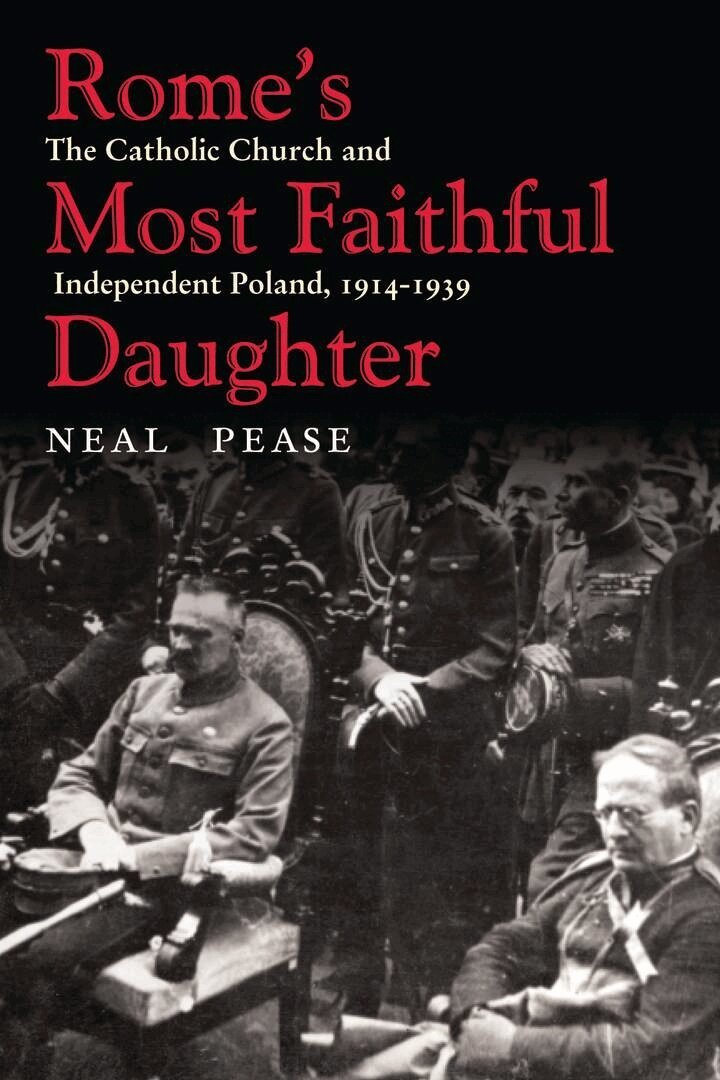
When an independent Poland reappeared on the map of Europe after World War I, it was widely regarded as the most Catholic country on the continent, as "Rome's Most Faithful Daughter." All the same, the relations of the Second Polish Republic with the Church—both its representatives inside the country and the Holy See itself—proved far more difficult than expected.Based on original research in the libraries and depositories of four countries, including recently opened collections in the Vatican Secret Archives, Rome's Most Faithful Daughter: The Catholic Church and Independent Poland, 1914–1939 presents the first scholarly history of the close but complex political relationship of Poland with the Catholic Church during the interwar period. Neal Pease addresses, for example, the centrality of Poland in the Vatican's plans to convert the Soviet Union to Catholicism and the curious reluctance of each successive Polish government to play the role assigned to it. He also reveals the complicated story of the relations of Polish Catholicism with Jews, Freemasons, and other minorities within the country and what the response of Pope Pius XII to the Nazi German invasion of Poland in 1939 can tell us about his controversial policies during World War II.Both authoritative and lively, Rome's Most Faithful Daughter shows that the tensions generated by the interplay of church and state in Polish public life exerted great influence not only on the history of Poland but also on the wider Catholic world in the era between the wars.
Häftad, Engelska, 2009
310 kr
Skickas inom 10-15 vardagar
When an independent Poland reappeared on the map of Europe after World War I, it was widely regarded as the most Catholic country on the continent, as "Rome's Most Faithful Daughter." All the same, the relations of the Second Polish Republic with the Church—both its representatives inside the country and the Holy See itself—proved far more difficult than expected.Based on original research in the libraries and depositories of four countries, including recently opened collections in the Vatican Secret Archives, Rome's Most Faithful Daughter: The Catholic Church and Independent Poland, 1914–1939 presents the first scholarly history of the close but complex political relationship of Poland with the Catholic Church during the interwar period. Neal Pease addresses, for example, the centrality of Poland in the Vatican's plans to convert the Soviet Union to Catholicism and the curious reluctance of each successive Polish government to play the role assigned to it. He also reveals the complicated story of the relations of Polish Catholicism with Jews, Freemasons, and other minorities within the country and what the response of Pope Pius XII to the Nazi German invasion of Poland in 1939 can tell us about his controversial policies during World War II.Both authoritative and lively, Rome's Most Faithful Daughter shows that the tensions generated by the interplay of church and state in Polish public life exerted great influence not only on the history of Poland but also on the wider Catholic world in the era between the wars.