Nectarios G. Limnatis - Böcker
Visar alla böcker från författaren Nectarios G. Limnatis. Handla med fri frakt och snabb leverans.
4 produkter
4 produkter
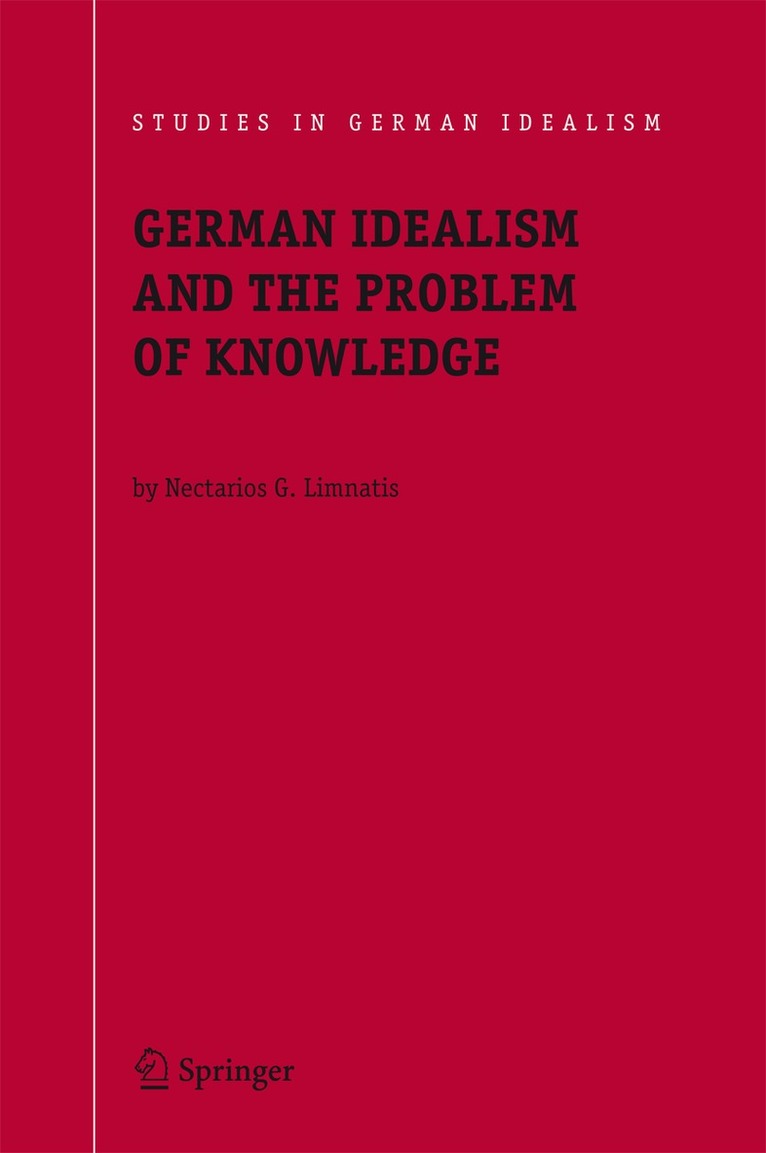
German Idealism and the Problem of Knowledge:
Kant, Fichte, Schelling, and Hegel
Inbunden, Engelska, 2008
1 593 kr
Skickas inom 10-15 vardagar
The movement of German idealism culminates in the revelation of the re? ective boundaries of theoretical knowledge. The history of the most important intellectual developments thereafter could be described, following a recent remark of Jurgen Habermas, as a his- 1 tory of the de-transcendentalization of the cognizing subject. In this context, the epistemological interpretation proposed in this book must be speci? cally understood. Examining the problem of knowledge in the development of German idealism, it aims not at an epistem- ogy of the Cartesian type, and even less at a formal logical analysis of knowledge which lacks the re? ective element of the devices it employs as "the search for the immutable structures within which knowledge, 2 life, and culture must be contained. " These "structures" do not only condition the process of knowledge, they are themselves conditioned. There is thus an unsurpassable circle in this process, a circle which German idealism brings to the surface and profoundly scrutinizes. Therefore, the task is to re? ectively account for the historical horizons in which cognition arises (being ultimately thereupon dependent), instead of searching for an ultimate Archimedean point for its deduction.Rather than searching for inexplicably transc- dental concepts, this argument points to their determination from within a given Lebenswelt. It does not renounce but rather rede? nes 3 objectivity, by seeing the subject as a coming-to-know-itself totality. 1 J. Habermas, Wahrheit und Rechtfertigung. Philosophische Aufsatze (Frankfurt a. M. : Suhrkamp, 1999), p. 186.
1 964 kr
Skickas inom 10-15 vardagar
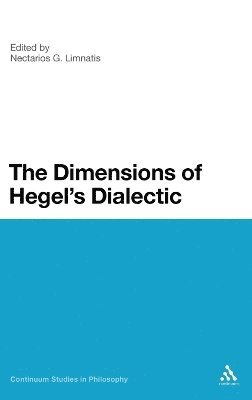
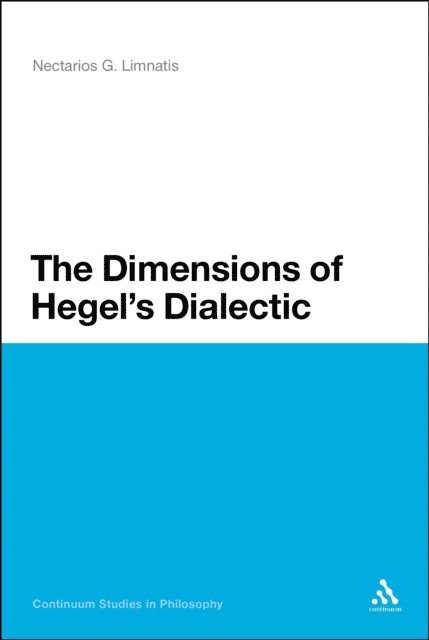
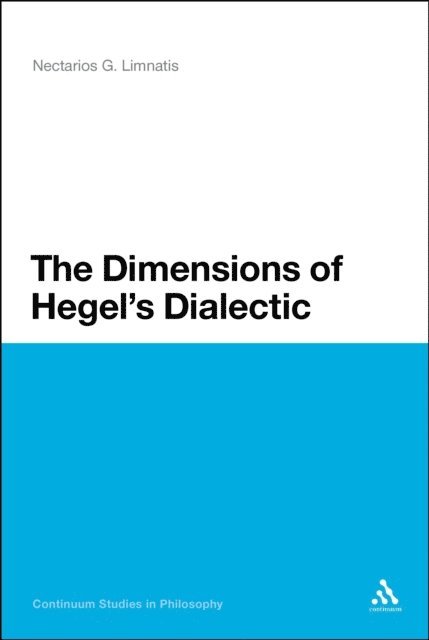
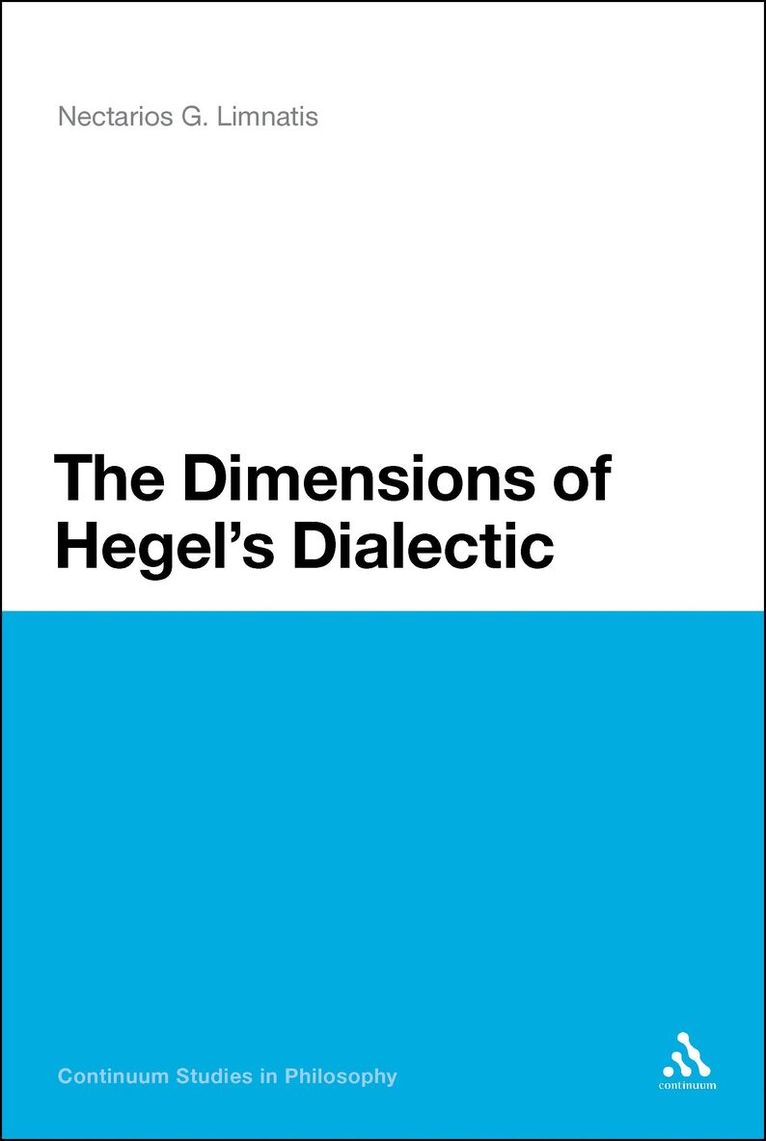
The Dimensions of Hegel's Dialectic examines the epistemological import of Hegelian dialectic in the widest sense. In modern philosophy, German idealism, Hegel in particular, is said to have made significant innovative steps in redefining the meaning, scope and use of dialectic. Indeed, it is dialectic that makes up the very core of Hegel's position, yet it is an area of his thought that is widely neglected by the available literature despite the increased interest in Hegel's philosophy in recent years. This book brings together an international team of expert contributors in a long-overdue discussion of Hegelian dialectic. Twelve specially commissioned essays address the task of making sense and use of Hegel's dialectic, which is fundamental not only for historical and hermeneutic reasons, but also for pragmatic ones; a satisfactory response to this challenge has the power to clarify Hegel's legacy in the current debate. The essays situate the dialectic in the context of German idealism with a clear-sighted elucidation of the problems that Hegel's dialectic is called upon to solve.
528 kr
Skickas inom 10-15 vardagar
The Dimensions of Hegel's Dialectic examines the epistemological import of Hegelian dialectic in the widest sense. In modern philosophy, German idealism, Hegel in particular, is said to have made significant innovative steps in redefining the meaning, scope and use of dialectic. Indeed, it is dialectic that makes up the very core of Hegel's position, yet it is an area of his thought that is widely neglected by the available literature despite the increased interest in Hegel's philosophy in recent years. This book brings together an international team of expert contributors in a long-overdue discussion of Hegelian dialectic. Twelve specially commissioned essays address the task of making sense and use of Hegel's dialectic, which is fundamental not only for historical and hermeneutic reasons, but also for pragmatic ones; a satisfactory response to this challenge has the power to clarify Hegel's legacy in the current debate. The essays situate the dialectic in the context of German idealism with a clear-sighted elucidation of the problems that Hegel's dialectic is called upon to solve.
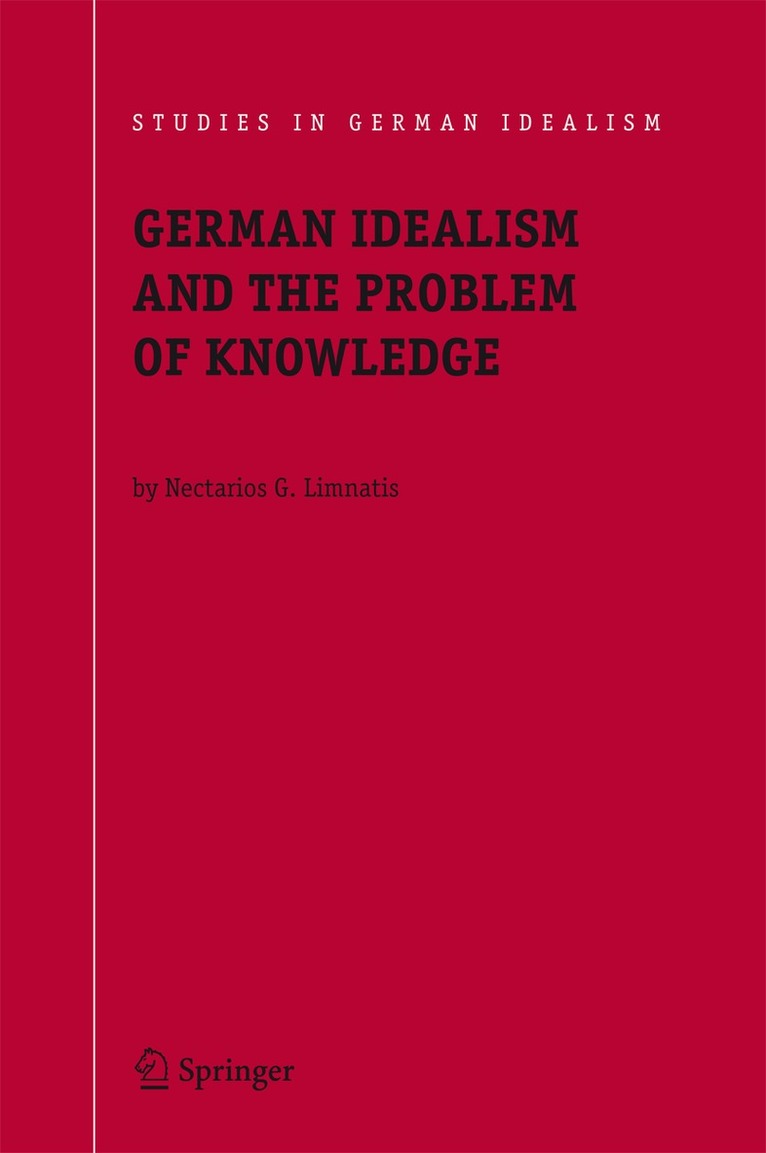
German Idealism and the Problem of Knowledge:
Kant, Fichte, Schelling, and Hegel
Häftad, Engelska, 2010
1 593 kr
Skickas inom 10-15 vardagar
The movement of German idealism culminates in the revelation of the re? ective boundaries of theoretical knowledge. The history of the most important intellectual developments thereafter could be described, following a recent remark of Jurgen Habermas, as a his- 1 tory of the de-transcendentalization of the cognizing subject. In this context, the epistemological interpretation proposed in this book must be speci? cally understood. Examining the problem of knowledge in the development of German idealism, it aims not at an epistem- ogy of the Cartesian type, and even less at a formal logical analysis of knowledge which lacks the re? ective element of the devices it employs as "the search for the immutable structures within which knowledge, 2 life, and culture must be contained. " These "structures" do not only condition the process of knowledge, they are themselves conditioned. There is thus an unsurpassable circle in this process, a circle which German idealism brings to the surface and profoundly scrutinizes. Therefore, the task is to re? ectively account for the historical horizons in which cognition arises (being ultimately thereupon dependent), instead of searching for an ultimate Archimedean point for its deduction.Rather than searching for inexplicably transc- dental concepts, this argument points to their determination from within a given Lebenswelt. It does not renounce but rather rede? nes 3 objectivity, by seeing the subject as a coming-to-know-itself totality. 1 J. Habermas, Wahrheit und Rechtfertigung. Philosophische Aufsatze (Frankfurt a. M. : Suhrkamp, 1999), p. 186.