
Ned Mohan – författare
3 724 kr
Skickas inom 5-8 vardagar
2 339 kr
Skickas inom 5-8 vardagar
1 461 kr
Skickas inom 5-8 vardagar
1 692 kr
Läs direkt efter köp
1 692 kr
Läs direkt efter köp
1 882 kr
Läs direkt efter köp
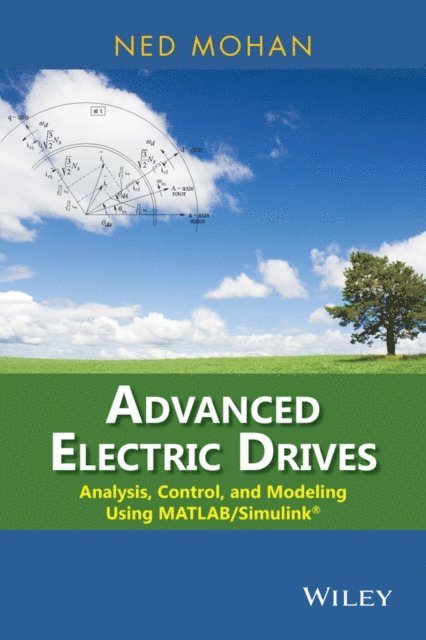
A guide to drives essential to electric vehicles, wind turbines, and other motor-driven systems
Analysis and Control of Electric Drives is a practical and comprehensive text that offers a clear understanding of electric drives and their industrial applications in the real-world including electric vehicles and wind turbines. The authors—noted experts on the topic—review the basic knowledge needed to understand electric drives and include the pertinent material that examines DC and AC machines in steady state using a unique physics-based approach. The book also analyzes electric machine operation under dynamic conditions, assisted by Space Vectors.
The book is filled with illustrative examples and includes information on electric machines with Interior Permanent Magnets. To enhance learning, the book contains end-of-chapter problems and all topics covered use computer simulations with MATLAB Simulink and Sciamble Workbench software that is available free online for educational purposes. This important book:
Explores additional topics such as electric machines with Interior Permanent Magnets Includes multiple examples and end-of-chapter homework problems Provides simulations made using MATLAB Simulink and Sciamble Workbench, free software for educational purposes Contains helpful presentation slides and Solutions Manual for Instructors; simulation files are available on the associated website for easy implementation A unique feature of this book is that the simulations in Sciamble Workbench software can seamlessly be used to control experiments in a hardware laboratoryWritten for undergraduate and graduate students, Analysis and Control of Electric Drives is an essential guide to understanding electric vehicles, wind turbines, and increased efficiency of motor-driven systems.
1 651 kr
Skickas inom 5-8 vardagar
1 914 kr
Läs direkt efter köp
A guide to drives essential to electric vehicles, wind turbines, and other motor-driven systems
Analysis and Control of Electric Drives is a practical and comprehensive text that offers a clear understanding of electric drives and their industrial applications in the real-world including electric vehicles and wind turbines. The authors—noted experts on the topic—review the basic knowledge needed to understand electric drives and include the pertinent material that examines DC and AC machines in steady state using a unique physics-based approach. The book also analyzes electric machine operation under dynamic conditions, assisted by Space Vectors.
The book is filled with illustrative examples and includes information on electric machines with Interior Permanent Magnets. To enhance learning, the book contains end-of-chapter problems and all topics covered use computer simulations with MATLAB Simulink and Sciamble Workbench software that is available free online for educational purposes. This important book:
Explores additional topics such as electric machines with Interior Permanent Magnets Includes multiple examples and end-of-chapter homework problems Provides simulations made using MATLAB Simulink and Sciamble Workbench, free software for educational purposes Contains helpful presentation slides and Solutions Manual for Instructors; simulation files are available on the associated website for easy implementation A unique feature of this book is that the simulations in Sciamble Workbench software can seamlessly be used to control experiments in a hardware laboratoryWritten for undergraduate and graduate students, Analysis and Control of Electric Drives is an essential guide to understanding electric vehicles, wind turbines, and increased efficiency of motor-driven systems.
1 349 kr
Skickas
1 566 kr
Läs direkt efter köp
POWER ELECTRONICS A FIRST COURSE
Enables students to understand power electronics systems, as one course, in an integrated electric energy systems curriculum
Power Electronics A First Course provides instruction on fundamental concepts related to power electronics to undergraduate electrical engineering students, beginning with an introductory chapter and moving on to discussing topics such as switching power-poles, switch-mode dc-dc converters, and feedback controllers.
The authors also cover diode rectifiers, power-factor-correction (PFC) circuits, and switch-mode dc power supplies. Later chapters touch on soft-switching in dc-dc power converters, voltage and current requirements imposed by various power applications, dc and low-frequency sinusoidal ac voltages, thyristor converters, and the utility applications of harnessing energy from renewable sources.
Power Electronics A First Course is the only textbook that is integrated with hardware experiments and simulation results. The simulation files are available on a website associated with this textbook. The hardware experiments will be available through a University of Minnesota startup at a low cost.
In Power Electronics A First Course, readers can expect to find detailed information on:
Availability of various power semiconductor devices that are essential in power electronic systems, plus their switching characteristics and various tradeoffs Common foundational unit of various converters and their operation, plus fundamental concepts for feedback control, illustrated by means of regulated dc-dc converters Basic concepts associated with magnetic circuits, to develop an understanding of inductors and transformers needed in power electronics Problems associated with hard switching, and some of the practical circuits where this problem can be minimized with soft-switchingPower Electronics A First Course is an ideal textbook for Junior/Senior-Undergraduate students in Electrical and Computer Engineering (ECE). It is also valuable to students outside of ECE, such as those in more general engineering fields. Basic understanding of electrical engineering concepts and control systems is a prerequisite.
1 566 kr
Läs direkt efter köp
POWER ELECTRONICS A FIRST COURSE
Enables students to understand power electronics systems, as one course, in an integrated electric energy systems curriculum
Power Electronics A First Course provides instruction on fundamental concepts related to power electronics to undergraduate electrical engineering students, beginning with an introductory chapter and moving on to discussing topics such as switching power-poles, switch-mode dc-dc converters, and feedback controllers.
The authors also cover diode rectifiers, power-factor-correction (PFC) circuits, and switch-mode dc power supplies. Later chapters touch on soft-switching in dc-dc power converters, voltage and current requirements imposed by various power applications, dc and low-frequency sinusoidal ac voltages, thyristor converters, and the utility applications of harnessing energy from renewable sources.
Power Electronics A First Course is the only textbook that is integrated with hardware experiments and simulation results. The simulation files are available on a website associated with this textbook. The hardware experiments will be available through a University of Minnesota startup at a low cost.
In Power Electronics A First Course, readers can expect to find detailed information on:
Availability of various power semiconductor devices that are essential in power electronic systems, plus their switching characteristics and various tradeoffs Common foundational unit of various converters and their operation, plus fundamental concepts for feedback control, illustrated by means of regulated dc-dc converters Basic concepts associated with magnetic circuits, to develop an understanding of inductors and transformers needed in power electronics Problems associated with hard switching, and some of the practical circuits where this problem can be minimized with soft-switchingPower Electronics A First Course is an ideal textbook for Junior/Senior-Undergraduate students in Electrical and Computer Engineering (ECE). It is also valuable to students outside of ECE, such as those in more general engineering fields. Basic understanding of electrical engineering concepts and control systems is a prerequisite.
1 434 kr
Skickas inom 5-8 vardagar
1 868 kr
Läs direkt efter köp
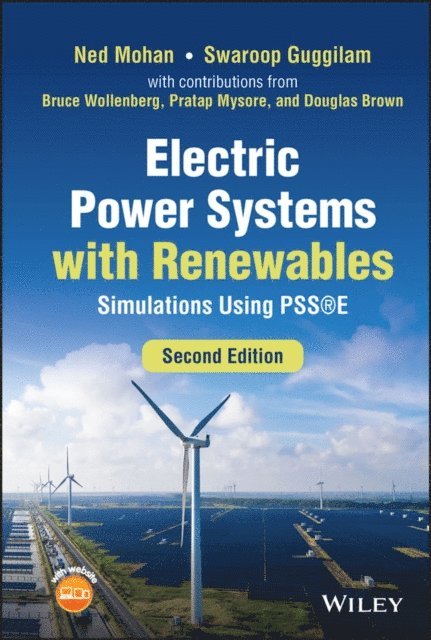
Concise, balanced, and fundamentals-based resource providing coverage of power system operation and planning, including simulations using PSS®E software
Electric Power Systems with Renewables provides a comprehensive treatment of various topics related to power systems with an emphasis on renewable energy integration into power systems. The updated use cases and methods in the book build upon the climate change science and renewables currently being integrated with the grid and the ability to manage resilience for electrifying transportation and related power systems as societies identify more ways to move towards a carbon-free future.
Simulation examples and software support are provided by integrating the educational version of PSS®E. The newly revised edition includes new topics on the intelligent use of PSS®E simulation software, presents a short introduction to Python (a widely used software in the power industry), and provides new examples and back-of-the-chapter homework problems to further aid in information retention.
Written by two highly qualified authors with significant experience in the field, Electric Power Systems with Renewables also contains information on:
Electric energy and the environment, covering hydro power, fossil-fuel based power plants, nuclear power, renewable energy, and distributed generation (DG) Power flow in power system networks covers basic power flow equations, the Newton-Raphson procedure, sensitivity analysis, and a new remote bus voltage control concept Transformers and generators in power systems, covering basic principles of operation, a simplified model, and per-unit representation High voltage DC (HVDC) transmission systems-current-link, and voltage-link systemsAssociated with this textbook, there is a website from which the simulation files can be downloaded for use in PSS®E and Python. It also contains short videos to simplify the use of these software. This website will be regularly updated.
Electric Power Systems with Renewables serves as a highly useful textbook for both undergraduate and graduate students in Electrical and Computer Engineering (ECE). It is also an appropriate resource for students outside of ECE who have the prerequisites, such as in mechanical, civil, and chemical engineering. Practicing engineers will greatly benefit with its industry-relevant approach to meet the present-day needs.
1 868 kr
Läs direkt efter köp
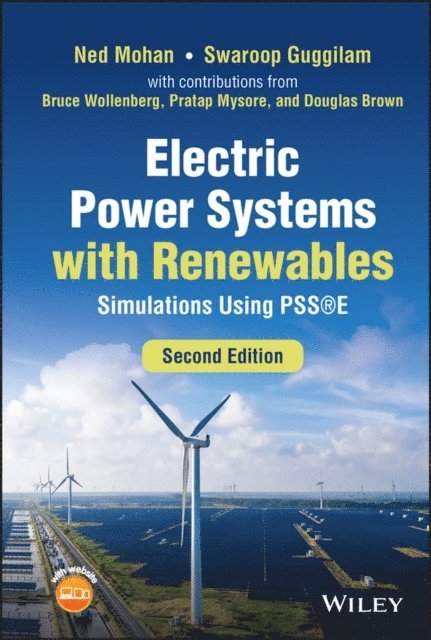
Concise, balanced, and fundamentals-based resource providing coverage of power system operation and planning, including simulations using PSS®E software
Electric Power Systems with Renewables provides a comprehensive treatment of various topics related to power systems with an emphasis on renewable energy integration into power systems. The updated use cases and methods in the book build upon the climate change science and renewables currently being integrated with the grid and the ability to manage resilience for electrifying transportation and related power systems as societies identify more ways to move towards a carbon-free future.
Simulation examples and software support are provided by integrating the educational version of PSS®E. The newly revised edition includes new topics on the intelligent use of PSS®E simulation software, presents a short introduction to Python (a widely used software in the power industry), and provides new examples and back-of-the-chapter homework problems to further aid in information retention.
Written by two highly qualified authors with significant experience in the field, Electric Power Systems with Renewables also contains information on:
Electric energy and the environment, covering hydro power, fossil-fuel based power plants, nuclear power, renewable energy, and distributed generation (DG) Power flow in power system networks covers basic power flow equations, the Newton-Raphson procedure, sensitivity analysis, and a new remote bus voltage control concept Transformers and generators in power systems, covering basic principles of operation, a simplified model, and per-unit representation High voltage DC (HVDC) transmission systems-current-link, and voltage-link systemsAssociated with this textbook, there is a website from which the simulation files can be downloaded for use in PSS®E and Python. It also contains short videos to simplify the use of these software. This website will be regularly updated.
Electric Power Systems with Renewables serves as a highly useful textbook for both undergraduate and graduate students in Electrical and Computer Engineering (ECE). It is also an appropriate resource for students outside of ECE who have the prerequisites, such as in mechanical, civil, and chemical engineering. Practicing engineers will greatly benefit with its industry-relevant approach to meet the present-day needs.
488 kr
Skickas inom 3-6 vardagar
534 kr
Läs direkt efter köp
Leistungselektroniksysteme verstehen!
Das Buch bietet Studierenden der Elektrotechnik eine Einführung in die grundlegenden Konzepte der Leistungselektronik. Nach einem ausführlichen Einführungskapitel werden dann Themen wie Schaltnetzteile, Gleichstrom-Schaltwandler und Rückkopplungsregler behandelt.
Diodengleichrichter, Schaltungen zur Leistungsfaktorkorrektur und Schaltnetzteile werden ebenfalls diskutiert. Spätere Kapitel befassen sich mit dem Soft-Switching in Gleichspannungswandlern, mit den Spannungs- und Stromanforderungen verschiedener Leistungsanwendungen, mit sinusförmigen Gleich- und Niederfrequenz-Wechselspannungen, mit Thyristorwandlern und mit der Nutzung von Energie aus erneuerbaren Quellen.
Im Buch finden die Leserinnen und Leser detaillierte Informationen über:
Die Eigenschaften verschiedener Leistungshalbleiter, die in leistungselektronischen Systemen unverzichtbar sind, sowie deren Schaltverhalten Grundlagen verschiedener Wandler und deren Betrieb sowie grundlegende Konzepte für die Rückkopplungssteuerung, veranschaulicht anhand von geregelten Gleichspannungswandlern Grundlegende Konzepte im Zusammenhang mit magnetischen Schaltkreisen, um ein Verständnis für Spulen und Transformatoren zu entwickeln, die in der Leistungselektronik benötigt werden Probleme im Zusammenhang mit hartem Schalten und einige der praktischen Schaltungen, bei denen dieses Problem durch weiches Schalten minimiert werden kann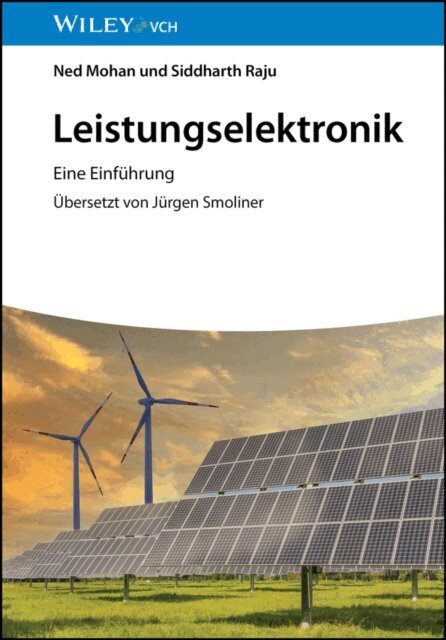
534 kr
Läs direkt efter köp
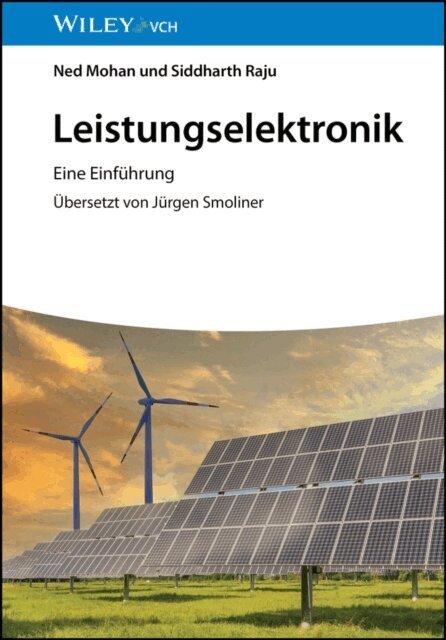
Leistungselektroniksysteme verstehen!
Das Buch bietet Studierenden der Elektrotechnik eine Einführung in die grundlegenden Konzepte der Leistungselektronik. Nach einem ausführlichen Einführungskapitel werden dann Themen wie Schaltnetzteile, Gleichstrom-Schaltwandler und Rückkopplungsregler behandelt.
Diodengleichrichter, Schaltungen zur Leistungsfaktorkorrektur und Schaltnetzteile werden ebenfalls diskutiert. Spätere Kapitel befassen sich mit dem Soft-Switching in Gleichspannungswandlern, mit den Spannungs- und Stromanforderungen verschiedener Leistungsanwendungen, mit sinusförmigen Gleich- und Niederfrequenz-Wechselspannungen, mit Thyristorwandlern und mit der Nutzung von Energie aus erneuerbaren Quellen.
Im Buch finden die Leserinnen und Leser detaillierte Informationen über:
Die Eigenschaften verschiedener Leistungshalbleiter, die in leistungselektronischen Systemen unverzichtbar sind, sowie deren Schaltverhalten Grundlagen verschiedener Wandler und deren Betrieb sowie grundlegende Konzepte für die Rückkopplungssteuerung, veranschaulicht anhand von geregelten Gleichspannungswandlern Grundlegende Konzepte im Zusammenhang mit magnetischen Schaltkreisen, um ein Verständnis für Spulen und Transformatoren zu entwickeln, die in der Leistungselektronik benötigt werden Probleme im Zusammenhang mit hartem Schalten und einige der praktischen Schaltungen, bei denen dieses Problem durch weiches Schalten minimiert werden kann