Neil Gunn - Böcker
Visar alla böcker från författaren Neil Gunn. Handla med fri frakt och snabb leverans.
8 produkter
8 produkter
223 kr
Skickas inom 10-15 vardagar
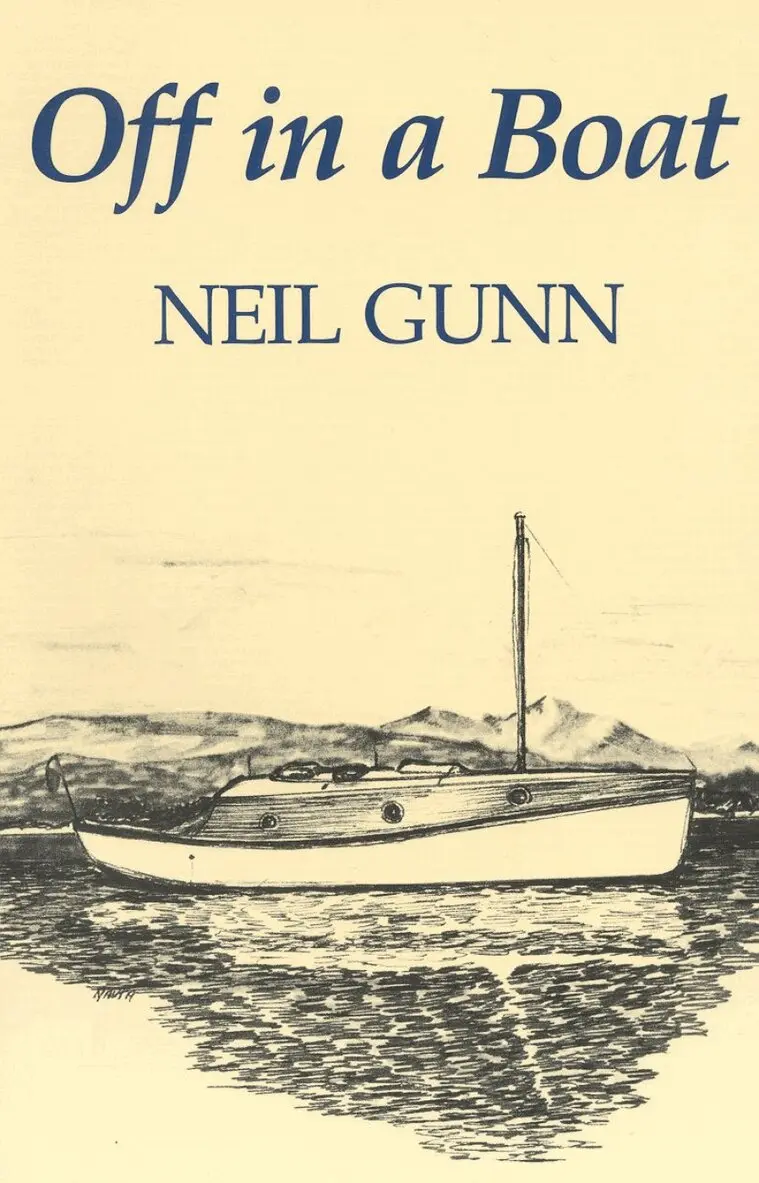
In 1937, the Scottish writer, Neil Gunn, gave up his job in the civil service, sold his house in Inverness, and bought a boat. With his wife and his brother John, he set off on a three-month voyage around Inner Hebrides.The boat had outlived its first youth, and its engine was somewhat cranky; she went tolerably under sail. These are not high recommendations, but for Gunn, and at times his fellow voyagers, the vessel was an argosy of freedom, of adventure and misadventure–for they were fairly inexperienced sailors, and the waters of the region are by no means placid.Gunn was a Scots nationalist in a sense that goes far beyond the political, even though he thought that an independent Scotland was the only proper basis for a reasonable civilization. He was by nature poetic, uplifted or cast down by changing skies, seascapes, and shores. His descriptions of those things, including their moods, are remarkably evocative. And he is also a passionate historian of his country, exalting its possibilities, anathematizing its shortcomings. The book is illustrated with Daisy Gunn's photographs taken on the voyage, which are palpably amateur but wonderfully telling.
202 kr
Tillfälligt slut
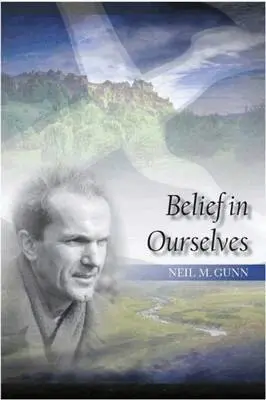
Introduction by Dairmid Gunn Neil M Gunn (1892 - 1973), one of Scotland's most distinguished and highly regarded novelists of the 20th century, was a prolific writer. While he is best known for his fictional work Gunn was also a perceptive and meditative essayist who wrote extensively throughout his life on a wide range of subjects from landscape, nature and fishing to politics, nationalism and current affairs. Belief in Ourselves is a collection of essays that focuses on politics in the widest sense, embracing group activity in all its forms from nationalism to both communal work in a social sense and co-operation in crofting and fishing; the focus extends also to literature as a source of inspiration for a nation and a provider of national identity. That most of the essays were written between the two world wars - a period of political uncertainty and economic crisis - brings a sense of urgency to the writer in terms of the resolution of the problems and the exploration of the ideas aired by him. Many of the problems he identifies remain with us, albeit in different forms.Indeed, the imaginative and enlightened way in which Gunn looks at the events of his day have a strange relevance for today's world. This forms a sister volume to the earlier Landscape to Light, which concentrates on his native landscape and culture and the spiritual aspects of his life and thought. As with Landscape to Light, much of what Gunn writes informs his fictional work
235 kr
Skickas
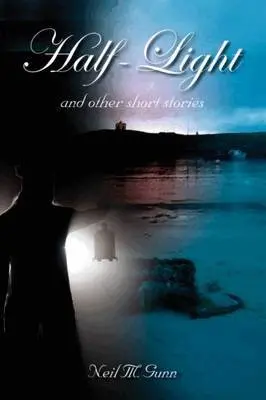
Neil M. Gunn is celebrated as one of Scotland's foremost novelists of the 20th century. Less well known is that he was also a perceptive and meditative essayist and accomplished writer of short stories. Most of his short stories were written in the 1920s and 1930s in parallel with his early novels, which they influence and inform. This collection draws some of its short stories from two previous collections but others are published for the first time. Although most are set against a Highland background, they are not in any way parochial; they touch on universal themes, which invite the serious reader to ponder and enjoy. Topics explored are: childhood and a sense of wonder; love in its deepest and most subtle sense; death as part of the cycle of existence and the place of land and sea in the development of those in search of greater self-understanding. The stories are attractive in their own right and have a freshness and immediacy that give a clarity and accessibility to the rich subject matter. They are also a gateway to a greater understanding of Gunn's essential thinking on life and living.
128 kr
Skickas
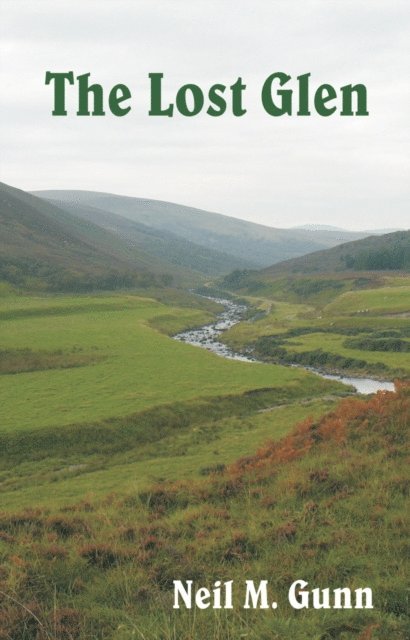
"The Lost Glen" vividly portrays a clash of cultures and personalities against a background of a landscape in visible decay. The cultural collision and its effects are explored through Ewan, a young local man recently returned from university in disgrace, and a retired English colonel staying at the village hotel. Both men in a sense are alienated from the community, the younger because of a haunting sense of failure, and the older through an unwillingness to understand the local culture. They have a mutual antipathy. The Colonel's self-imposed cultural isolation leads to aggressive bullying and an openly lascivious attitude towards local young women. His unworthiness as a representative of Anglo-Saxon culture is largely compensated for by his young niece, who behaves with sensitivity and integrity. She is clearly attracted to Ewan whose sense of failure is complex and does not only concern his enforced withdrawal from university and his involvement in an incident at sea that cost his father his life; it concerns the feeling he has of himself as a spiritual exile - a man who had intended to emigrate but who had remained as an outsider in the land that meant so much to him.He is fascinated by the experience of a local piper, whose finding of a lost glen that had a strange beauty and primordial freshness had been translated into a pibroch. The haunting tune acts as a stimulant to Ewan's Hamlet-like musings on the possibility of a rejuvenation of the landscape or a final disappearance of its life and meaning. The antipathy between the two main protagonists leads to a physical struggle between them that brings to an end a novel, layered with meanings, that is more a symbolic drama than a novel of realism. One of the earliest novels to appear in the Scottish Literary Renaissance of the 1920s and 1930s, "The Lost Glen" turns its back on the form of writing that had depicted Scotland as a rural paradise in favour of describing Highland life as it really was at that time.
202 kr
Tillfälligt slut
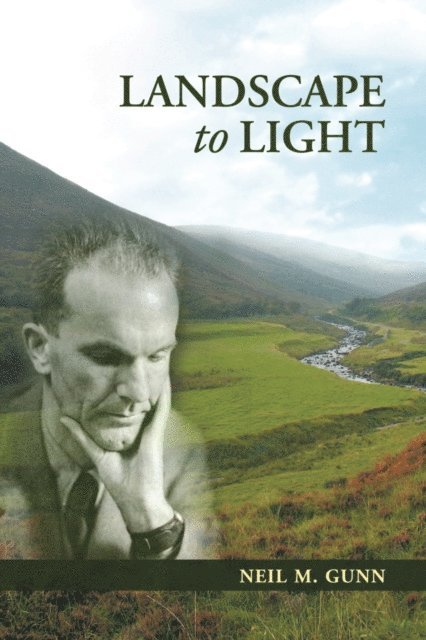
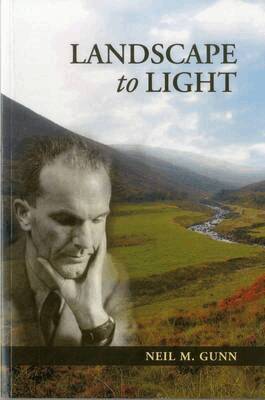
Although Neil M. Gunn is well-known as one of Scotland's foremost writers of the 20th century, he is less well-known as a perceptive and meditative essayist who wrote on a variety of subjects - from landscape, nature and the sea to literature, politics and matters of the spirit. Written in parallel with his novels, these essays contain many of the ideas and speculations that inform them. In this collection the focus is on landscape and the stimulus it provides for a journey of an enquiring mind from the observation of everyday life to a state of self-realisation. The essays mark the route. For example, in The French Fishing Smack there is a sense of freedom that only the sea can give; in The First Salmon a primal sense of adventure captivates; The Heron's Legs cannot but engender a sense of wonder and Light is a signal that the inner journey of the spirit has all but ended. Products of the uneasy and uncertain 1930s, the Second World War and the Cold War, the essays lead not only to a more imaginative and enlightened way of looking at life in troubled times but also to a greater understanding of the mind of this profoundly thoughtful writer.They can be understood as a miniature biography of the writer himself in terms of being a series of moments of revelation and delight experienced during walks in the countryside, fishing expeditions and chance encounters with people and books. Covering 40 years of the writer's life, the essays show that the ideas derived from them evolve rather than change; there is always a sense of movement. In the later essays it is the smallest social entity of all, the human psyche, that fascinates Gunn and becomes the essential ingredient in the search for self-enlightenment. Encounters with Zen Buddhism and other disciplines and philosophies were to reassure him that he had been moving in the right direction throughout his life.
182 kr
Kommande
A compelling, dramatic and deeply psychological story of youthful love and trapped hopes set in the startling landscape of the far North. First published by Jonathan Cape in 1926, this centenary edition celebrates a major talent and the work of one of Scotland’s most important and neglected writers. The wide-open skies, fierce seas and the ever-changing weather of Scotland’s farthest reaches, provides the setting for this gripping and emotionally acute study of young love and youthful ambition and the constraints and violence of a traditional community. Maggie and Ivor struggle to connect in a world that seems fixed on keeping them apart. The Grey Coast is a magnificent novel of land and the people who live upon it. Timeless, uncompromising and exhilarating, this is a work that marks the arrival of a startling new talent. It introduces a host of compelling characters and way of life that – though vastly different to our present age – demand our attention as much now as ever. Gunn is a major Scottish writer with an international reputation; this beautiful new edition aims to re-establish him as a central figure in Scottish letters.
182 kr
Kommande
This tense, psychically aware thriller hooks the reader from the first page when a local policeman arrives at the home of an isolated crofter in search of a young fugitive. Blood Hunt is a tale of, love, murder, divided loyalties and the awful human instinct to hunt a fellow animal down - even to death.From the moment Sandy opens his door we enter into the ancient world of crime and punishment, action and retribution, of passion and the centrality of a woman’s power, brought bang up to date by a precise, psychologically acute narrative of the killed and the killer.Who is right? Who is wrong? What is the story behind this tale of terror and revenge? Blood Hunt plots these questions and more, as, step by step, it takes the reader across a wild and remote landscape that is the stuff of myth and fable.Gunn is a major Scottish writer with an international reputation; this beautiful new edition aims to re-establish him as a central figure in Scottish letters.
182 kr
Kommande
An old man living at the height of his powers of recall and memory tells the story of his life on the day of his death from the vantage point on a hill above the village where he was born.Quietly narrated and yet raging with will and the passion of youth, this is a novel about fathers and sons, hope and hope’s death, and how we might live in the world before leaving it. In the company of such masterpieces as Seethaler’s A Whole Life and Tolstoy’s The Death of Ivan Ilyich.A wildly immersive story, The Serpent will grip the reader from the outset and is a provocative and an-putdownable study of what it is to be human.