Neil M. Kay – författare
Visar alla böcker från författaren Neil M. Kay. Handla med fri frakt och snabb leverans.
8 produkter
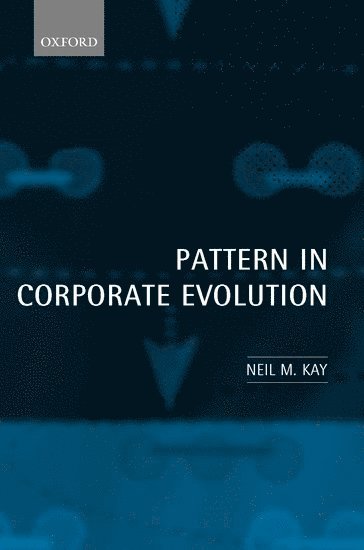
Pattern in Corporate Evolution
Av Neil M. Kay
Häftad, 2000
830 kr
Lägg i varukorg
Questions relating to the existence and nature of firms have become major issues in economics in recent years. In this major new work, Neil Kay provides original explanations for many individual phenomena in this area. The analysis is set in the context of an integrative framework for analysing the …
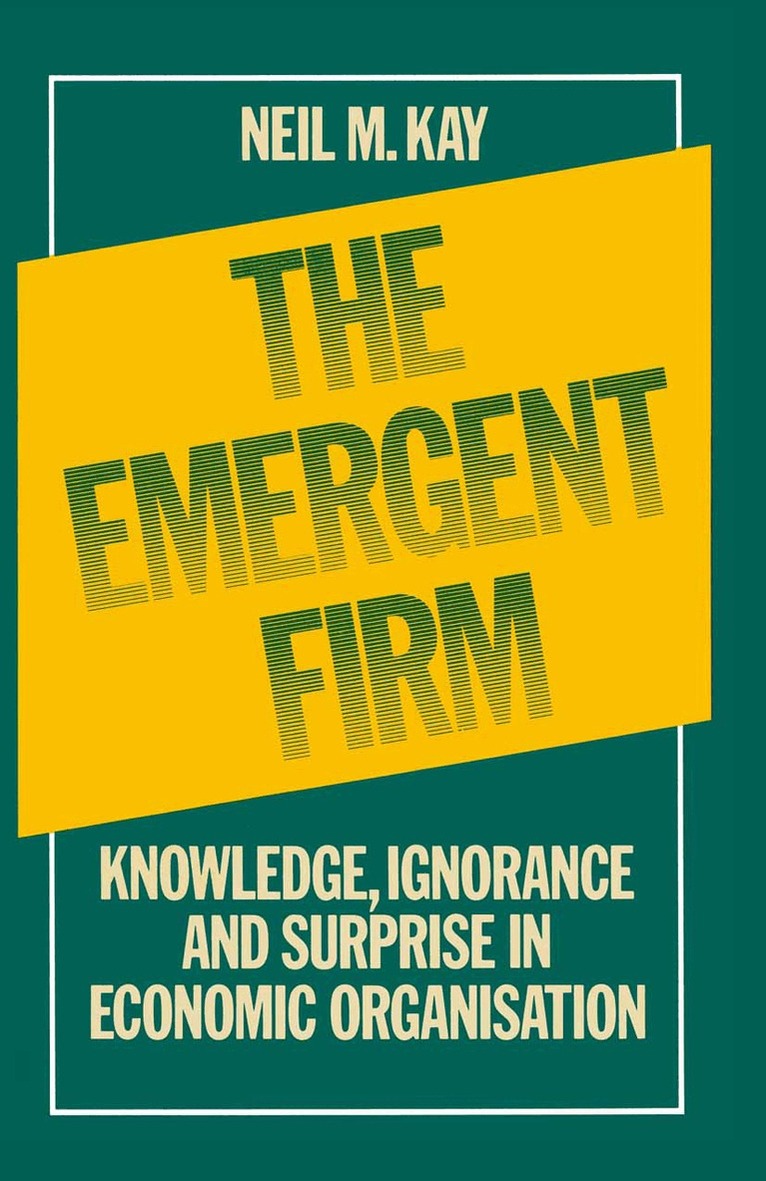
Emergent Firm
Knowledge, Ignorance and Surprise in Economic Organisation
Av Neil M. Kay
Häftad, 1984
287 kr
Lägg i varukorg
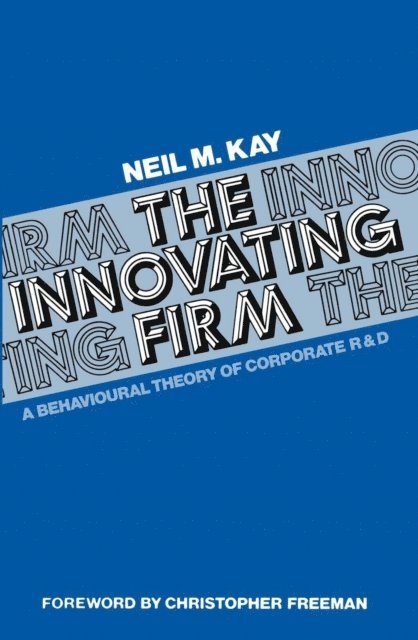
Innovating Firm
A Behavioural Theory of Corporate R.and D.
Av Neil M. Kay
E-bok, 1979
725 kr
Lägg i varukorg
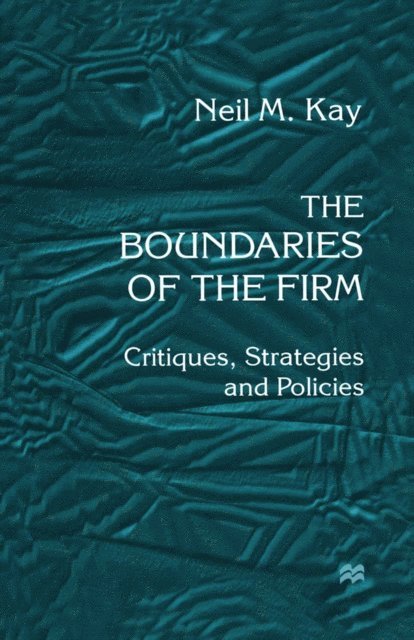
Boundaries of the Firm
Critiques, Strategies and Policies
Av Neil M. Kay
E-bok, 1999
763 kr
Lägg i varukorg
What is the nature of the firm? Why do firms adopt certain strategies in preference to others? What are the competitive implications of large firm mergers and alliances for government policy? These are extremely important and highly topical questions which tend to be treated separately in most …
Boundaries of the Firm
Critiques, Strategies and Policies
Av Neil M. Kay
Häftad, 1999
550 kr
Lägg i varukorg
What is the nature of the firm? Why do firms adopt certain strategies in preference to others? What are the competitive implications of large firm mergers and alliances for government policy? These are extremely important and highly topical questions which tend to be treated separately in most …
Emergent Firm
Knowledge, Ignorance and Surprise in Economic Organisation
Av Neil M. Kay
E-bok, 1984
410 kr
Lägg i varukorg
Evolution of the Theory of the Firm
Av David J. Teece, Neil M. Kay
Inbunden, 2019
13691 kr
Lägg i varukorg
This stimulating research review analyses how the theory of the firm evolved from several core concepts and building blocks that underpin this important area of economics. It discusses a variety of perspectives from leading scholars in the field, including the basic elements of: risk and …