Neil Ward – författare
685 kr
Skickas inom 10-15 vardagar
2 343 kr
Skickas inom 10-15 vardagar
649 kr
Läs direkt efter köp
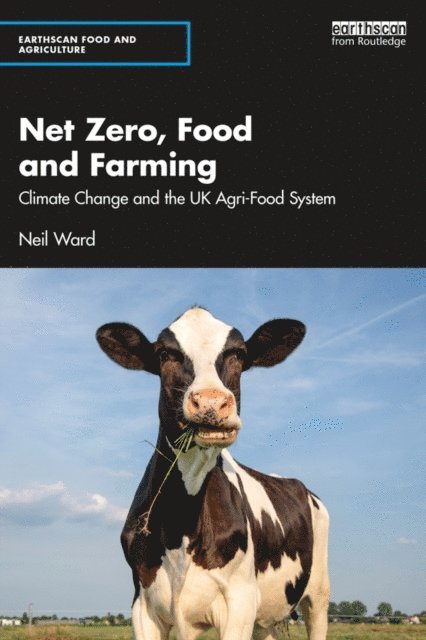
This book examines the implications of the net zero transition for food and farming in the UK and how these can be managed to avoid catastrophic climate change in the crucial decades ahead.
For the UK to meet its international obligations for reducing greenhouse gas emissions, nothing short of a revolution is required in our use of land, our farming practices and our diet. Taking a historical approach, the book examines the evolution of agriculture and the food system in the UK over the last century and discusses the implications of tackling climate change for food, farming and land use, setting the UK situation in an international context. The chapters analyse the key challenges for this transition, including dietary change and food waste, afforestation and energy crops, and low-emission farming practices. This historical perspective helps develop an understanding of how our food, farming and land use system has evolved to be the way that it is, and draws lessons for how the agri-food system could evolve further to support the transition to net zero and avoid catastrophic climate change.
Written in a clear and accessible style, this book will be essential reading to students and scholars of food, agriculture and the environment, as well as policymakers and professionals involved climate change policy and the agriculture and food industry.
649 kr
Läs direkt efter köp
This book examines the implications of the net zero transition for food and farming in the UK and how these can be managed to avoid catastrophic climate change in the crucial decades ahead.
For the UK to meet its international obligations for reducing greenhouse gas emissions, nothing short of a revolution is required in our use of land, our farming practices and our diet. Taking a historical approach, the book examines the evolution of agriculture and the food system in the UK over the last century and discusses the implications of tackling climate change for food, farming and land use, setting the UK situation in an international context. The chapters analyse the key challenges for this transition, including dietary change and food waste, afforestation and energy crops, and low-emission farming practices. This historical perspective helps develop an understanding of how our food, farming and land use system has evolved to be the way that it is, and draws lessons for how the agri-food system could evolve further to support the transition to net zero and avoid catastrophic climate change.
Written in a clear and accessible style, this book will be essential reading to students and scholars of food, agriculture and the environment, as well as policymakers and professionals involved climate change policy and the agriculture and food industry.
746 kr
Läs direkt efter köp
Horses, Power and Place explores the evolution of humanity’s relationship with horses, from early domestication through to the use of the horse as a draught animal, an agricultural, industrial and military asset, and an animal of sport and leisure.
Taking an historical approach, and using Britain as a case study, this is the first book-length exploration of the horse in the more-than-human geography of a nation. It traces the role and implications of horse-based mobility for the evolution of settlement structure, urban morphology and the rural landscape. It maps the growth and various uses of horses to the point of ‘peak horse’ in the early twentieth century before considering the contemporary place of the horse in twenty-first century economy and society. It assesses the role of the horse in the formation of places within Britain and in the formation of the nation. The book reflects on the implications of this historical and contemporary equine geography for animal geographies and animal studies. It argues for the study of animals in general in how places are made, not just by humans.
Written in a clear and accessible style, this book will be essential reading for students and scholars of animal geography and animal studies more widely.
746 kr
Läs direkt efter köp
Horses, Power and Place explores the evolution of humanity’s relationship with horses, from early domestication through to the use of the horse as a draught animal, an agricultural, industrial and military asset, and an animal of sport and leisure.
Taking an historical approach, and using Britain as a case study, this is the first book-length exploration of the horse in the more-than-human geography of a nation. It traces the role and implications of horse-based mobility for the evolution of settlement structure, urban morphology and the rural landscape. It maps the growth and various uses of horses to the point of ‘peak horse’ in the early twentieth century before considering the contemporary place of the horse in twenty-first century economy and society. It assesses the role of the horse in the formation of places within Britain and in the formation of the nation. The book reflects on the implications of this historical and contemporary equine geography for animal geographies and animal studies. It argues for the study of animals in general in how places are made, not just by humans.
Written in a clear and accessible style, this book will be essential reading for students and scholars of animal geography and animal studies more widely.
560 kr
Skickas inom 10-15 vardagar
2 151 kr
Skickas inom 10-15 vardagar
2 151 kr
Skickas inom 10-15 vardagar
643 kr
Skickas inom 10-15 vardagar
584 kr
Läs direkt efter köp
584 kr
Läs direkt efter köp
795 kr
Läs direkt efter köp
In the wake of BSE, the threat to ban fox hunting and Foot and Mouth disease, the English countryside appears to be in turmoil. Long-standing uses of rural space are in crisis and, unsurprisingly, political processes in rural areas are marked by conflicts between groups, such as farmers, environmentalists, developers and local residents. Using an innovative theoretical approach based on ''networks of conventions'', this book investigates the ''regionalisation'' of the English countryside through a series of case-studies. These studies are based on a set of ''ideal types'': ''the preserved'' countryside, where environmental pressures are strongly expressed; the ''contested'' countryside, where development processes are shaped by disputes between agrarian and environmental interests; and the ''paternalistic'' countryside, where large landowners continue to oversee patterns of land development. It looks in detail at landowners, residents, politicians, planners, farmers, and environmentalists and shows how these groups compete.The Differentiated Countryside argues that the countryside is increasingly governed by regional policies. It becomes hard to discern a single English countryside; we see the emergence of multiple countrysides, places where diverse modes of identity are expressed and differing forms of development take place. Such diversity, it is argued, now lies at the heart of rural England.
795 kr
Läs direkt efter köp
In the wake of BSE, the threat to ban fox hunting and Foot and Mouth disease, the English countryside appears to be in turmoil. Long-standing uses of rural space are in crisis and, unsurprisingly, political processes in rural areas are marked by conflicts between groups, such as farmers, environmentalists, developers and local residents. Using an innovative theoretical approach based on ''networks of conventions'', this book investigates the ''regionalisation'' of the English countryside through a series of case-studies. These studies are based on a set of ''ideal types'': ''the preserved'' countryside, where environmental pressures are strongly expressed; the ''contested'' countryside, where development processes are shaped by disputes between agrarian and environmental interests; and the ''paternalistic'' countryside, where large landowners continue to oversee patterns of land development. It looks in detail at landowners, residents, politicians, planners, farmers, and environmentalists and shows how these groups compete.The Differentiated Countryside argues that the countryside is increasingly governed by regional policies. It becomes hard to discern a single English countryside; we see the emergence of multiple countrysides, places where diverse modes of identity are expressed and differing forms of development take place. Such diversity, it is argued, now lies at the heart of rural England.
685 kr
Skickas inom 10-15 vardagar
795 kr
Läs direkt efter köp
795 kr
Läs direkt efter köp
106 kr
Skickas
106 kr
Skickas
188 kr
Skickas inom 3-6 vardagar
505 kr
Skickas inom 10-15 vardagar
2 151 kr
Skickas inom 10-15 vardagar