Nerida Jarkey – författare
Visar alla böcker från författaren Nerida Jarkey. Handla med fri frakt och snabb leverans.
3 produkter
3 produkter
Häftad, Engelska, 2025
74 kr
Skickas inom 5-8 vardagar
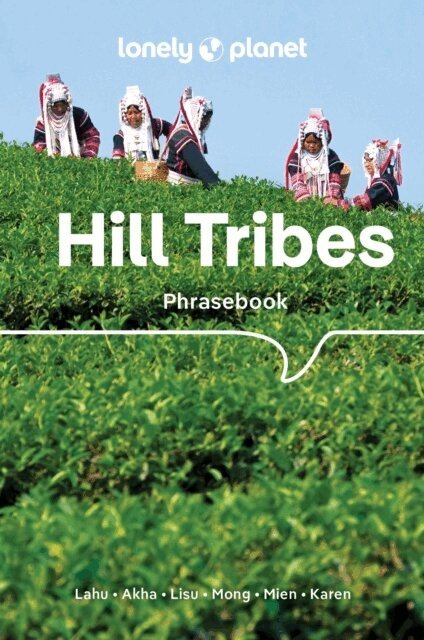
Learn essential phrases and vocabulary–from directions to eating out and travelling safely–and get to the heart of the local culture with this on-the-go language guide.Never get stuck for words again with Lonely Planet's Hill Tribes Phrasebook & Dictionary and feel at ease with social greetings, manners and tips on local culture during your travels. Use the pull-out fast-phrases card when you need to reference something quickly, and let the 3,500 word two-way dictionary guide you in your conversations.Inside Lonely Planet's Hill Tribes Phrasebook & Dictionary:Learn top phrases and get to grips with the basics with handy guides on pronunciation, phonetics and grammarBuy tickets for transport, find and book accommodation, get directions, understand currency and find your way when you're out and aboutOrder foods with confidence using the menu decoder, learn table etiquette and manners, ask for special meals and discuss dietary requirementsPractice simple greetings and conversation starters so you can meet new people and socialise with the community Understand what to say when visiting a pharmacy, discuss medical symptoms, speak to a doctor, contact the police, and find help when you need it Reference situations and events quickly using the pull-out fast-phrases cardTranslate specific words and learn their meanings with the 3,500 word two-way dictionaryLonely Planet's Phrasebook & Dictionary series covers 120+ languages – more than any other publisher on the market! Get to the heart of Thailand and immerse yourself in the language, so you can get closer to the local culture and community, and have your best adventure yet.
E-bok
PDF, Engelska, 20211 363 kr
Läs direkt efter köp
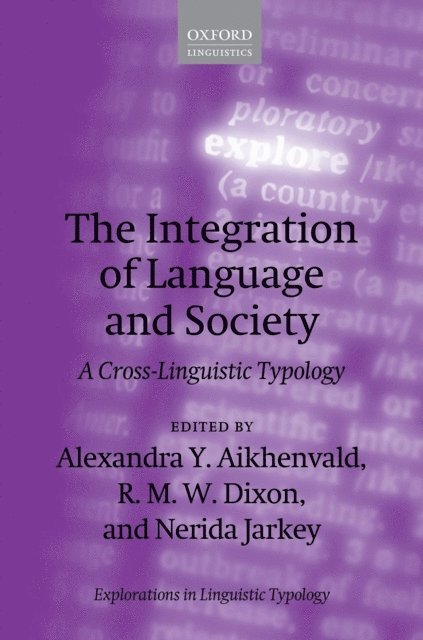
The volume explores the integration of language and society as reflected in the grammar of a language. Each language bears an imprint of the society that speaks it; language reflects speakers'' relationships with each other, their beliefs, and their ways of viewing the world, as well as other aspects of their social environment, their means of subsistence, and even geographical features of the areas in which the language is spoken. The chapters in this book draw on data from the languages of Australia and New Guinea (Dyirbal and Idi), South America (Chamacoco, Ayoreo, Murui, and Tariana), Asia (Japanese, Brokpa, and Dzongkha), and Africa (Iraqw) to examine the ways in which the grammar of a language relates to societal practices. The volume begins with a general introduction that summarizes the main issues relevant to how language and societies are integrated, before later chapters explore specific points of integration in a range of diverse languages, including honorifics, genders and classifiers, possessives, evidentiality, comparatives, and demonstratives. The findings advance our understanding of how non-linguistic traits have their correlates in language, and how these change when society changes. The volume will be a valuable resource for scholars and students of typology, cultural and linguistic anthropology, and sociolinguistics and social sciences more widely.
Inbunden, Engelska, 2021
1 710 kr
Skickas inom 7-10 vardagar
The volume explores the integration of language and society as reflected in the grammar of a language. Each language bears an imprint of the society that speaks it; language reflects speakers' relationships with each other, their beliefs, and their ways of viewing the world, as well as other aspects of their social environment, their means of subsistence, and even geographical features of the areas in which the language is spoken. The chapters in this book draw on data from the languages of Australia and New Guinea (Dyirbal and Idi), South America (Chamacoco, Ayoreo, Murui, and Tariana), Asia (Japanese, Brokpa, and Dzongkha), and Africa (Iraqw) to examine the ways in which the grammar of a language relates to societal practices. The volume begins with a general introduction that summarizes the main issues relevant to how language and societies are integrated, before later chapters explore specific points of integration in a range of diverse languages, including honorifics, genders and classifiers, possessives, evidentiality, comparatives, and demonstratives. The findings advance our understanding of how non-linguistic traits have their correlates in language, and how these change when society changes. The volume will be a valuable resource for scholars and students of typology, cultural and linguistic anthropology, and sociolinguistics and social sciences more widely.