Néstor García Canclini – författare
Visar alla böcker från författaren Néstor García Canclini. Handla med fri frakt och snabb leverans.
19 produkter
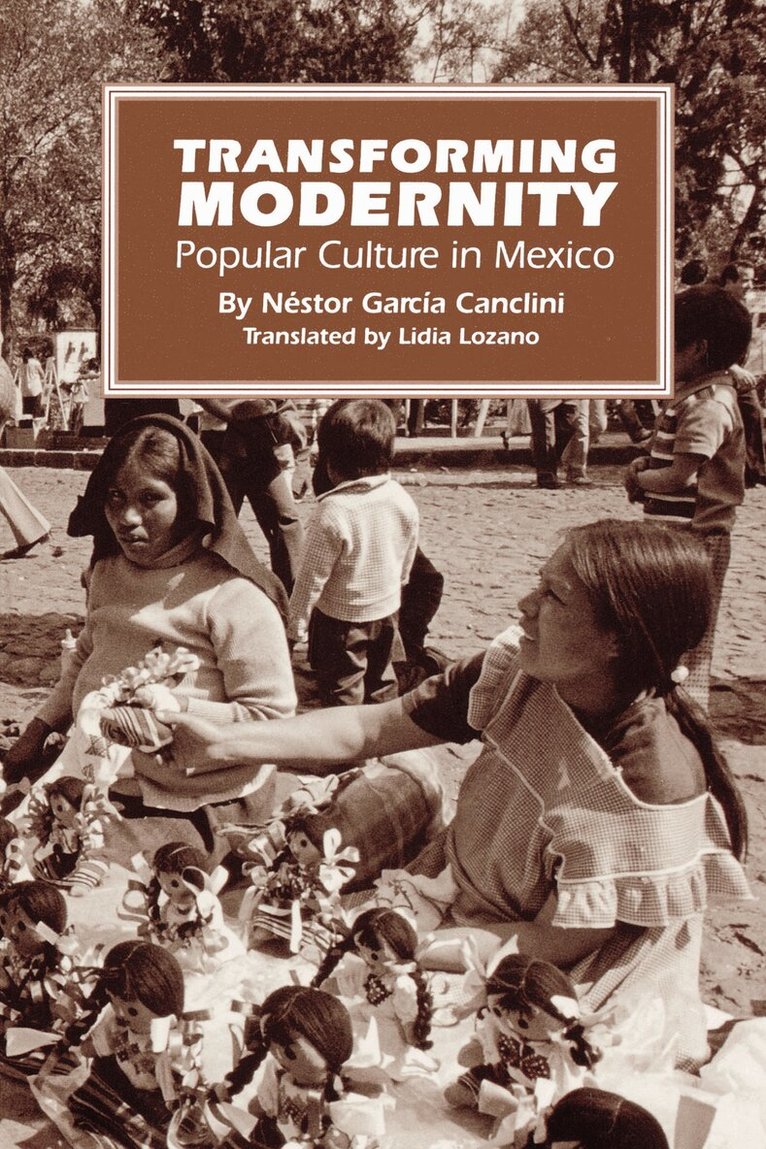
Transforming Modernity
Popular Culture in Mexico
Häftad, 1993
219 kr
Lägg i varukorg
Is popular culture merely a process of creating, marketing, and consuming a final product, or is it an expression of the artist's surroundings and an attempt to alter them? Noted Argentine/Mexican anthropologist NÉstor GarcÍa Canclini addresses these questions and more in Transforming Modernity, a …
Consumers and Citizens
Globalization and Multicultural Conflicts
Häftad, 2001
272 kr
Lägg i varukorg
An essential analysis of the ways consumerism and globalization intersect with political power.Social Theory/Latin American StudiesAn essential analysis of the ways consumerism and globalization intersect with political power. In Consumers and Citizens, NÉstor GarcÍa Canclini, the best-known and …
Hybrid Cultures
Strategies for Entering and Leaving Modernity
Häftad, 2005
300 kr
Lägg i varukorg
When it was originally published, Hybrid Cultures was foundational to Latin American cultural studies. This now-classic work features a new introduction in which Nestor Garcia Canclini calls for a cultural politics to contain the damaging effects of globalization and responds to relevant …
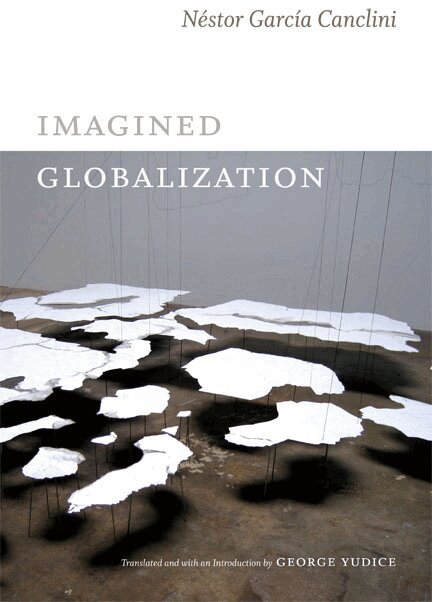
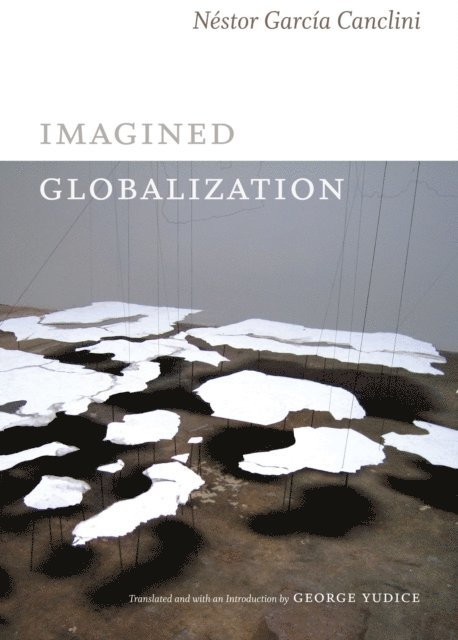
Imagined Globalization
Inbunden, 2014
2288 kr
Lägg i varukorg
A leading figure in cultural studies worldwide, NÉstor GarcÍa Canclini is a Latin American thinker who has consistently sought to understand the impact of globalization on the relations between Latin America, Europe, and the United States, and among Latin American countries. In this book, newly …
Imagined Globalization
Häftad, 2014
440 kr
Lägg i varukorg
A leading figure in cultural studies worldwide, NÉstor GarcÍa Canclini is a Latin American thinker who has consistently sought to understand the impact of globalization on the relations between Latin America, Europe, and the United States, and among Latin American countries. In this book, newly …
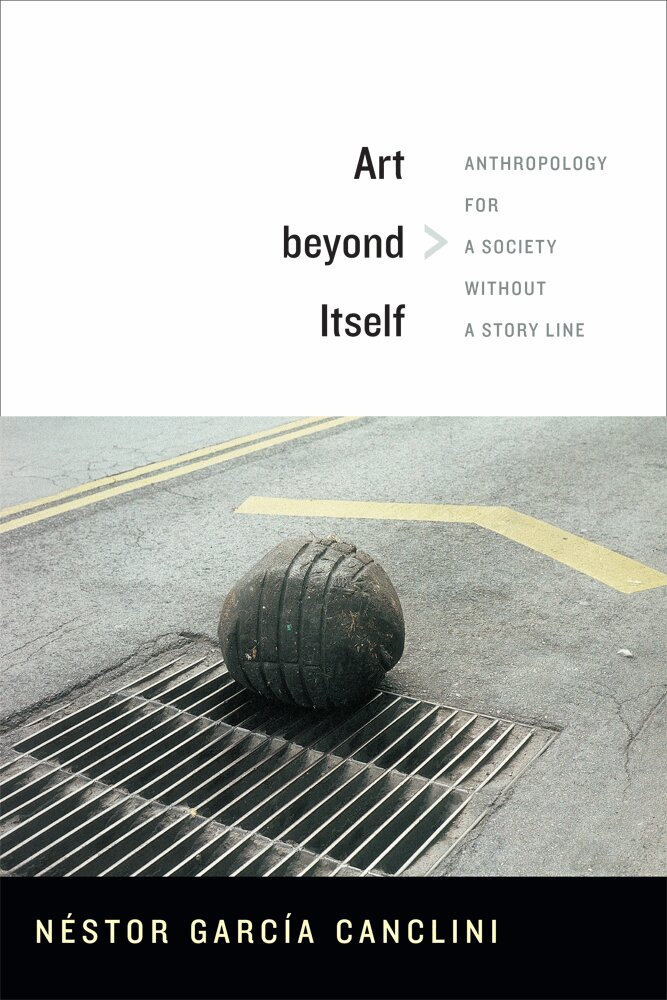
Art Beyond Itself
Anthropology for a Society Without a Story Line
Inbunden, 2014
1473 kr
Lägg i varukorg
First published in Spanish in 2010, Art beyond Itself is NÉstor GarcÍa Canclini's deft assessment of contemporary art. The renowned cultural critic suggests that, ideally, art is the place of imminence, the place where we glimpse something just about to happen. Yet, as he demonstrates, defining …
Art Beyond Itself
Anthropology for a Society Without a Story Line
Häftad, 2014
352 kr
Lägg i varukorg
First published in Spanish in 2010, Art beyond Itself is NÉstor GarcÍa Canclini's deft assessment of contemporary art. The renowned cultural critic suggests that, ideally, art is the place of imminence, the place where we glimpse something just about to happen. Yet, as he demonstrates, defining …
Art beyond Itself
Anthropology for a Society without a Story Line
E-bok, 2014
520 kr
Lägg i varukorg
First published in Spanish in 2010, Art beyond Itself is Néstor García Canclini''s deft assessment of contemporary art. The renowned cultural critic suggests that, ideally, art is the place of imminence, the place where we glimpse something just about to happen. Yet, as he demonstrates, defining …
Imagined Globalization
E-bok, 2014
652 kr
Lägg i varukorg
A leading figure in cultural studies worldwide, Néstor García Canclini is a Latin American thinker who has consistently sought to understand the impact of globalization on the relations between Latin America, Europe, and the United States, and among Latin American countries. In this book, newly …
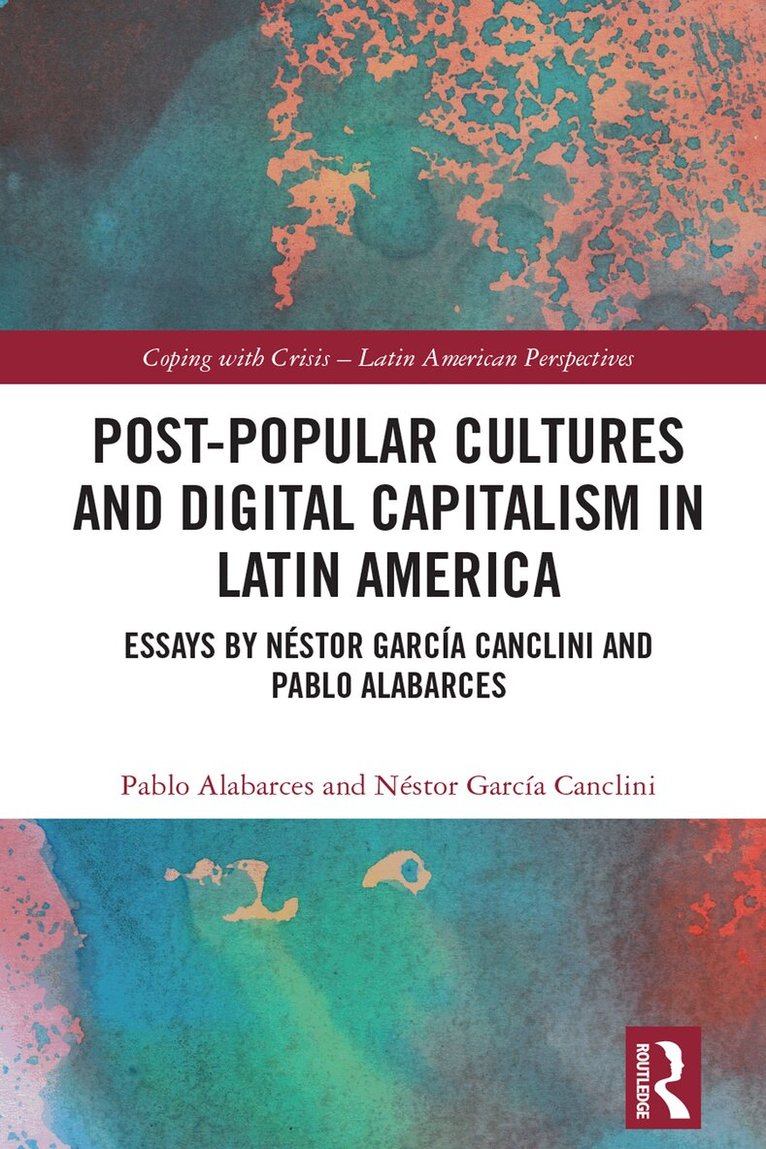
Post-Popular Cultures and Digital Capitalism in Latin America
Essays by Néstor García Canclini and Pablo Alabarces
Av Nestor Garcia Canclini, Pablo Alabarces
E-bok, 2024
813 kr
Lägg i varukorg
In this book, renowned Latin American intellectuals, Pablo Alabarces and Néstor García Canclini, bring us up to date on the changes in the status and role of the popular classes in Latin American democracies over the past two decades. Building on decades-long research and experience in the field of …
Post-Popular Cultures and Digital Capitalism in Latin America
Essays by Néstor García Canclini and Pablo Alabarces
Av Nestor Garcia Canclini, Pablo Alabarces
E-bok, 2024
813 kr
Lägg i varukorg
In this book, renowned Latin American intellectuals, Pablo Alabarces and Néstor García Canclini, bring us up to date on the changes in the status and role of the popular classes in Latin American democracies over the past two decades. Building on decades-long research and experience in the field of …
Post-Popular Cultures and Digital Capitalism in Latin America
Essays by Néstor García Canclini and Pablo Alabarces
Av Pablo Alabarces, Néstor García Canclini
Inbunden, 2024
2504 kr
Lägg i varukorg
In this book, renowned Latin American intellectuals, Pablo Alabarces and Néstor García Canclini, bring us up to date on the changes in the status and role of the popular classes in Latin American democracies over the past two decades. Building on decades-long research and experience in the field of …
Post-Popular Cultures and Digital Capitalism in Latin America
Essays by Néstor García Canclini and Pablo Alabarces
Av Pablo Alabarces, Néstor García Canclini
Häftad, 2025
704 kr
Lägg i varukorg
In this book, renowned Latin American intellectuals, Pablo Alabarces and Néstor García Canclini, bring us up to date on the changes in the status and role of the popular classes in Latin American democracies over the past two decades. Building on decades-long research and experience in the field of …
La creatividad redistribuida
Av Juan Villoro, Nestor Garcia Canclini
E-bok, 2014
103 kr
Lägg i varukorg
Por iniciativa del antropólogo Néstor Carcía Canclini y del escritor Juan Villoro, un grupo interdisciplinario explora la nueva circulación de significados artísticos y la conformación de públicos en la América Latina de hoy. El análisis colectivo aborda, entre otros temas, la piratería y el …
La sociedad sin relato : antropología y estética de la inminencia
Antropología y estética de la inminencia
Häftad, 2010
128 kr
Lägg i varukorg
En momentos en que las ciencias sociales hallan difícil explicar los logros y los fracasos de la globalización, cuando el arco que va de la caída de las Torres Gemelas al derrumbe del mundo de las finanzas ha hecho del inicio de este siglo el gran territorio de la incertidumbre, una nueva mirada …
Diferentes, desiguales y desconectados
Mapas de la interculturalidad
E-bok, 2022
147 kr
Lägg i varukorg
La interacción entre culturas se intensifica, impulsada por los intercambios tecnológicos y económicos. El aumento de choques interculturales hace pensar que soportamos mal tanta proximidad. ¿Cómo organizar este paisaje?Según la mayoría de los antropólogos, algunos procesos nos diferencian y otros …
Lectores, espectadores e internautas
E-bok, 2007
108 kr
Lägg i varukorg
Existen libros que averiguan qué significa leer, ser espectador en un museo o de la televisión, y navegar como internauta. García Canclini explora aquí cómo se transforman estas actividades al practicar cada persona las tres. Los museos, las editoriales y los medios de comunicación ya no pueden ser …
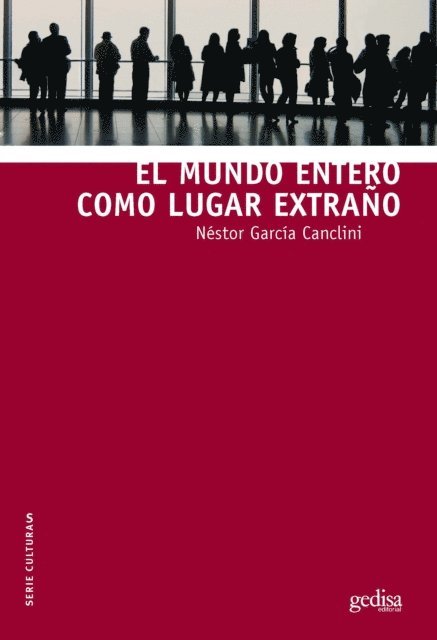
El mundo entero como lugar extraño
E-bok, 2014
113 kr
Lägg i varukorg
Este libro se sitúa en forma sugerente en el cuarto de máquinas o en la tramoya de la reflexión. Su objetivo consiste en entender la forma en que se produce el pensamiento. Estamos ante una brillante Carta de Navegación para circular por los fenómenos culturales contemporáneos. García Canclini …