Ngonidzashe Marongwe – författare
Visar alla böcker från författaren Ngonidzashe Marongwe. Handla med fri frakt och snabb leverans.
9 produkter
9 produkter
E-bok
PDF, Engelska, 2018963 kr
Läs direkt efter köp
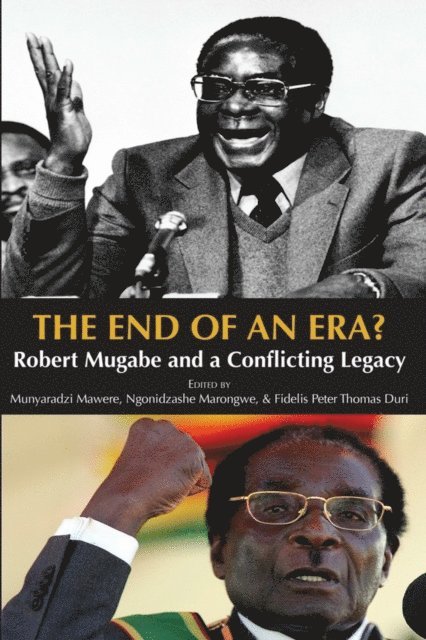
Arguably, one of the most polarising figures in modern times has been Robert Gabriel Mugabe, the former President of the Republic of Zimbabwe. The mere mentioning of his name raises a lot of debate and often times vicious, if not irreconcilable differences, both in Zimbabwe and beyond. In an article titled: ‘Lessons of Zimbabwe’, Mahmood Mamdani succinctly captures the polarity thus: ‘It is hard to think of a figure more reviled in the West than Robert Mugabe… and his land reform measures, however harsh, have won him considerable popularity, not just in Zimbabwe but throughout southern Africa.’ This, together with his recent ‘stylised’ ouster, speaks volumes to his conflicted legacy. The divided opinion on Mugabe’s legacy can broadly be represented, first, by those who consider him as a champion of African liberation, a Pan-Africanist, an unmatched revolutionary and an avid anti-imperialist who, literally, ‘spoke the truth’ to Western imperialists. On the other end of the spectrum are those who – seemingly paying scant regard to the predicament of millions of black Zimbabweans brutally dispossessed of their land and human dignity since the Rhodesian days – have differentially characterised Mugabe as a rabid black fascist, an anti-white racist, an oppressor, and a dictator. Drawing on all these opinions and characterisations, the chapters ensconced in this volume critically reflect on the personality, leadership style and contributions of Robert Mugabe during his time in office, from 1980 to November 2017. The volume is timely in view of the current contested transition in Zimbabwe, and with regard to the ongoing consultations on the Land Question in neighbouring South Africa. It is a handy and richly documented text for students and practitioners in political science, African studies, economics, policy studies, development studies, and global studies.
E-bok
PDF, Engelska, 2019712 kr
Läs direkt efter köp
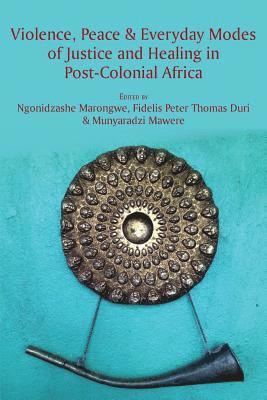
Violence in its various proportions, genres and manifestations has had an enduring historical legacy the world over. However, works speaking to approaches aimed at mitigating violence characteristic of Africa are very limited. As some scholars have noted, Africans have experienced cycles of violence since the pre-colonial epoch, such that overt violence has become banalised on the African continent. This has had the effect of generating complex results, legacies and perennial emotional wounds that call for healing, reconciliation, justice and positive peace. Yet, in the absence of systematic and critical approaches to the study of violence on the continent, discourses on violence would hardly challenge the global matrices of violence that threaten peace and development in Africa. This volume is a contribution in the direction of such urgently needed systematic and critical approaches. It interrogates, from different angles and with inspiration from a multidisciplinary perspective, the contentious production and resilience of violence in Africa. It calls for a paradigm shift , an alternative approach that forges and merges African customary dispute resolution and Western systems of dispute resolution , towards a framework of positive peace, holistic restoration, sustainable development and equity. The book is a welcome contribution to students and practitioners in security studies, African studies, development studies, global studies, policy studies, and political science.
Häftad, Engelska, 2019
619 kr
Skickas inom 5-8 vardagar
Häftad, Engelska, 2018
828 kr
Skickas inom 5-8 vardagar
Häftad, Engelska, 2021
519 kr
Skickas inom 5-8 vardagar
E-bok
PDF, Engelska, 2021594 kr
Läs direkt efter köp
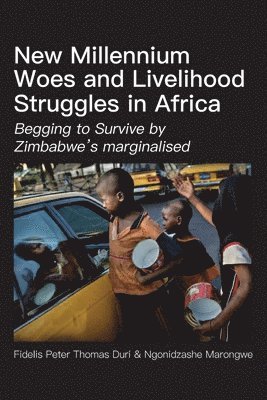
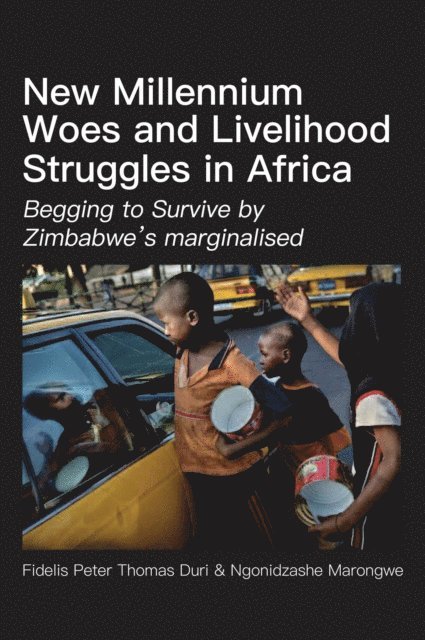
One of the oldest survival pursuits undertaken by the weak and the downtrodden people across the world has been begging. Going back to the ancient Christian biblical times up to the present epoch as well as across varying spatial settings, in situations of trouble and tribulations, parts of various communities have resorted to beggary to either overcome immediate adversities or longer term calamities. Drawing on insights from two polar theoretical lenses of Social Constructionism and Social Deconstructionism, and guided by a pithy study of the begging across the African continent especially by Zimbabweans, this book troubles the various contours related to the subject of begging. Inter alia, the book considers the concept of begging, the causes of the prevalence of begging across the world and particularly among Zimbabweans, the challenges and benefits associated with the pursuit of alms, the impact of begging in foreign lands as well as some of the strategies that beggars employ to maximize their collections and/ or profits. What can be discerned from the book is that for many, begging is one of the last resort undertakings with low pickings. However, from a utilitarian perspective, begging has helped to sustain the impoverished livelihoods of Zimbabweans, both inside and outside the borders of the country since the advent of a debilitating crisis experienced from the turn of the new millennium. On the whole, this book seeks to provoke further researches on an important socio-economic area that affects many African communities but has so far been scantily researched. The book is handy for students and practitioners in economic history, African studies, economics, risk and disaster management, social anthropology, political science, and development studies.
E-bok
PDF, Engelska, 2022594 kr
Läs direkt efter köp
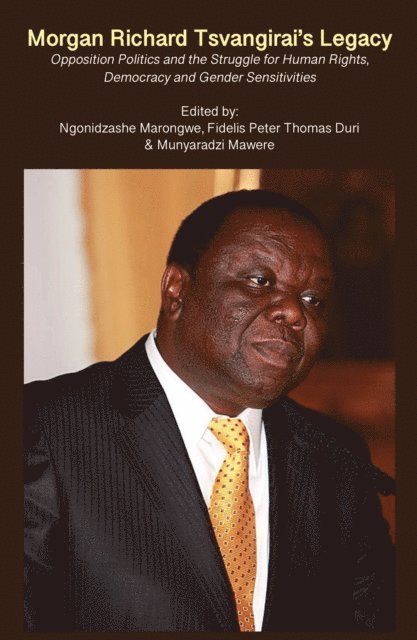
Morgan Richard Tsvangirai is arguably the most polarising figure and advocate of democracy and human rights in the history of opposition politics in Zimbabwe. He is as much a topic of debate in Zimbabwe and beyond as the late president Robert Gabriel Mugabe. Tsvangirai''s legacy, like Mugabe''s, remains indisputably controversial and conflicted. Broadly, the divided opinion on the Tsvangirai legacy can be represented, firstly, by those who argue that Tsvangirai was the champion of democracy and the face of the struggle for human rights in Zimbabwe. In this light, Tsvangirai has been variously described as a "selfless...people''s hero", a "colossus of the struggle for democracy", "the commander of the struggle", "a symbol of courage and resistance", and "the doyen of constitutionalism" in Zimbabwe. On the other hand, critics have described Tsvangirai as a "sell-out", "a Judas Iscariot", "traitor", and "coward", among other nefarious and pejorative characterisations. Drawing on all these opinions and the various characterisations of Tsvangirai, this book provides a comprehensive and multi-disciplinary appraisal of a gigantic trade unionist and political figure who, in his life and in death, inspires different narratives, emotions and values. This book is therefore about a mortal but "living" figure who left an indelible mark on Zimbabwe, Africa and the rest of the world in fields such as trade unionism, governance and politics. As such, the book is handy for students and practitioners in African studies, political science, policy studies, economics, history, global studies and development studies.
E-bok
PDF, Engelska, 2016772 kr
Läs direkt efter köp
This volume critically interrogates, from different angles and dimensions, the resilience of conflict and violence into 21st century Africa. The demise of European colonial administration in Africa in the 1960s wielded fervent hope for enduring peace for the people of Africa. Regrettably, conflict alongside violence in all its dimensions � physical, religious, political, psychological and structural � remain unabated and occupy central stage in contemporary Africa. The resilience of conflict and violence on the continental scene invokes unsettling memories of the past while negatively influencing the present and future of crafting inclusive citizenship and statehood. The book provides fresh insightful ethnographic and intellectual material for rethinking violence and conflict, and for fostering long-lasting peace and political justice on the continent and beyond. With its penetrating focus on conflict and associated trajectories of violence in Africa, the book is an inestimable asset for conflict management practitioners, political scientists, historians, civil society activists and leaders in economics and politics as well as all those interested in the affairs of Africa.
E-bok
PDF, Engelska, 2016816 kr
Läs direkt efter köp
The myths of peace and democracy in Africa are at the heart of this volume. Democracy and peace have become buzz words across postcolonial Africa. The gospel of democracy and peace is preached by national governments and by civil society and international organisations alike. But to what extent are the ongoing sideshows and charades of quasi-oligarchies in Africa really democracy? What do ordinary Africans mean when they hunger and thirst for democracy and peace? Positive and noble as the loud sounding rhetoric about democracy and peace in Africa might seem, the reality of propaganda and dissemblance and of multi-dimensional violence are simply too overwhelming not to be disillusioning. This book interrogates the rampant violence, enduring conflicts, autocratic governance, and facades of democracy amidst claims and calls for enduring peace on the continent. This is a monumental resource book for human rights activists, conflict management practitioners, civil society activists, political scientists, statesmen and development practitioners. It poses a challenge to those African governments who claim to embrace principles of democracy and respect for human rights to rethink and reconsider their role as ambassadors of peace, hope, transformation, and good governance.