Niall Brady – författare
Visar alla böcker från författaren Niall Brady. Handla med fri frakt och snabb leverans.
2 produkter
2 produkter
E-bok
Engelska, 201232 kr
Läs direkt efter köp
In the summer of 2011, investors with Custom House Capital - some of whom had all their pension savings tied up with the investment house - faced a nightmare: the possibility that their money was gone, and that they wouldn't be getting it back. Finance journalist Niall Brady takes us behind the scenes for the first in-depth account of a disaster that has cost investors millions. He shows how clients' funds were mis-allocated to cover losses, how the Financial Regulator, though aware of irregularities at CHC for years, failed to forestall the crisis, and how it remains unclear, over a year after the scandal was uncovered, whether people will get their money back. His account of the strange culture and practices of CHC makes House of Cards a must-read for fans of Too Big to Fail and The Big Short.Niall Brady is a chartered accountant and a journalist with the Sunday Times.'Damning ... Brady tells the tale of how the rogues still run rings around the protectors' Shane Ross, Sunday Independent'One of the most shocking stories to have emerged in Ireland's economic bust' Cantillon, Irish Times'Excellent concise read. Great story' Tom Lyons, author of The FitzPatrick Tapes
Häftad, Engelska, 2019
1 065 kr
Skickas inom 3-6 vardagar
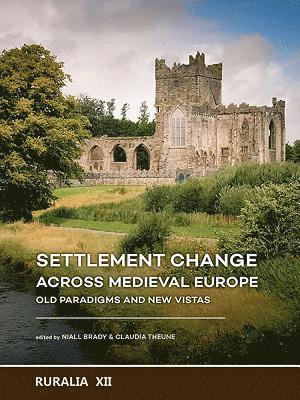
The idea that the past was an era with long periods of little or no change is almost certainly false. Change has always affected human society. Some of the catalysts for change were exogenous and lay in natural transformations, such as climate change or plant and animal diseases. Others came from endogamous processes, such as demographic change and the resulting alterations in demographic pressure. They might be produced by economic changes in the agrarian economy such as crop- or stock-breeding or better agricultural husbandry systems with the resultant greater harvests. Equally, they might be from technological developments in industry and manufacturing affecting traditional forms of production. We should also note changes in ideology within society and even between principal groups, such as secular and ecclesiastical bodies. We need to consider the impact of politics and warfare.These innovations, transmissions and transformations had profound spatial, economic and social impacts on the environments, landscapes and habitats evident at micro-, meso- and macro-levels. Changes, alterations and modifications may affect how land was worked, how it was organized, and the nature of buildings and rural complexes (homesteads, work buildings, villages, monasteries, towns and landscapes). The authors of the 36 papers focus in particular on transmissions and transformations in a longue durée perspective, such as from early medieval times (c. 500AD) to the High Middle Ages (c. 1000/1200 AD), and from medieval to post-medieval and early modern times (1700). The case studies include the shrinking and disappearance of settlements; changes in rule and authority; developments in the agrarian economy; the shift from handwork to manufacturing; demographic change.