Niamatullah Ibrahimi - Böcker
Visar alla böcker från författaren Niamatullah Ibrahimi. Handla med fri frakt och snabb leverans.
5 produkter
5 produkter
2 098 kr
Skickas inom 10-15 vardagar
Mapping Futures for Afghanistan offers a critical and forward-looking exploration of Afghanistan’s most pressing challenges and future possibilities. It examines the current crises posed by the Taliban’s return to power and the collapse of the Republic in August 2021 and maps a range of challenges and solutions that will shape the country’s long-term future.As the first volume of its kind to be entirely produced by scholars from Afghanistan, it critically engages with the dominant narratives and re-imagines the country’s path toward a just, pluralistic and democratic future. Featuring original contributions from leading experts, the volume critically examines Afghanistan’s political, economic, human rights, and geopolitical challenges - while exploring potential solutions. It foregrounds local knowledge and perspectives that are often excluded from mainstream policy and academic discourses. This timely collection will be of interest to a wide range of audiences, including policymakers, practitioners, scholars and students with an interest in Afghanistan and the broader processes and challenges of inclusive peacebuilding and conflict resolution in war-torn societies.
2 160 kr
Skickas inom 10-15 vardagar
This book offers an overview of the formation of the Afghan state and of the politics, economic challenges and international relations of contemporary Afghanistan. It opens with an account of some of the key features that make Afghanistan unique and proceeds to discuss how the Afghan state acquired a distinctive character as a rentier state. In addition, the authors outline a complex range of domestic and external factors that led to the breakdown of the state, and how that breakdown gave rise to a set of challenges with which Afghan political and social actors have been struggling to deal since the 2001 international intervention that overthrew the anti-modernist Taliban regime. It then presents the different types of politics that Afghanistan has witnessed over the last two decades; examines some of the most important features of the Afghan economy; and demonstrates how Afghanistan’s geopolitical location and international relations more broadly have complicated the task of promoting stability in the post-2001 period. It concludes with some reflections on the factors that are likely to shape Afghanistan’s future trajectory and notes that if there are hopes for a better future, they largely rest on the shoulders of a globalised generation of younger Afghans.This book will be of interest to students and scholars in the fields of Middle East and Central Asian studies, international relations, politics, development studies and history.
582 kr
Skickas inom 10-15 vardagar
This book offers an overview of the formation of the Afghan state and of the politics, economic challenges and international relations of contemporary Afghanistan. It opens with an account of some of the key features that make Afghanistan unique and proceeds to discuss how the Afghan state acquired a distinctive character as a rentier state. In addition, the authors outline a complex range of domestic and external factors that led to the breakdown of the state, and how that breakdown gave rise to a set of challenges with which Afghan political and social actors have been struggling to deal since the 2001 international intervention that overthrew the anti-modernist Taliban regime. It then presents the different types of politics that Afghanistan has witnessed over the last two decades; examines some of the most important features of the Afghan economy; and demonstrates how Afghanistan’s geopolitical location and international relations more broadly have complicated the task of promoting stability in the post-2001 period. It concludes with some reflections on the factors that are likely to shape Afghanistan’s future trajectory and notes that if there are hopes for a better future, they largely rest on the shoulders of a globalised generation of younger Afghans.This book will be of interest to students and scholars in the fields of Middle East and Central Asian studies, international relations, politics, development studies and history.
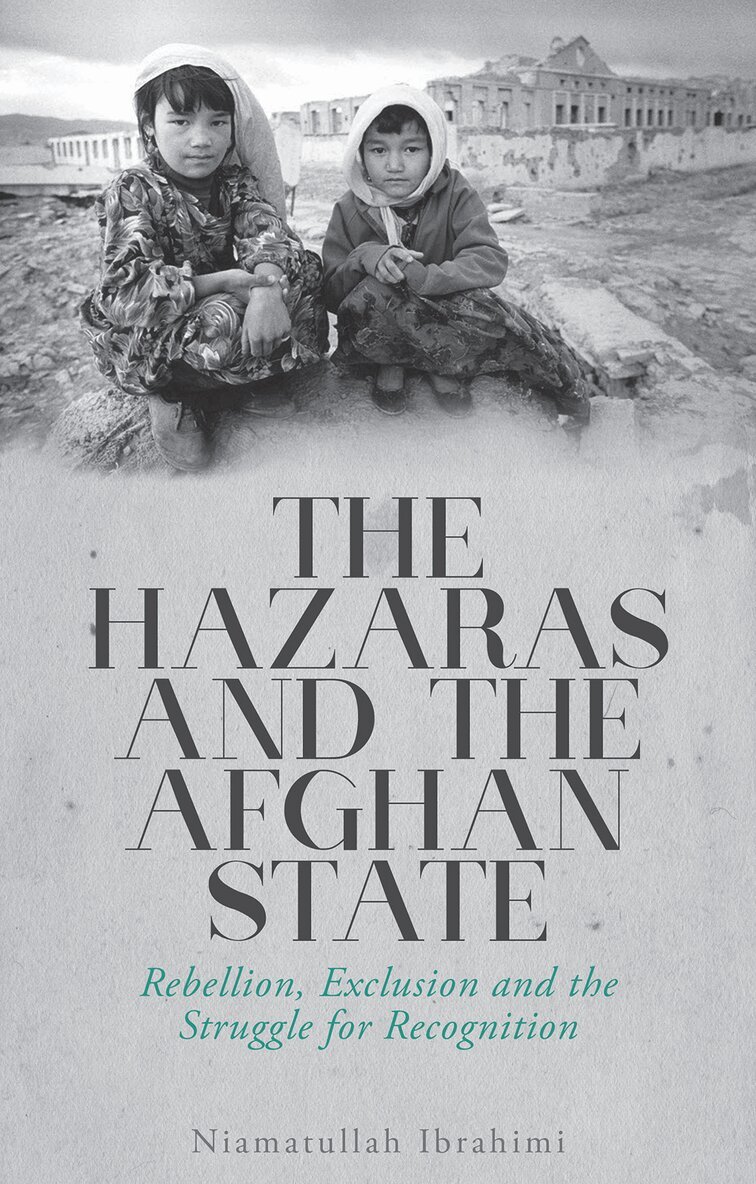
Hazaras and the Afghan State
Rebellion, Exclusion and the Struggle for Recognition
Häftad, Engelska, 2022
259 kr
Skickas
The Hazaras of Afghanistan have borne the brunt of many of the destructive forces unleashed by the establishment of the Afghan monarchy in 1747. The history of their relationship with the Afghan state has been punctuated by frequent episodes of ethnic cleansing, mass dispossession, forced displacement, enslavement and social and economic exclusion. Mostly Shia in a country dominated by Sunni Muslims, and identifiable because of their Asian features, the Hazaras became Afghanistan's internal 'Other'. They look different and practise a different school of Islam in a country that is prone to internal conflict and the machinations of external powers. The history of the Hazaras therefore offers a unique perspective into the deep contradictions of Afghanistan as a modern state, and how its ethnic and religious dynamics continue to undermine the post-2001 political process. This volume provides a fresh account of both the strategies and tactics of the Afghan state and how the Hazaras have responded to them, focusing on three key phenomena: Hazara rebellion and resistance to the intrusion of the Afghan state in the nineteenth century; the incorporation of the Hazara homeland into Afghanistan in the 1890s and their subsequent marginalisation and exclusion; and the Hazaras' ethnic mobilisation and struggle for recognition in recent decades.
Hazaras and the Afghan State
Rebellion, Exclusion and the Struggle for Recognition
Inbunden, Engelska, 2017
476 kr
Tillfälligt slut
The Hazaras of Afghanistan have borne the brunt of many of the destructive forces unleashed by the establishment of the Afghan monarchy in 1747. The history of their relationship with the Afghan state has been punctuated by frequent episodes of ethnic cleansing, mass dispossession, forced displacement, enslavement and social and economic exclusion. Mostly Shia in a country dominated by Sunni Muslims, and identifiable because of their Asian features, the Hazaras became Afghanistan's internal 'Other'. They look different and practise a different school of Islam in a country that is prone to internal conflict and the machinations of external powers. The history of the Hazaras therefore offers a unique perspective into the deep contradictions of Afghanistan as a modern state, and how its ethnic and religious dynamics continue to undermine the post-2001 political process. This volume provides a fresh account of both the strategies and tactics of the Afghan state and how the Hazaras have responded to them, focusing on three key phenomena: Hazara rebellion and resistance to the intrusion of the Afghan state in the nineteenth century; the incorporation of the Hazara homeland into Afghanistan in the 1890s and their subsequent marginalisation and exclusion; and the Hazaras' ethnic mobilisation and struggle for recognition in recent decades.