Nicholas Crafts - Böcker
Visar alla böcker från författaren Nicholas Crafts. Handla med fri frakt och snabb leverans.
13 produkter
13 produkter
733 kr
Skickas inom 7-10 vardagar
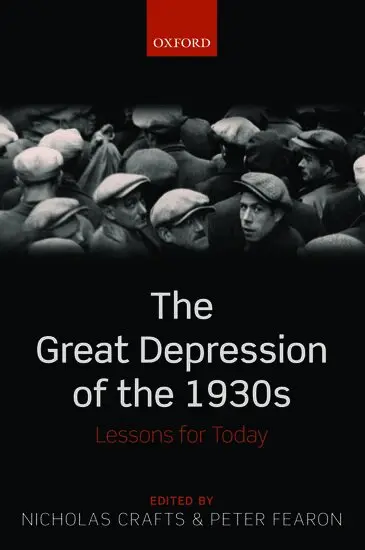
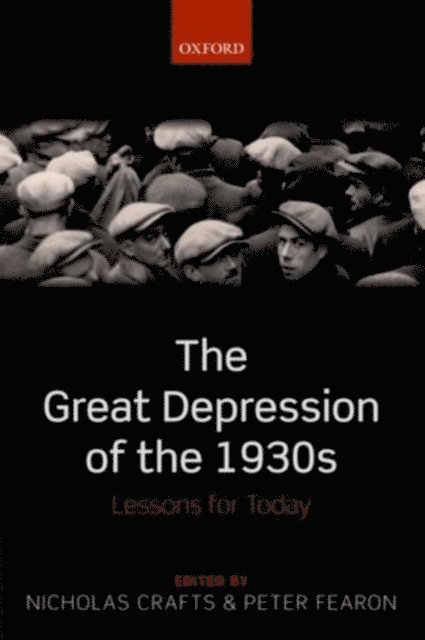
Understanding the Great Depression has never been more relevant than in today's economic crisis. This edited collection provides an authoritative introduction to the Great Depression as it affected the advanced countries in the 1930s. The contributions are by acknowledged experts in the field and cover in detail the experiences of Britain, Germany, and, the United States, while also seeing the depression as an international disaster. The crisis entailed the collapse of the international monetary system, sovereign default, and banking crises in many countries in the context of the most severe downturn in western economic history. The responses included protectionism, regulation, fiscal and monetary stimulus, and the New Deal. The relevance to current problems facing Europe and the United States is apparent. The chapters are written at a level which will be comprehensible to advanced undergraduates in economics and history while also being a valuable source of reference for policy makers grappling with the current economic crisis. The book will be of interest to modern macroeconomists and students of interwar history alike and seeks to bring the results of modern research in economic history to a wide audience. The focus is not only on explaining how the Great Depression happened but also on understanding what eventually led to the recovery from the crisis. A key feature is that every chapter has a full list of bibliographical references which can be a platform for further study.
796 kr
Skickas inom 5-8 vardagar
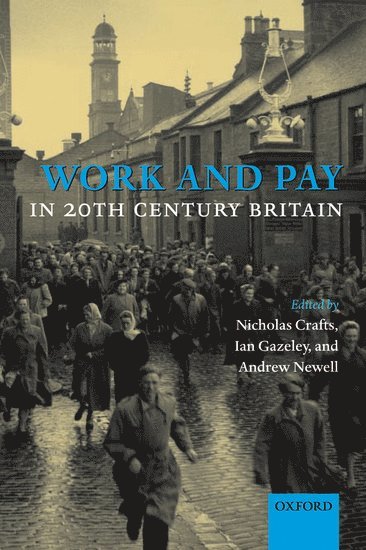
From assembly line to call centre, this volume charts the immense transformation of work and pay across the 20th century and provides the first labour focused history of Britain. Written by leading British historians and economists, each chapter stands as a self-contained reading for those who need an overview of the topic, as well as an introduction to and analysis of the controversies among scholars for readers entering or refreshing deeper study. The 20th century was a period of unrivalled change in the British labour market. Technology, social movements, and political action all contributed to an increased standard of living, while also revolutionizing what workers do and how they do it. Covering a range of topics from lifetime work patterns and education to unemployment and the welfare state, this book provides a practical introduction to the evolution of work and pay in 20th century Britain.
1 081 kr
Skickas inom 3-6 vardagar
From assembly line to call centre, this volume charts the immense transformation of work and pay across the 20th century and provides the first labour focused history of Britain. Written by leading British historians and economists, each chapter stands as a self-contained reading for those who need an overview of the topic, as well as an introduction to and analysis of the controversies among scholars for readers entering or refreshing deeper study. The 20th century was a period of unrivalled change in the British labour market. Technology, social movements, and political action all contributed to an increased standard of living, while also revolutionizing what workers do and how they do it. Covering a range of topics from lifetime work patterns and education to unemployment and the welfare state, this book provides a practical introduction to the evolution of work and pay in 20th century Britain.
2 085 kr
Skickas inom 3-6 vardagar
Understanding the Great Depression has never been more relevant than in today's economic crisis. This edited collection provides an authoritative introduction to the Great Depression as it affected the advanced countries in the 1930s. The contributions are by acknowledged experts in the field and cover in detail the experiences of Britain, Germany, and, the United States, while also seeing the depression as an international disaster. The crisis entailed the collapse of the international monetary system, sovereign default, and banking crises in many countries in the context of the most severe downturn in western economic history. The responses included protectionism, regulation, fiscal and monetary stimulus, and the New Deal. The relevance to current problems facing Europe and the United States is apparent.The chapters are written at a level which will be comprehensible to advanced undergraduates in economics and history while also being a valuable source of reference for policy makers grappling with the current economic crisis. The book will be of interest to modern macroeconomists and students of interwar history alike and seeks to bring the results of modern research in economic history to a wide audience. The focus is not only on explaining how the Great Depression happened but also on understanding what eventually led to the recovery from the crisis. A key feature is that every chapter has a full list of bibliographical references which can be a platform for further study.
187 kr
Skickas inom 5-8 vardagar
Economic historian Professor Nick Crafts gives a wide-ranging assessment of the economic record of the recent Conservative Government.
193 kr
Tillfälligt slut
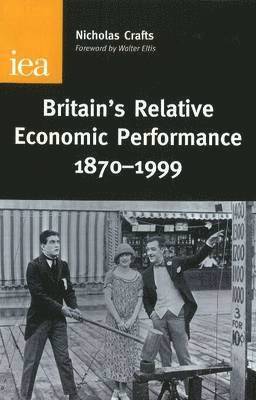
Judgments about Britain's economic performance are constantly being made, often based on inadequate evidence. In this paper, Professor Nicholas Crafts, one of Britain's leading economic historians, assembles the evidence, places recent performance in a long run context and makes informed judgements about whether Britain is suffering from absolute or relative decline. His book is a mine of information about economic trends since the 1870s, giving details of the GDP, productivity, investment, educational attainment, taxation and other statistics which are relevant if proper assessments of economic performance are to be made. One of his conclusions is that the economic reforms which began with the Thatcher governments, and which have broadly been continued under New Labour, have made a difference, avoiding some of the 'government failures' of earlier years. How managers respond to the revolution in information and communications technology is now a key factor in determining Britain's future performance.
2 369 kr
Skickas inom 10-15 vardagar
Forrest Capie is an eminent economic historian who has published extensively on a wide range of topics, with an emphasis on banking and monetary history, particularly in the nineteenth and twentieth centuries, but also in other areas such as tariffs and the interwar economy. He is also a former editor of the Economic History Review, one of the leading academic journals in this discipline.This book comprises a collection of papers by eminent scholars in the fields of historiography, banking, monetary economics both domestic and international, and tariff theory and policy, all areas to which Forrest Capie, in whose honour this book was produced, has made major contributions. Under the editorship of Geoffrey Wood, Terence Mills and Nicholas Crafts, this book brings together a stellar line of contributors – including Charles Goodhart, Harold James, Michael Bordo, Barry Eichengreen and Charles Calomiris. The book analyses many of the mainstream themes in economic and financial history – monetary policy, international financial regulation, economic performance, exchange rate systems, international trade, banking and financial markets – where historical perspectives are considered important. The current wave of globalisation has stimulated interest in many of these areas as ‘lessons of history’ are sought. These themes also reflect the breadth of Capie’s work in terms of time periods and topics.This expertly written book contain original scholarly work, often with new empirical results, and will be of interest to Economics postgraduates and researchers, particularly those focussing on monetary economics, banking and economic history, as well as to Central Bankers and trade negotiators.
694 kr
Skickas inom 10-15 vardagar
Forrest Capie is an eminent economic historian who has published extensively on a wide range of topics, with an emphasis on banking and monetary history, particularly in the nineteenth and twentieth centuries, but also in other areas such as tariffs and the interwar economy. He is also a former editor of the Economic History Review, one of the leading academic journals in this discipline.This book comprises a collection of papers by eminent scholars in the fields of historiography, banking, monetary economics both domestic and international, and tariff theory and policy, all areas to which Forrest Capie, in whose honour this book was produced, has made major contributions. Under the editorship of Geoffrey Wood, Terence Mills and Nicholas Crafts, this book brings together a stellar line of contributors – including Charles Goodhart, Harold James, Michael Bordo, Barry Eichengreen and Charles Calomiris. The book analyses many of the mainstream themes in economic and financial history – monetary policy, international financial regulation, economic performance, exchange rate systems, international trade, banking and financial markets – where historical perspectives are considered important. The current wave of globalisation has stimulated interest in many of these areas as ‘lessons of history’ are sought. These themes also reflect the breadth of Capie’s work in terms of time periods and topics.This expertly written book contain original scholarly work, often with new empirical results, and will be of interest to Economics postgraduates and researchers, particularly those focussing on monetary economics, banking and economic history, as well as to Central Bankers and trade negotiators.
604 kr
Skickas inom 7-10 vardagar
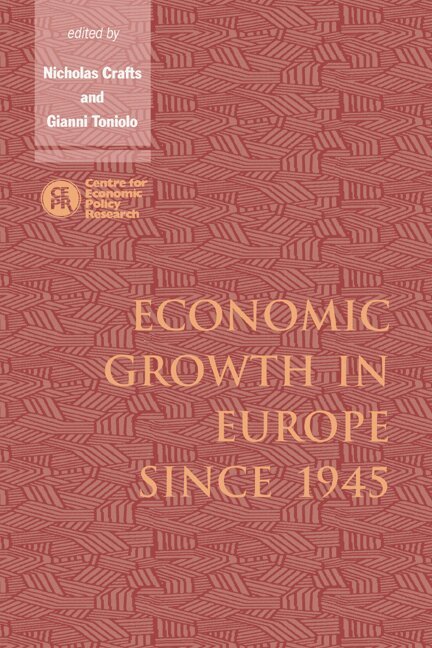
Interest in growth theory has reawakened since the middle of the 1980s, but it is some time since a comparative exercise has been carried out. This volume explores the catch-up and convergence evidence of European growth on a cross-sectional basis, armed not only with alternative theoretical ideas, but also with the empirical evidence since 1950 on which to draw. Individual chapters cover macroeconomic accounts, national accounts by industry, measures of fixed capital stocks, technology indicators, human capital, total factor productivity and changes in trend rates of growth, and each assesses the pitfalls, benefits and implications of the methods used. The result is an authoritative quantitative account of the dimensions of European economic growth within an explicitly internationally comparative framework.
1 702 kr
Skickas inom 7-10 vardagar
Interest in growth theory has reawakened since the middle of the 1980s, but it is some time since a comparative exercise has been carried out. This volume explores the catch-up and convergence evidence of European growth on a cross-sectional basis, armed not only with alternative theoretical ideas, but also with the empirical evidence since 1950 on which to draw. Individual chapters cover macroeconomic accounts, national accounts by industry, measures of fixed capital stocks, technology indicators, human capital, total factor productivity and changes in trend rates of growth, and each assesses the pitfalls, benefits and implications of the methods used. The result is an authoritative quantitative account of the dimensions of European economic growth within an explicitly internationally comparative framework.
672 kr
Skickas inom 7-10 vardagar
This compelling volume re-examines the topic of economic growth in Europe after the Second World War. The contributors approach the subject armed not only with new theoretical ideas, but also with the experience of the 1980s on which to draw. The analysis is based on both applied economics and on economic history. Thus, while the volume is greatly informed by insights from growth theory, emphasis is given to the presentation of chronological and institutional detail. The case study approach and the adoption of a longer-run perspective than is normal for economists allow new insights to be obtained. As well as including chapters that consider the experience of individual European countries, the book explores general European institutional arrangements and historical circumstances. The result is a genuinely comparative picture of post-war growth, with insights that do not emerge from standard cross-section regressions based on the post-1960 period.
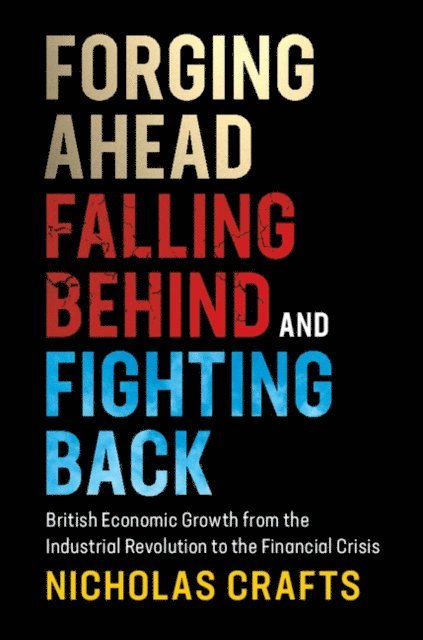
Forging Ahead, Falling Behind and Fighting Back
British Economic Growth from the Industrial Revolution to the Financial Crisis
Inbunden, Engelska, 2018
1 065 kr
Skickas inom 7-10 vardagar
To what extent has the British economy declined compared to its competitors and what are the underlying reasons for this decline? Nicholas Crafts, one of the world's foremost economic historians, tackles these questions in a major new account of Britain's long-run economic performance. He argues that history matters in interpreting current economic performance, because the present is always conditioned by what went before. Bringing together ideas from economic growth theory and varieties of capitalism to endogenous growth and cliometrics, he reveals the microeconomic foundations of Britain's economic performance in terms of the impact of institutional arrangements and policy choices on productivity performance. The book traces Britain's path from the first Industrial Revolution and global economic primacy through to its subsequent long-term decline, the strengths and weaknesses of the Thatcherite response, and the improvement in relative economic performance that was sustained to the eve of the financial crisis.
Forging Ahead, Falling Behind and Fighting Back
British Economic Growth from the Industrial Revolution to the Financial Crisis
Häftad, Engelska, 2018
331 kr
Skickas inom 7-10 vardagar
To what extent has the British economy declined compared to its competitors and what are the underlying reasons for this decline? Nicholas Crafts, one of the world's foremost economic historians, tackles these questions in a major new account of Britain's long-run economic performance. He argues that history matters in interpreting current economic performance, because the present is always conditioned by what went before. Bringing together ideas from economic growth theory and varieties of capitalism to endogenous growth and cliometrics, he reveals the microeconomic foundations of Britain's economic performance in terms of the impact of institutional arrangements and policy choices on productivity performance. The book traces Britain's path from the first Industrial Revolution and global economic primacy through to its subsequent long-term decline, the strengths and weaknesses of the Thatcherite response, and the improvement in relative economic performance that was sustained to the eve of the financial crisis.