Nicholas F Gray – författare
Visar alla böcker från författaren Nicholas F Gray. Handla med fri frakt och snabb leverans.
6 produkter
6 produkter
1 765 kr
Skickas inom 3-6 vardagar
Our rivers and lakes are continuously self-purifying thanks to algal and bacterial biofilms that grow over the surface of stones and other debris. This same process has been employed for over a century to treat our municipal and industrial wastewater in specially designed fixed film reactors that maximize this microbial activity by providing ideal growth conditions and unlimited food and oxygen. Fixed film, or attached biofilm, reactors are unique in their ability to treat complex wastewaters and shock loadings; using far less energy than other wastewater treatment processes such as activated sludge, making them a sustainable treatment option.Targeted at undergraduate and postgraduate engineers and scientists, this book follows the structure of bestseller Biology of Wastewater Treatment. This volume gives an expanded and up-to-date overview of the use of fixed-film reactors in wastewater treatment with content spanning from biofilm formation, to traditional trickling filters and rotating biological contactor technology, advanced submerged systems (including MBBRs and IFAS) and their key role in the treatment of contaminated air, and finally to nitrogen removal employing new microbial pathways such as Anammox. This monograph emphasizes the biological aspects of the processes.
2 160 kr
Skickas inom 3-6 vardagar
This book deals with natural treatment systems and the challenges the water industry faces in dealing with sustainability and the realisation of reaching Net Zero by 2030.Surface waters are all under threat, with freshwater ecosystems now facing unprecedented levels of contamination, even after a century of ever stricter legislation and regulation. The increase in population and especially in urbanization without sufficient planning and investment to ensure adequate wastewater collection and treatment coupled with the need to reduce greenhouse gas emissions associated with wastewater treatment is leading to a crisis in wastewater treatment in many countries.Natural treatment systems which use plants and soil micro-organisms are very much nature-based solutions and wherever applicable might offer sustainable and low emissions options for a range of wastewater problems protecting surface waters as well as creating new habitats to support and enhance wildlife diversity. In terms of circularity, natural treatment systems have the potential to produce a staggering array of useful and valuable by-products, including high-value compounds for the pharmaceutical industry.Related Link(s)
2 304 kr
Skickas inom 3-6 vardagar
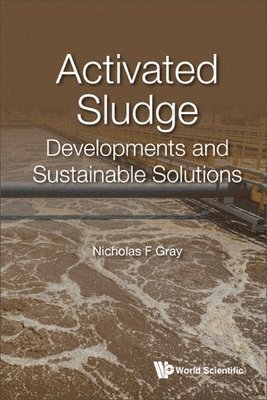
Activated sludge is the most widely used biological wastewater treatment process globally to date, although its high energy demand makes it a major contributor of greenhouse gas emissions. Over recent decades it has been constantly modified and retrofitted to treat ever higher loads or improve effluent standards which have often resulted in even greater carbon emissions. Conventional activated sludge treatment is at a crossroads where new sustainable solutions are required if we are to protect the quality of our rivers and meet net-zero carbon targets.The book details current operation and design with special emphasis on the biological aspects of the process. From the microbial kinetics to the fascinating process of floc formation and development, the book explores the development of our understanding of the process looking at new sustainable designs, including biological nutrient removal and new aeration systems. Sludge separation problems and control options are explained, with a trouble-shooting guide to non-bulking problems. Environmental issues including noise, odor, aerosols, micro-plastics and nanoparticles are all reviewed, as is pathogen removal and the problem of antibiotic resistant genes and bacteria. The development of membrane bioreactors has increased process reliability and effluent quality, while integrated fixed-film activated sludge processes are more efficient and compact. The book concludes by exploring how activated sludge can become more sustainable, for example, by carbon harvesting and byproduct recovery.This interdisciplinary book is essential reading for both engineers and scientists whether training at university or practitioners and consultants in the wastewater industry.Related Link(s)
1 837 kr
Skickas
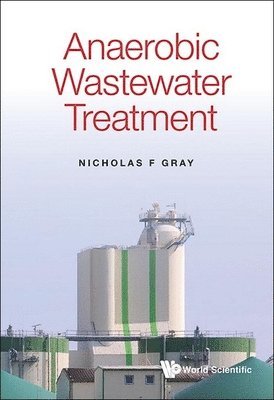
This book introduces the reader to the exciting range of modern anaerobic processes that are now available for wastewater treatment. To meet the new challenges of population growth, global warming, and the existing problems of protecting biodiversity and public health, we must move away from existing energy-intensive aerobic treatment processes to more sustainable systems. Embracing the circular economy concept, wastewater treatment plants are changing from being solely about pollution control to resource recovery centers, and to achieve this anaerobic treatment is required. Among the huge range of valuable by-products that can be generated by fermentation are biomethane, biohydrogen, bioplastics, biodiesel and volatile fatty acids which are used in the food, chemical and pharmaceutical sectors.The scope of the book covers all aspects of anaerobic wastewater treatment including the microbiology and chemistry of hydrolysis, acidogenesis, acetogenesis and methanogenesis and the main end products of digestion including contaminants. All processes are discussed including digesters, combined, attached growth and floc-based systems. Biogas production is examined along with biomethane and biohydrogen. The book finishes by looking at the key sustainable factors of anaerobic treatment and how biotechnology is pushing towards more efficient and reliable processes.This interdisciplinary book is essential reading for both engineers and scientists whether training at university or practitioners and consultants in the wastewater industry.
Del 4 - Series On Environmental Science And Management
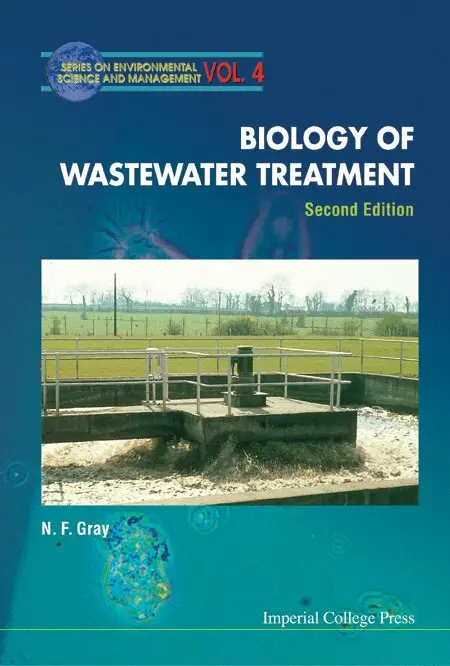
Biology Of Wastewater Treatment (2nd Edition)
Inbunden, Engelska, 2004
6 027 kr
Tillfälligt slut
This comprehensive text provides the reader with both a detailed reference and a unified course on wastewater treatment. Aimed at scientists and engineers, it deals with the environmental and biological aspects of wastewater treatment and sludge disposal.The book starts by examining the nature of wastewaters and how they are oxidized in the natural environment. An introductory chapter deals with wastewater treatment systems and examines how natural principles have been harnessed by man to treat his own waste in specialist reactors. The role of organisms is considered by looking at kinetics, metabolism and the different types of micro-organisms involved. All the major biological process groups are examined in detail, in highly referenced chapters; they include fixed film reactors, activated sludge, stabilization ponds, anaerobic systems and vegetative processes. Sludge treatment and disposal is examined with particular reference to the environmental problems associated with the various disposal routes. A comprehensive chapter on public health looks at the important waterborne organisms associated with disease, as well as removal processes within treatment systems. Biotechnology has had an enormous impact on wastewater treatment at every level, and this is explored in terms of resource reuse, biological conversion processes and environmental protection. Finally, there is a short concluding chapter that looks at the sustainability of waste water treatment. The text is fully illustrated and supported by over 3000 references.
Del 4 - Series On Environmental Science And Management
Biology Of Wastewater Treatment (2nd Edition)
Häftad, Engelska, 2004
2 840 kr
Tillfälligt slut
This comprehensive text provides the reader with both a detailed reference and a unified course on wastewater treatment. Aimed at scientists and engineers, it deals with the environmental and biological aspects of wastewater treatment and sludge disposal.The book starts by examining the nature of wastewaters and how they are oxidized in the natural environment. An introductory chapter deals with wastewater treatment systems and examines how natural principles have been harnessed by man to treat his own waste in specialist reactors. The role of organisms is considered by looking at kinetics, metabolism and the different types of micro-organisms involved. All the major biological process groups are examined in detail, in highly referenced chapters; they include fixed film reactors, activated sludge, stabilization ponds, anaerobic systems and vegetative processes. Sludge treatment and disposal is examined with particular reference to the environmental problems associated with the various disposal routes. A comprehensive chapter on public health looks at the important waterborne organisms associated with disease, as well as removal processes within treatment systems. Biotechnology has had an enormous impact on wastewater treatment at every level, and this is explored in terms of resource reuse, biological conversion processes and environmental protection. Finally, there is a short concluding chapter that looks at the sustainability of waste water treatment. The text is fully illustrated and supported by over 3000 references.