Nicholas Greenwood Onuf - Böcker
Visar alla böcker från författaren Nicholas Greenwood Onuf. Handla med fri frakt och snabb leverans.
5 produkter
5 produkter
468 kr
Skickas inom 5-8 vardagar
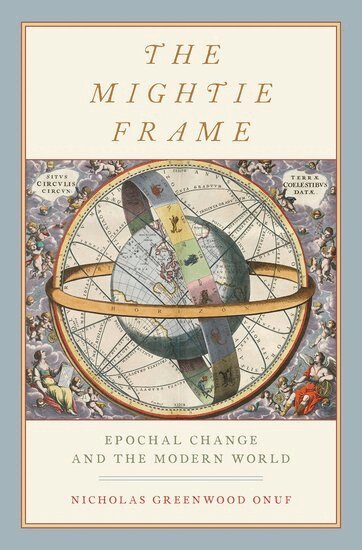
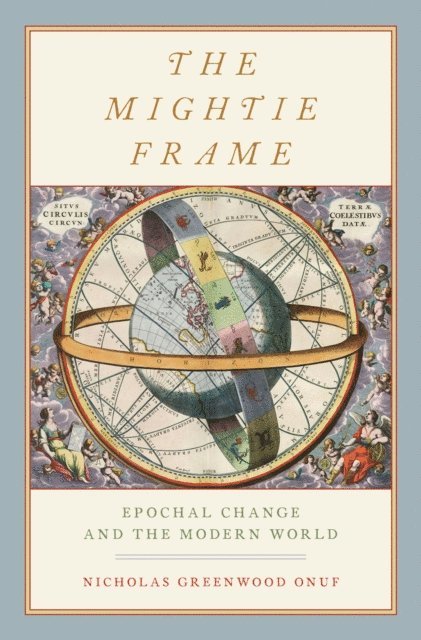
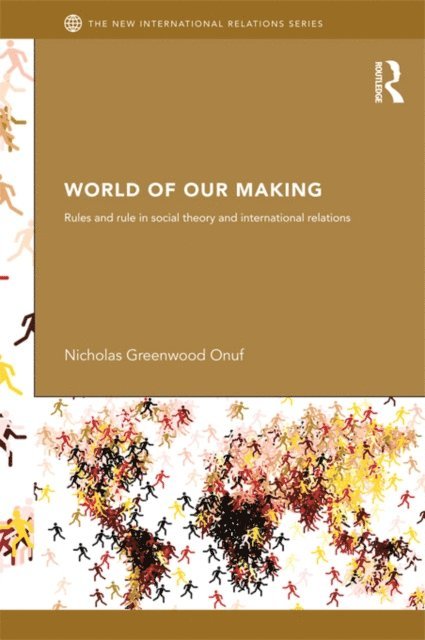
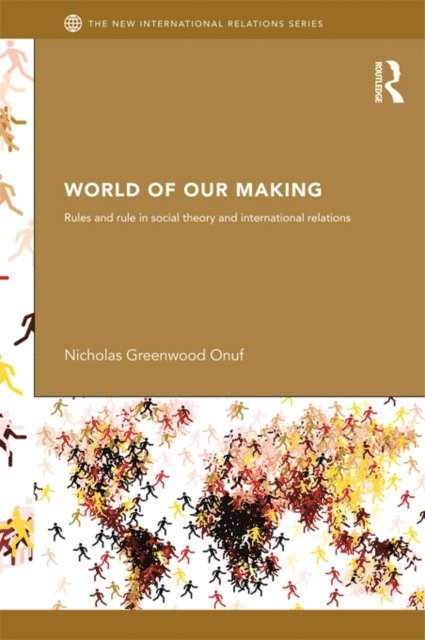
Inspired by Michel Foucault's The Order of Things, this book tells a story about epochal change in the modern world. Like Foucault, Nicholas Onuf is concerned with how we moderns think about ourselves and our world, but in this book he emphasizes the conceptual links in the ways we think, talk, get things done, conduct ourselves, and run societies, from age to age. As with his previous work, Onuf emphasizes the "rules for rule" that have solidified over time through repeated behaviors that work themselves out into a system of social uniformity and hierarchy. Rules set out who is a member of society, establish goals, provide opportunities to act, and dictate who sits on top -- in other words, what any political society looks like in a particular time and place. This book looks at the political society that has evolved since the Renaissance, or what might be called "the modern world," in order to consider what is yet to come. Onuf argues that modernity, although consisting of a succession of epochs or ages separated by great ruptures, has continued to change within the confines of a "mightie frame" (a turn of phrase he borrows from John Milton). Epoch by epoch, this frame has linked the limits of our knowledge, à la Michel Foucault, to conditions of rule, and it points to a plausible ethics for what comes next. But unlike Foucault, Onuf argues that modernism marked an end to societal and political transitions, and that we have entered a period during which established conditions of rule are likely to be reinforced -- and the mighty frame will grow ever mightier.
Del 59 - Cambridge Studies in International Relations
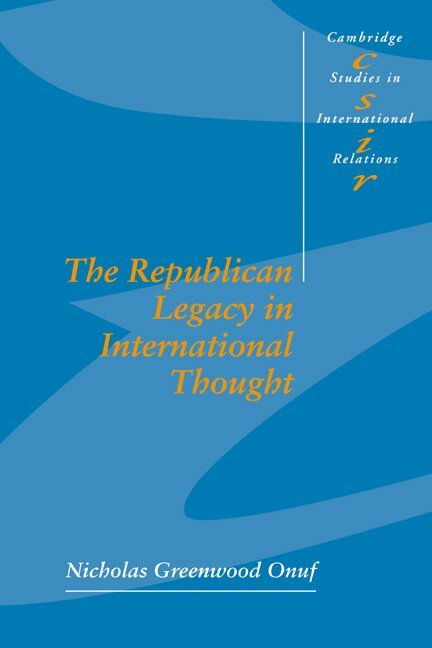
The Republican Legacy in International Thought
Inbunden, Engelska, 1998
1 192 kr
Skickas inom 7-10 vardagar
Republicanism has enjoyed a revival of scholarly interest in several fields. In this book Nicholas Onuf provides the first major treatment of the republican way of thinking about law, politics, and society in the context of international thought. The author tells two stories about republicanism, starting with Aristotle and culminating in the eighteenth century, when international thought became a distinctive enterprise. These two stories surround the thought of Vattel and Kant, and by telling them side by side the author identifies a substantial but little-acknowledged legacy of republicanism in contemporary discussions of sovereignty, intervention, international society, peace, levels of analysis, and the global economy. In identifying this legacy in contemporary thought, Nicholas Onuf develops his constructivist approach to international theory.
Del 59 - Cambridge Studies in International Relations
The Republican Legacy in International Thought
Häftad, Engelska, 1998
428 kr
Skickas inom 7-10 vardagar
Republicanism has enjoyed a revival of scholarly interest in several fields. In this book Nicholas Onuf provides the first major treatment of the republican way of thinking about law, politics, and society in the context of international thought. The author tells two stories about republicanism, starting with Aristotle and culminating in the eighteenth century, when international thought became a distinctive enterprise. These two stories surround the thought of Vattel and Kant, and by telling them side by side the author identifies a substantial but little-acknowledged legacy of republicanism in contemporary discussions of sovereignty, intervention, international society, peace, levels of analysis, and the global economy. In identifying this legacy in contemporary thought, Nicholas Onuf develops his constructivist approach to international theory.
936 kr
Skickas
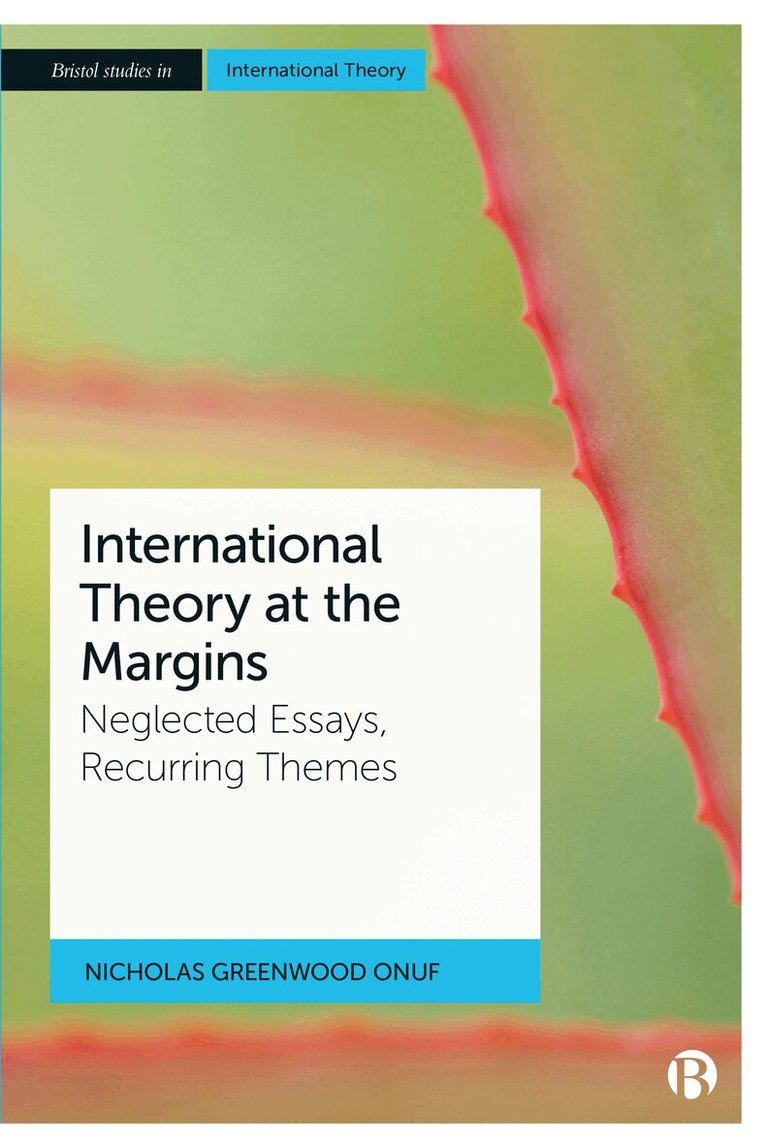
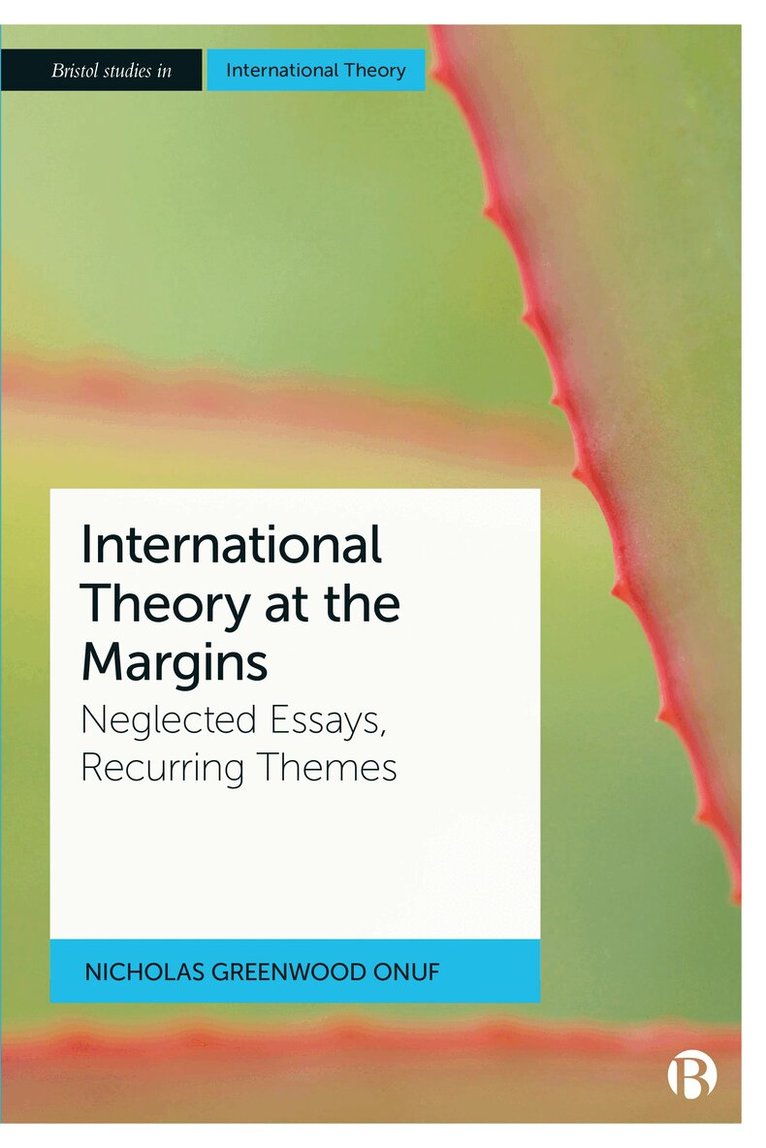
This book brings together thirteen essays from the celebrated international theorist Nicholas Greenwood Onuf. They address topics that Onuf has puzzled over for decades, prompting him to develop a distinctive perspective on international theory as social theory. Among these topics are the problem of materiality in social construction, epochal change in the modern world and the power of language.Building on the work of giants, from Aristotle and Cicero, Hume and Kant, to Derrida and Foucault, and drawing on diverse contemporary theorists, including Seyla Benhabib, James Der Derian, Johan Galtung, Morton Kaplan, Joseph Nye, James Rosenau, Elaine Scarry and Kenneth Waltz, the book ranges over the margins of the fi eld and settles on issues that have never been put to rest.
397 kr
Skickas
This book brings together thirteen essays from the celebrated international theorist Nicholas Greenwood Onuf. They address topics that Onuf has puzzled over for decades, prompting him to develop a distinctive perspective on international theory as social theory. Among these topics are the problem of materiality in social construction, epochal change in the modern world and the power of language.Building on the work of giants, from Aristotle and Cicero, Hume and Kant, to Derrida and Foucault, and drawing on diverse contemporary theorists, including Seyla Benhabib, James Der Derian, Johan Galtung, Morton Kaplan, Joseph Nye, James Rosenau, Elaine Scarry and Kenneth Waltz, the book ranges over the margins of the fi eld and settles on issues that have never been put to rest.