320 kr
Skickas inom 3-6 vardagar
320 kr
Skickas inom 3-6 vardagar
449 kr
Skickas inom 3-6 vardagar
210 kr
Skickas inom 11-20 vardagar
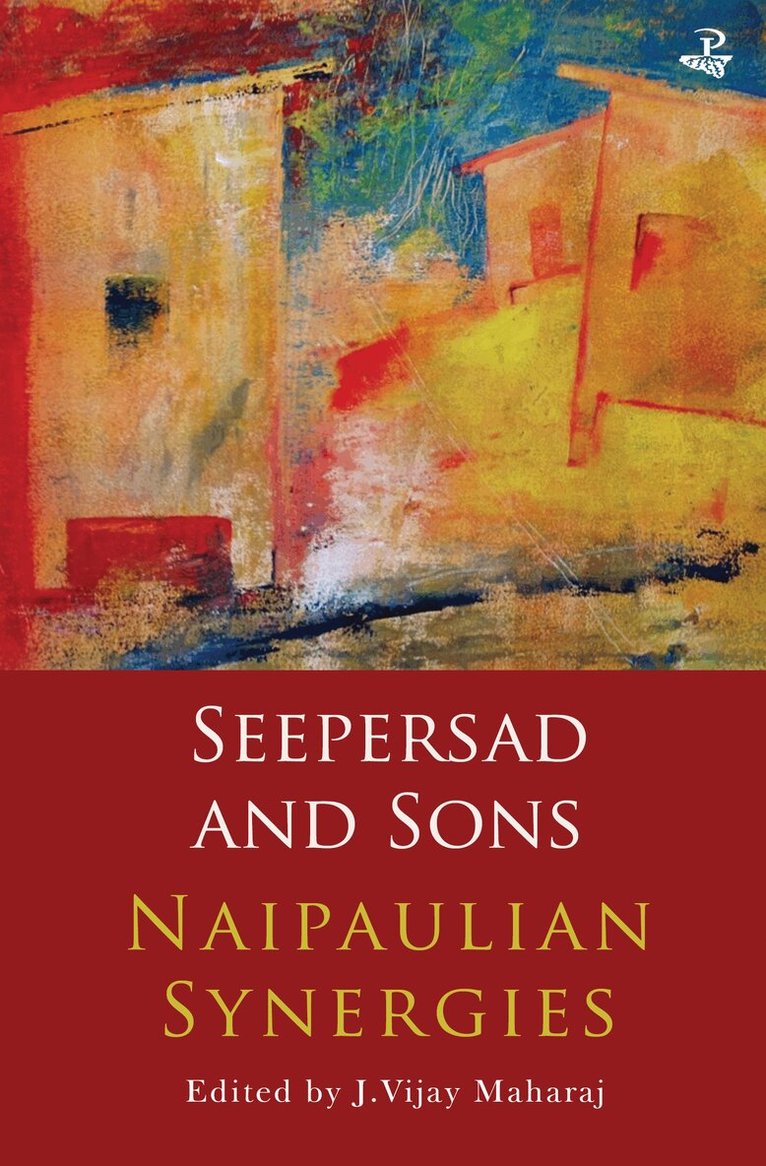
This book, based on a conference organised by The Friends of Mr Biswas, explores the writing careers of Seepersad Naipaul and his two sons, Vidia and Shiva, within the sustenance and sometimes pain of family connections -- synergies that V.S. Naipaul laboured to conceal, as the publishing histories of his father’s collection of short stories and Letters between a Father and Son both show. Essays by Brinsley Samaroo and Aaron Eastley focus on Seepersad Naipaul’s importance as a journalist who opened up what was hidden in Trinidadian society, who boldly creolised reporting styles and offered his sons an example of the possibilities of combining fiction and non-fiction. Arnold Rampersad, in his moving essay on his journalist father, Jerome, further makes the case for seeing a tradition of Trinidadian newspaper writing that achieves literary quality. Not only is the father given long-overdue attention, but so too is the work of Shiva Naipaul, exploring the same family territory in his deservedly classic novel, Fireflies.
Essays find new things to say about V.S. Naipaul: Andre Bagoo writes on his fascination with gay sexuality and cinema (another essay deals with the themes of sadomasochism and incest), Hywel Dix advances the idea of “lateness”, in an insightful reading of Magic Seeds, whilst other essays focus on issues of race, gender and globalisation in the Naipauls’ work. Kevin Frank, for instance, explores the contrast between the father’s engagement with Creole society, and his sons’ recoil, and Elizabeth Jackson and Paula Morgan write respectively on masculinity and motherhood in the Naipauls’ work.
Seepersad and Sons is highly readable because contributors to this book have followed the example and urging of the keynote speaker, Professor Kenneth Ramchand, to address readers beyond an academic circle, and convey the importance of the Naipauls and their literary heritage to the wider society. Literary contributions from Sharon Millar, Raymond Ramcharitar and Keith Jardim make connections with the Naipaulian legacy that show just how alive it is. Robert Clarke provides a visual dimension to the book in a photo essay on the St James district of Port of Spain and J. Vijay Maharaj writes on the complementary art of Shastri Maharaj.
Contributors include: Kenneth Ramchand, Vijay Maharaj, Bhoendradatt Tewarie, Nicholas Laughlin, Aaron Eastley, Brinsley Samaroo, Arnold Rampersad, Robert Clarke, Andre Bagoo, Sharon Millar, Keith Jardim, Raymond Ramcharitar, Kevin Frank, Jim Hanna, Hywel Dix, Elizabeth Jackson, Paula Morgan, Fariza Mohammed, Meghan Cleghorn, Varistha Persad and Nivedita Misra.
149 kr
Skickas
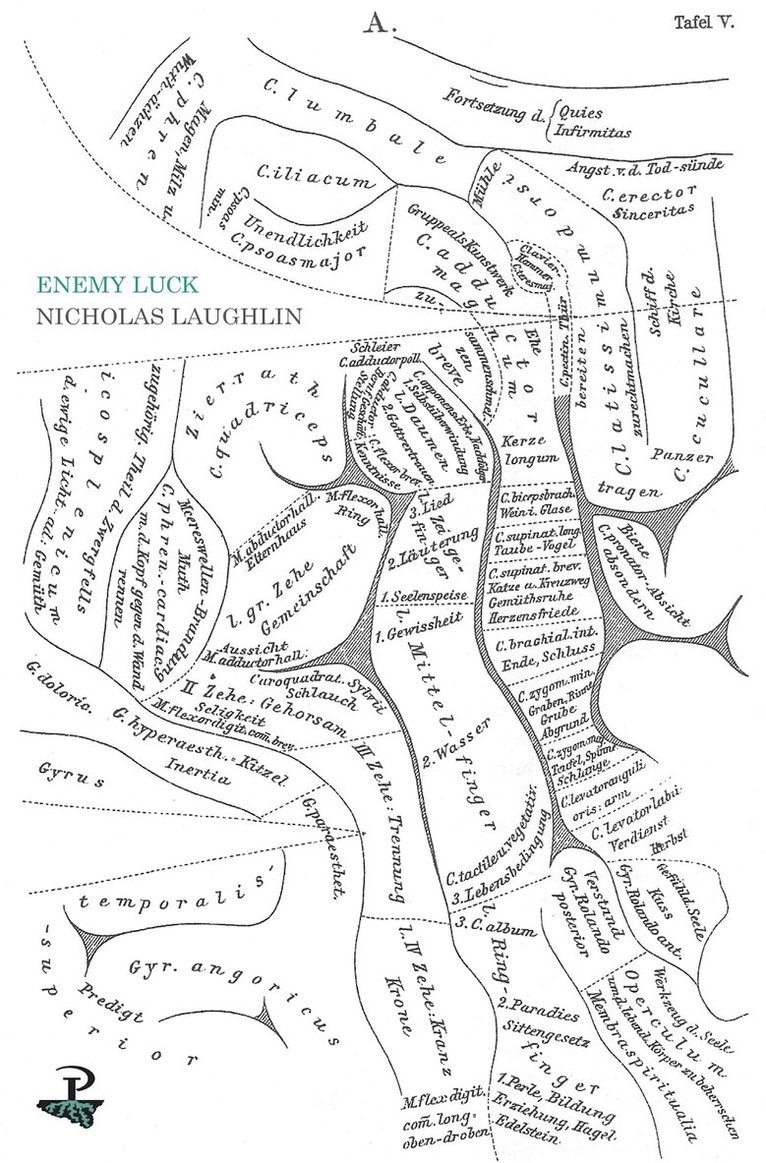
In using an epigraph from the 18th century poet Christopher Smart, for years incarcerated in the madhouse (“For I am not without authority in my jeopardy”), Nicholas Laughlin stakes his case for a poetics of radical innocence (for “The less you know, the less mistaken”) that includes the accidental, the punning slip, the puzzlingly axiomatic, (“You bruise a grammar before it bruises you”).
Indeed, when a poem speaks of “the unstable topography” of dreams, some readers may feel they have arrived at a more stable and recognisable place. This is a poetics by no means without Caribbean precedent. Like the brilliant Jamaican poet, Anthony McNeill with his “mutants” (retained typos), for Laughlin “Errors are not accidents”.
Enemy Luck is almost an encyclopaedia of ingenious devices and forms: cut-outs that hint at kidnapping threats; a poem that resembles the often mystifying chapter summaries of the 19th century novel (in which…); visits to geographical territories mutated from a Wilson Harris fiction (Borges is also an inspiration); found fragments; lengthier extracts from a variety of sources, from Strabo to Oliver Goldsmith, whose meaning is changed by their new contexts; Poundian translations where the original is absorbed into a characteristic Laughlin voice rather than being attempts to replicate the original; an index to some fugitive travel narrative that invites the reader to construct their own story; seemingly absurd narratives that make perfectly good sense; seemingly realistic narratives that mystify like an Escher building; a cast of personas from Cousin Hermes to King Q.
Here is a collection that invites us to active reading, to picking up clues, to inserting ourselves into the dialogue between the poems. Above all, Nicholas Laughlin challenges us to think about the expectations and accumulated experiences we bring to the shaping influence of a variety of literary forms – and helps us to deconstruct them.