Nicholas Phillipson – författare
Visar alla böcker från författaren Nicholas Phillipson. Handla med fri frakt och snabb leverans.
5 produkter
5 produkter
E-bok
Engelska, 2010161 kr
Läs direkt efter köp
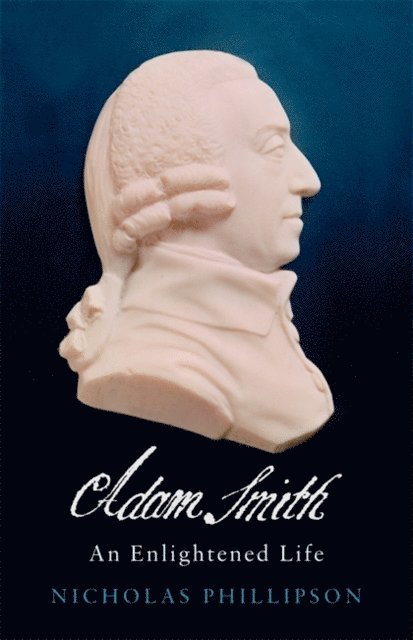
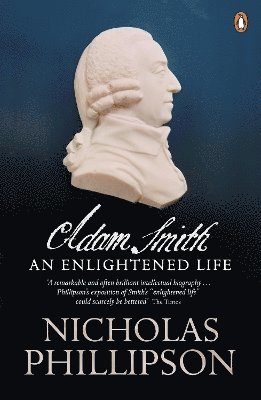
Adam Smith is celebrated all over the world as the author of The Wealth of Nations and the founder of modern economics. A few of his ideas - that of the 'Invisible Hand' of the market and that 'It is not from the benevolence of the butcher, the brewer, or the baker that we expect our dinner, but from their regard to their own interest' - have become icons of the modern world. Yet Smith saw himself primarily as a philosopher rather than an economist, and would never have predicted that the ideas for which he is now best known were his most important. This book, by one of the leading scholars of the Scottish Enlightenment, shows the extent to which The Wealth of Nations and Smith's other great work, The Theory of Moral Sentiments, were part of a larger scheme to establish a grand 'Science of Man', one of the most ambitious projects of the European Enlightenment, which was to encompass law, history and aesthetics as well as economics and ethics.Nicholas Phillipson reconstructs Smith's intellectual ancestry and formation, of which he gives a radically new and convincing account. He shows what Smith took from, and what he gave to, the rapidly changing and subtly different intellectual and commercial cultures of Glasgow and Edinburgh as they entered the great years of the Scottish Enlightenment. Above all he explains how far Smith's ideas developed in dialogue with those of his closest friend, the other titan of the age, David Hume. This superb biography is now the one book which anyone interested in the founder of economics must read.
E-bok
Engelska, 2011118 kr
Läs direkt efter köp
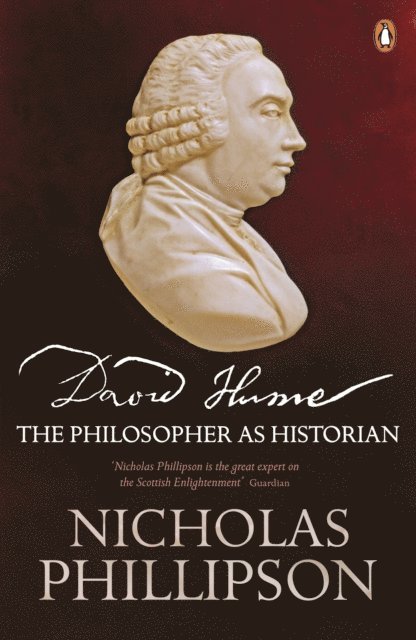
'A skilful and lucid study ... Hume's History has been unjustly neglected at the expense of his philosophy. Phillipson's book should help redress the balance' London Review of Books'For pray, what is the End of Man? Is he created for Happiness or for Virtue? For this Life or for the next? For himself or for his Maker?'A giant of the eighteenth-century Enlightenment, David Hume was one of the most important philosophers ever to write in English. He was also a brilliant historian. Nicholas Phillipson's succinct study shows how Hume freed history from religion and politics. As a philosopher, Hume sought a way of seeing the world and pursuing happiness independently of a belief in God. His groundbreaking approach applied the same outlook to Britain's history, showing how the past was shaped solely through human choices and actions.In this account of Hume's life and works, from his university days in Edinburgh to the rapturous reception of his History of England, Nicholas Phillipson reveals the gradual process by which one of the greatest Western philosophers turned himself into one of the greatest historians of Britain. In doing so, he shows us how revolutionary Hume was, and why his ideas still matter today.
Del 24 - Ideas in Context
Political Discourse in Early Modern Britain
Häftad, Engelska, 2011
448 kr
Skickas inom 7-10 vardagar
Originally published in 1993, this collection of essays, all by pre-eminent exponents of the history of political thought, explores the political ideologies of early modern Britain. Organised on a broadly chronological basis, the topics addressed by individual scholars reflect in general the themes initiated and inspired by the work of the distinguished intellectual historian J. G. A. Pocock, for whom the collection is intended as a tribute. Each of the sixteen contributors have thought long and critically about Pocock's seminal contributions to the subject, and in each essay they engage with the debates he has provoked. As a fitting conclusion to the volume, Professor Pocock responds to the essays and provided his personal interpretation of the themes they invoke.
Del 24 - Ideas in Context
Political Discourse in Early Modern Britain
Inbunden, Engelska, 1993
1 769 kr
Skickas inom 7-10 vardagar
Originally published in 1993, this collection of essays, all by pre-eminent exponents of the history of political thought, explores the political ideologies of early modern Britain. Organised on a broadly chronological basis, the topics addressed by individual scholars reflect in general the themes initiated and inspired by the work of the distinguished intellectual historian J. G. A. Pocock, for whom the collection is intended as a tribute. Each of the sixteen contributors have thought long and critically about Pocock's seminal contributions to the subject, and in each essay they engage with the debates he has provoked. As a fitting conclusion to the volume, Professor Pocock responds to the essays and provided his personal interpretation of the themes they invoke.
Häftad, Engelska, 2003
411 kr
Skickas inom 11-20 vardagar
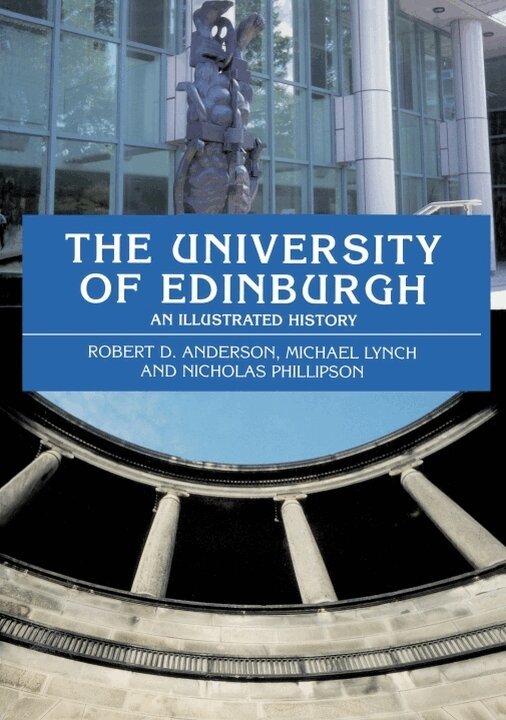
From a small city college in the sixteenth century the University of Edinburgh grew to be one of the world’s greatest centres of scholarship, research and learning. Its history is told here by three of its leading historians with wit, verve and style. Copiously illustrated in colour and black and white, this is a book for everyone concerned with the university or the city of Edinburgh to read and enjoy. The authors consider the impacts of Reformation, Union with England, Enlightenment, and scientific and industrial revolutions. They show the university rising to the challenge of competition from Europe, describe the great periods of expansion in the nineteenth and twentieth centuries, and chart the university's building from Old College to George Square. They explore its tense relationship with the city, explore the histories of student outrage and unrest, recall the days when blasphemy could be punished by death, and reveal that the university’s department of anatomy once supported a thriving trade in body-snatching. Upheaval and crisis, triumph and achievement succeed each other by turns in a story that is entertaining, intriguing and surprising – and always interesting.