Nick Bellantoni - Böcker
Visar alla böcker från författaren Nick Bellantoni. Handla med fri frakt och snabb leverans.
2 produkter
2 produkter
246 kr
Skickas inom 11-20 vardagar
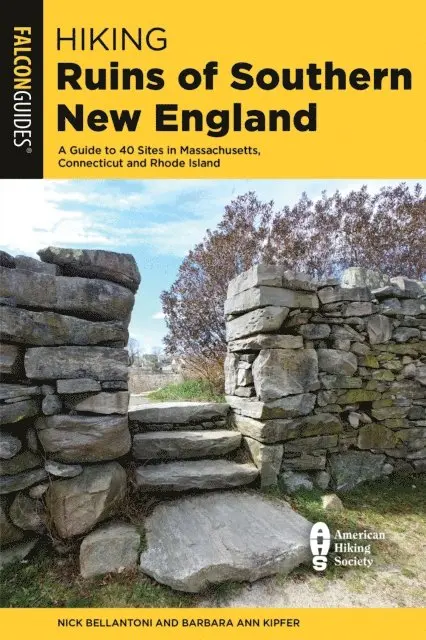
Hiking Ruins Seldom Seen Southern New England is a guide to hiking archaeological sites in Connecticut, Massachusetts, and Rhode Island. Many people have no idea that there are archaeological sites in the area, on public lands where they are allowed to hike.Each of the 40 hikes chosen for this book is described with a map and summary information that delivers the trail's vital statistics, including distance, difficulty, fees and permits, schedule, canine compatibility, and trail contacts. Directions to the trailhead are provided, along with a general description of what you'll see along the way. A detailed route finder (miles and directions) describes significant landmarks along the trail.This book aims to show that there are many interesting archaeological and historical places throughout the area that people can explore.
Vampires and Gallstones
Bioarchaeology and Forensic Science of Connecticut’s Historic Burial Grounds
Häftad, Engelska, 2026
607 kr
Kommande
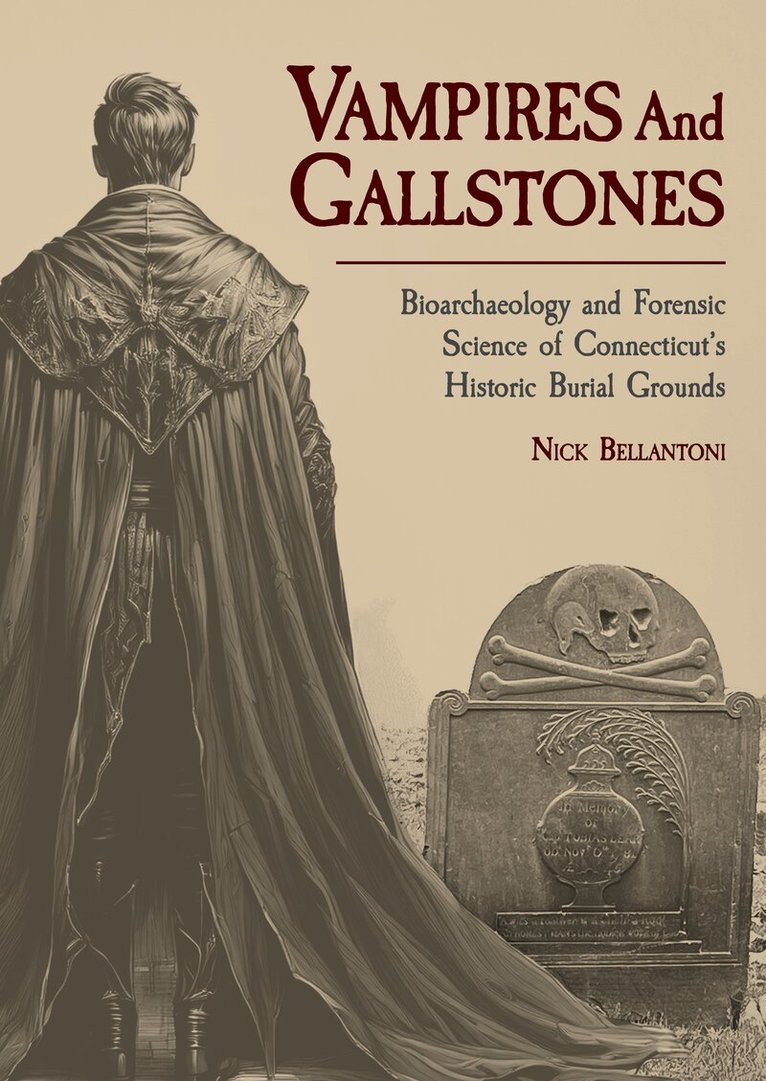
This book, as a companion to "And So the Tomb Remained" proposes to tell the stories of nine cemetery case studies where the Connecticut State Archaeologist was summoned to investigate human burials impacted by economic development projects, natural disasters, suspected crime scenes and family request. In each instance, archaeological excavations uncovered a few surprises, including the burial of a suspected vampire; gallstones that survived over 165 years in the ground; a burial’s missing arm; a mysterious man dressed in a blue suit enclosed in a cast-iron coffin; skeletons under a hospital emergency room expansion; 18th-century burials discovered under the grass of a baseball field; and unmarked burials and an unknown time capsule hidden under a city green for over 100 years containing memorabilia from the American Civil War along with copies of New Haven newspapers published on 12 February 1909. The book begins with an overview of the history of New England burying grounds from the earliest Puritans into the 21st century, including changing social and religious attitudes toward death, monuments and treatments of the dead; a review of the disinterment of the dead by 18th- and 19th-century medical students searching for cadavers and skeletal remains for their anatomical studies and the outrage of local citizens at envisioning their loved ones' graves uprooted; a discussion of current archaeological methods and preservation ethics, including the role of the Connecticut State Archaeologist in burial investigations and Indigenous repatriations. Each chapter then delves into discovery stories, archaeological fieldwork, genealogical history and bioanthropological analyses of associated human skeletal remains. Along with scientific data, personal anecdotes will be told of our experiences and research into each case. The goal is a scientific approach with a personal, storytelling style while unearthing the most unusual discoveries hidden beneath Connecticut’s historical cemeteries.Case studies include the recovery of 30 family burials, discovered falling out of a quarry edge, which included the disarticulated remains of ‘J.B.’, whose head had been deliberately decapitated and his thigh bones crossed over the chest, which had also been violated. In times of epidemic and infectious diseases, to save the lives of living family members, the antidote required going back into graves and conducting 'an experiment' to determine if the deceased endured as a mischievous vampire within their coffin. If considered still alive, burning of the heart and rearrangement of the bones, including decapitation, were the prescribed solutions in putting the undead to rest. ‘J.B.’ suffered from the infectious ‘wasting disease’ known as consumption (tuberculosis).Following vandalism of an abandoned cemetery, the state archaeologist was petitioned by the Horton family to disinter three individuals whose burials dated to the early 19th century. Among them were the skeletal remains of Ruth Horton, who died in 1837, with a pocket of white, shellfish-like flecks in the lower abdomen of the body. Chemical analysis identified these as the oldest buried case of gallstones ever reported in the United States.