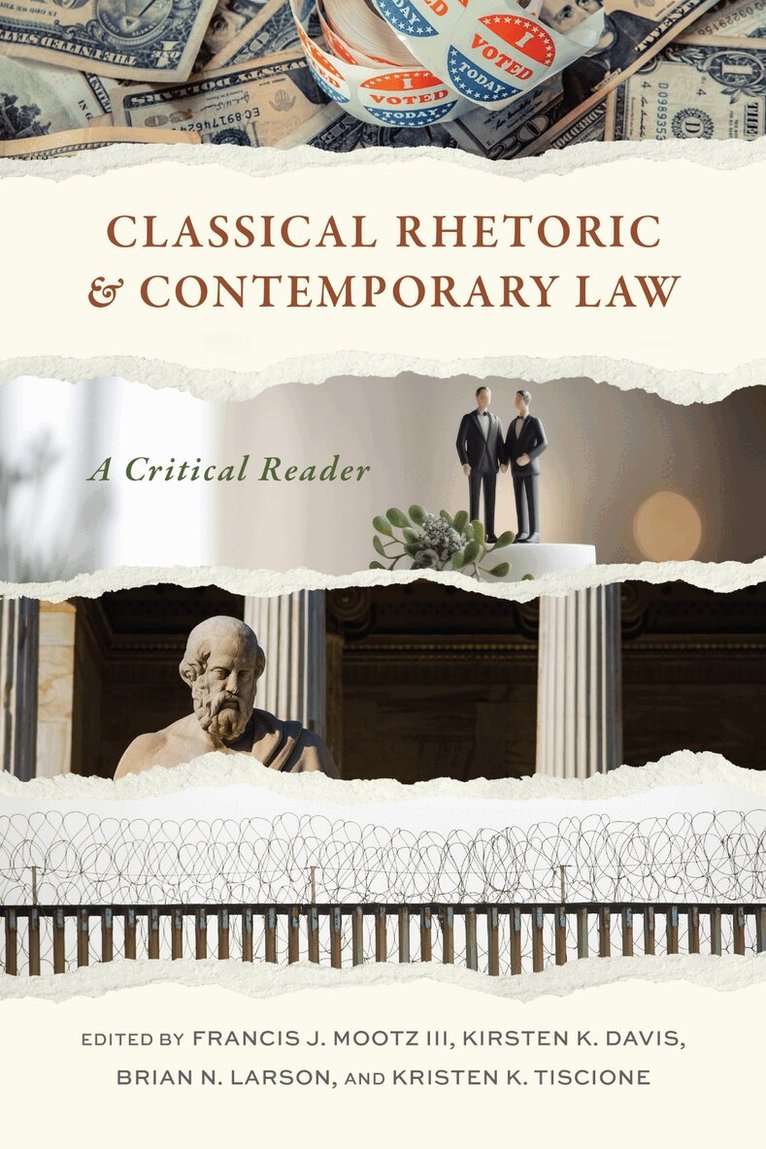
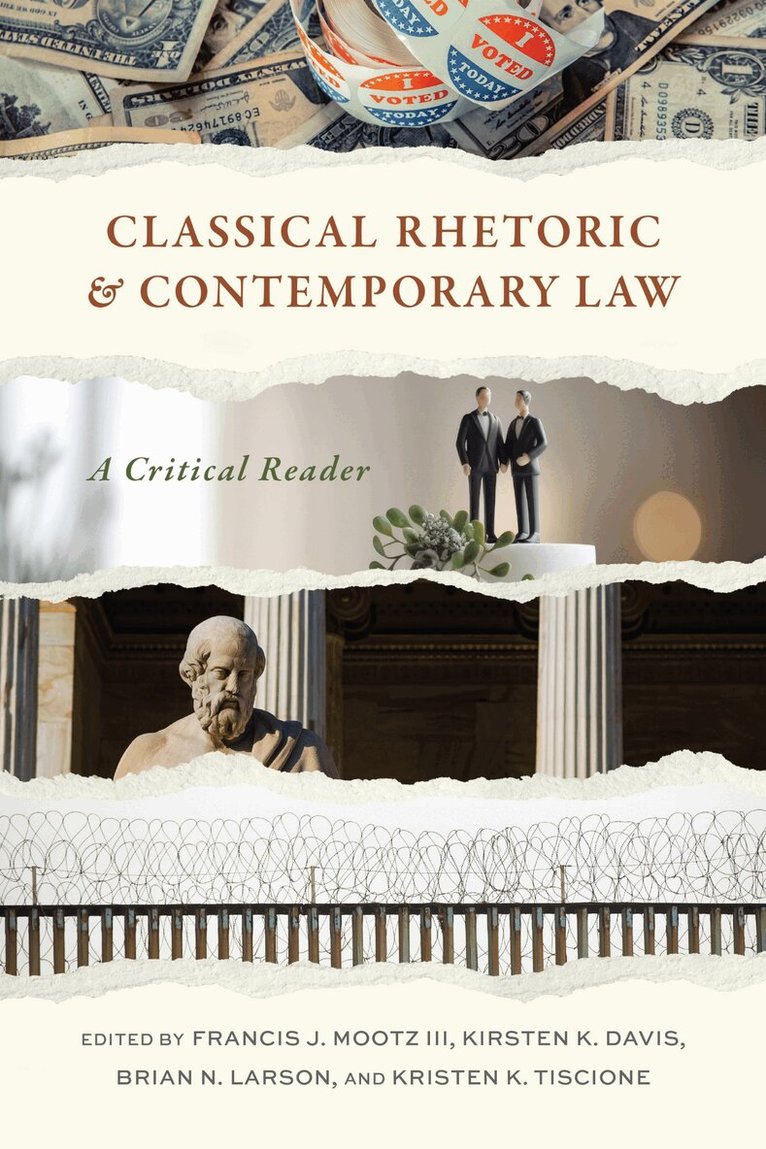
Pairs passages from works of classical rhetoric with contemporary legal rulings to highlight and analyze their deep and abiding connections in matters of persuasionClassical Rhetoric and Contemporary Law: A Critical Reader is a rich work that analyzes the interplay between ancient rhetorical traditions and modern legal practice, reestablishing the lost connections between law and classical rhetoric. From Isocrates’s Panegyricus in 380 BCE to the landmark US Supreme Court case Trump v. Hawaii in 2018, and from Antiphon’s fifth century BCE First Tetralogy to 1995’s O. J. Simpson trial, the volume draws on an array of sources to illuminate how ancient rhetorical insights may even today challenge and enrich our grasp of contemporary legal principles. The collection opens with a brisk review of the historical development of rhetoric. The second part examines a pair of rhetorical theorists whose works frame the period across which classical rhetoric declined as a mode of thought. A contemporary appellate case contrasts with the work of Giambattista Vico, an eighteenth-century professor of rhetoric who warned of the separation of law from rhetoric. The analysis of the work of twentieth-century scholars ChaÏm Perelman and Lucie Olbrects-Tyteca shows that where Cartesian rationality fails, the humanistic tradition of rhetoric allows the law to respond to the needs of justice. In the third part, ten case studies bring together a classical rhetorical theorist with a contemporary court case, demonstrating the abiding relevance of the classical tradition to contemporary jurisprudence.With its cross-disciplinary appeal, Classical Rhetoric and Contemporary Law encompasses the work of legal, rhetorical, English, and communication scholars alike, catalyzing interactive exploration into the profound ways ancient rhetorical insights continue to shape our comprehension of today’s legal landscape.CONTRIBUTORSVasileios Adamidis / Elizabeth C. Britt / Kirsten K. Davis / David A. Frank / Michael Gagarin / Eugene Garver / Mark A. Hannah / Catherine L. Langford / Brian N. Larson / Craig A. Meyer / Francis J. Mootz III / Susan E. Provenzano / Nick J. Sciullo / Kristen K. Tiscione / Laura A. Webb
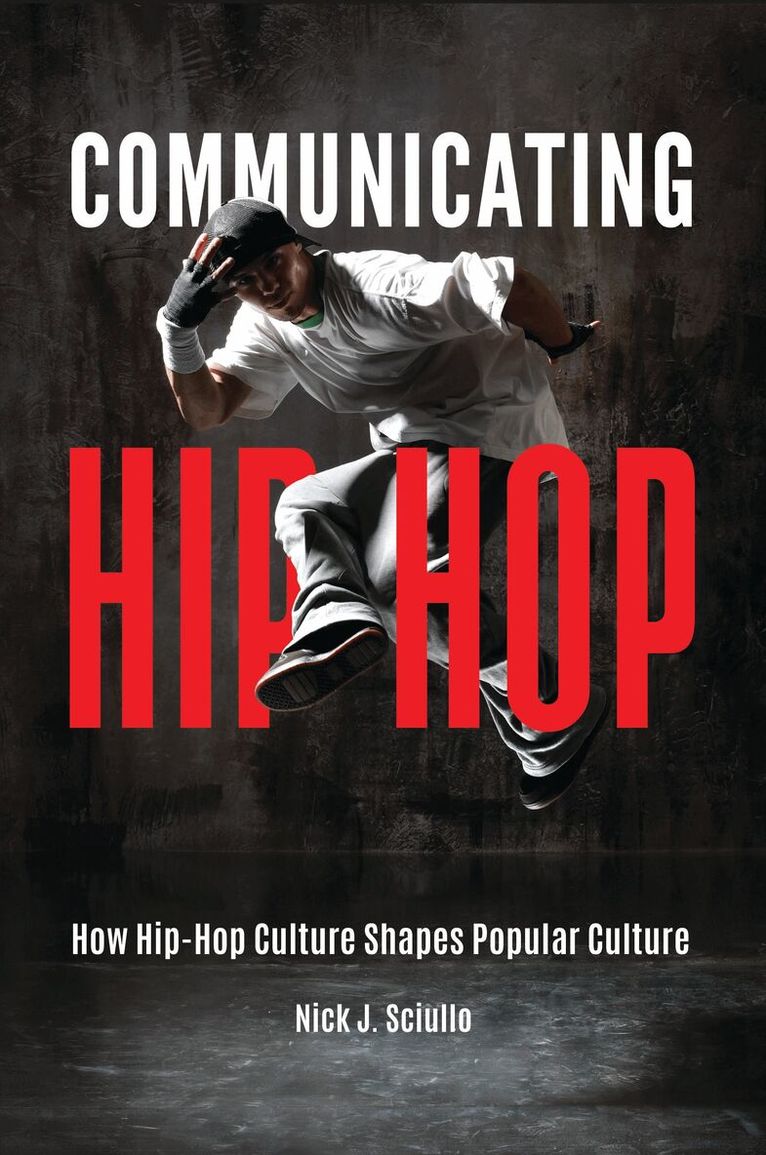
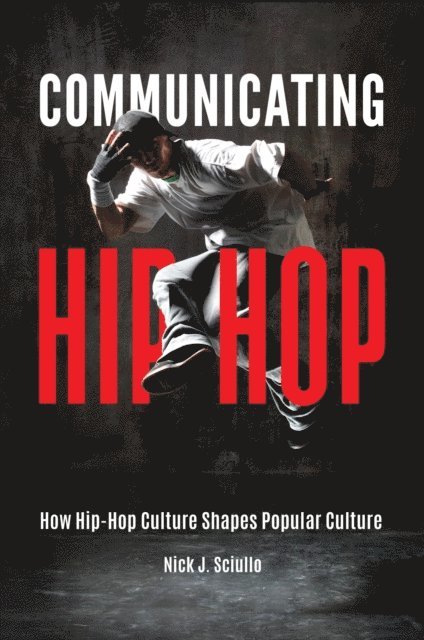
This insightful analysis of the broad impact of hip-hop on popular culture examines the circulation of hip-hop through media, academia, business, law, and consumer culture to explain how hip-hop influences thought and action through our societal institutions.How has hip-hop influenced our culture beyond the most obvious ways (music and fashion)? Examples of the substantial power of hip-hop culture include influence on consumer buying habits—for example, Dr. Dre's Beats headphones; politics, seen in Barack Obama's election as the first "hip-hop president" and increased black political participation; and social movements such as various stop-the-violence movements and mobilization against police brutality and racism.In Communicating Hip-Hop: How Hip-Hop Culture Shapes Popular Culture, author Nick Sciullo considers hip-hop's role in shaping a number of different aspects of modern culture ranging from law to communication and from business to English studies. Each chapter takes the reader on a behind-the-scenes tour of hip-hop's importance in various areas of culture with references to leading literature and music. Intended for scholars and students of hip-hop, race, music, and communication as well as a general audience, this appealing, accessible book will enable readers to understand why hip-hop is so important and see why hip-hop has such far-reaching influence.
This insightful analysis of the broad impact of hip-hop on popular culture examines the circulation of hip-hop through media, academia, business, law, and consumer culture to explain how hip-hop influences thought and action through our societal institutions.How has hip-hop influenced our culture beyond the most obvious ways (music and fashion)? Examples of the substantial power of hip-hop culture include influence on consumer buying habits—for example, Dr. Dre''s Beats headphones; politics, seen in Barack Obama''s election as the first "hip-hop president" and increased black political participation; and social movements such as various stop-the-violence movements and mobilization against police brutality and racism.In Communicating Hip-Hop: How Hip-Hop Culture Shapes Popular Culture, author Nick Sciullo considers hip-hop's role in shaping a number of different aspects of modern culture ranging from law to communication and from business to English studies. Each chapter takes the reader on a behind-the-scenes tour of hip-hop's importance in various areas of culture with references to leading literature and music. Intended for scholars and students of hip-hop, race, music, and communication as well as a general audience, this appealing, accessible book will enable readers to understand why hip-hop is so important and see why hip-hop has such far-reaching influence.