Nick P. Bassill – författare
Visar alla böcker från författaren Nick P. Bassill. Handla med fri frakt och snabb leverans.
4 produkter
4 produkter
Inbunden, Engelska, 2026
1 523 kr
Skickas inom 10-15 vardagar
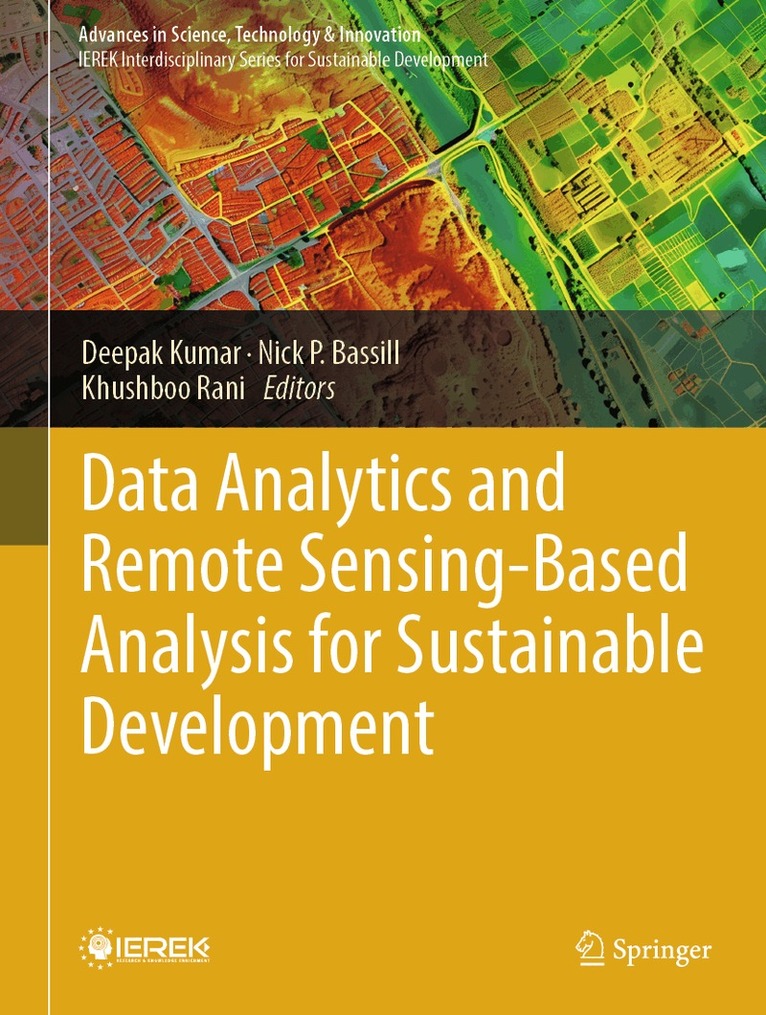
This book presents analysis of data analytics and remote sensing which are two powerful tools that can be used to support sustainable development. Remote sensing involves the use of sensors to gather data about the environment from a distance, while data analytics refers to the use of statistical and computational techniques to extract insights and patterns from large datasets. Sustainable development and remote sensing are used to monitor changes in the environment, such as deforestation, land use change, and water quality. This information is analyzed using data analytics to identify trends and patterns and to develop strategies for sustainable development. Remote sensing is used to monitor the health of forests, and data analytics is used to identify areas where deforestation is particularly high. This information is then used to develop targeted strategies for reducing deforestation, such as promoting sustainable forestry practices or supporting reforestation efforts. It is alsoused to monitor water quality, and data analytics is used to identify sources of pollution and to develop strategies for improving water quality. This information is particularly important in developing countries, where access to clean water is often a major challenge. Furthermore, data analytics and remote sensing are powerful tools for supporting sustainable development. By gathering and analyzing data about the environment, authors better understand the challenges they face and develop effective strategies for addressing them.
E-bok
Engelska, 20261 825 kr
Läs direkt efter köp
This book presents analysis of data analytics and remote sensing which are two powerful tools that can be used to support sustainable development. Remote sensing involves the use of sensors to gather data about the environment from a distance, while data analytics refers to the use of statistical and computational techniques to extract insights and patterns from large datasets. Sustainable development and remote sensing are used to monitor changes in the environment, such as deforestation, land use change, and water quality. This information is analyzed using data analytics to identify trends and patterns and to develop strategies for sustainable development. Remote sensing is used to monitor the health of forests, and data analytics is used to identify areas where deforestation is particularly high. This information is then used to develop targeted strategies for reducing deforestation, such as promoting sustainable forestry practices or supporting reforestation efforts. It is alsoused to monitor water quality, and data analytics is used to identify sources of pollution and to develop strategies for improving water quality. This information is particularly important in developing countries, where access to clean water is often a major challenge. Furthermore, data analytics and remote sensing are powerful tools for supporting sustainable development. By gathering and analyzing data about the environment, authors better understand the challenges they face and develop effective strategies for addressing them.
Inbunden, Engelska, 2025
1 848 kr
Skickas inom 10-15 vardagar
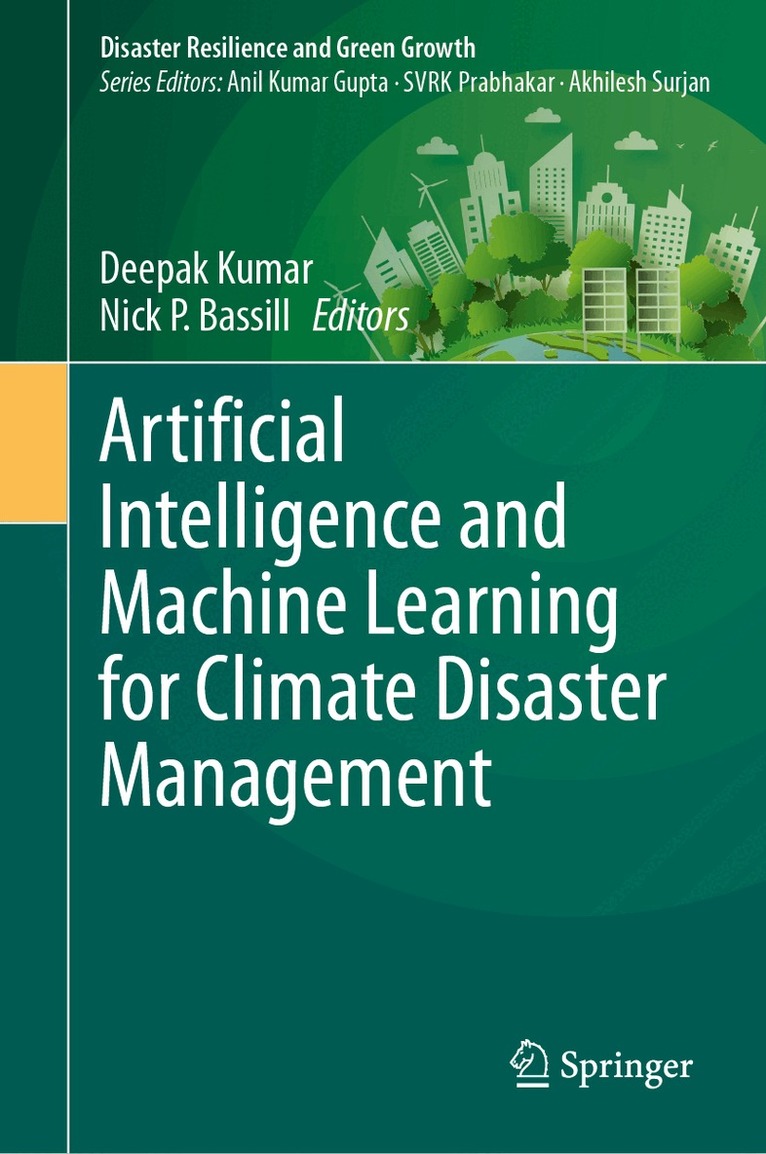
This edited volume highlights the importance of Artificial Intelligence (AI) and Machine Learning (ML) being utilised in climate disaster management to enhance preparedness, response, recovery, and mitigation efforts. The integration of AI and ML technologies with climate disaster management greatly improves decision-making, resource allocation, and overall effectiveness in addressing the impacts of climate-related disasters. It serves as a comprehensive guide to harnessing the power of geospatial information and services for climate-resilient disaster management.This book is a timely exploration of how cutting-edge technology can shape our response to climate-related disasters. The book embarks on a journey through the intricate web of geospatial data, uncovering its indispensable role in disaster preparedness, response, and recovery. Several ways in which AI and ML are being applied comprise Early Warning Systems, Disaster Response Planning, Damage Assessment, Risk Assessment and Vulnerability Mapping, Climate Modeling and Simulation, Resilience and Adaptation Strategies, Satellite Imagery for Disaster Response, Vulnerability Mapping and Resilience Planning, Data Integration in Emergency Response, Climate Adaptation Policies, among many others. Real-world case studies and practical insights illustrate how geospatial technology empowers early warning systems, enhances risk assessment, and streamlines resource allocation. It delves into the nuances of climate adaptation planning, shedding light on innovative strategies for building resilient communities and infrastructure.This book will serve as an invaluable resource for policymakers, disaster managers, researchers, and anyone concerned with safeguarding communities against climate-related disasters.
E-bok
Engelska, 20252 283 kr
Läs direkt efter köp
This edited volume highlights the importance of Artificial Intelligence (AI) and Machine Learning (ML) being utilised in climate disaster management to enhance preparedness, response, recovery, and mitigation efforts. The integration of AI and ML technologies with climate disaster management greatly improves decision-making, resource allocation, and overall effectiveness in addressing the impacts of climate-related disasters. It serves as a comprehensive guide to harnessing the power of geospatial information and services for climate-resilient disaster management.This book is a timely exploration of how cutting-edge technology can shape our response to climate-related disasters. The book embarks on a journey through the intricate web of geospatial data, uncovering its indispensable role in disaster preparedness, response, and recovery. Several ways in which AI and ML are being applied comprise Early Warning Systems, Disaster Response Planning, Damage Assessment, Risk Assessment and Vulnerability Mapping, Climate Modeling and Simulation, Resilience and Adaptation Strategies, Satellite Imagery for Disaster Response, Vulnerability Mapping and Resilience Planning, Data Integration in Emergency Response, Climate Adaptation Policies, among many others. Real-world case studies and practical insights illustrate how geospatial technology empowers early warning systems, enhances risk assessment, and streamlines resource allocation. It delves into the nuances of climate adaptation planning, shedding light on innovative strategies for building resilient communities and infrastructure.This book will serve as an invaluable resource for policymakers, disaster managers, researchers, and anyone concerned with safeguarding communities against climate-related disasters.