Nick Trakakis – författare
Visar alla böcker från författaren Nick Trakakis. Handla med fri frakt och snabb leverans.
11 produkter
William L. Rowe on Philosophy of Religion
Selected Writings
Av William L. Rowe, Nick Trakakis
Inbunden, 2007
2512 kr
Lägg i varukorg
William Rowe is one of the leading thinkers in contemporary philosophy of religion. Although he is best known for his contributions to the problem of evil, he has produced innovative and influential work across a wide array of subjects at the interface between philosophy and religion. He has, for …
William L. Rowe on Philosophy of Religion
Selected Writings
Av William L. Rowe, Nick Trakakis
Häftad, 2022
706 kr
Lägg i varukorg
William Rowe is one of the leading thinkers in contemporary philosophy of religion. Although he is best known for his contributions to the problem of evil, he has produced innovative and influential work across a wide array of subjects at the interface between philosophy and religion. He has, for …
William L. Rowe on Philosophy of Religion
Selected Writings
Av Nick Trakakis, William L. Rowe
E-bok, 2017
805 kr
Lägg i varukorg
William Rowe is one of the leading thinkers in contemporary philosophy of religion. Although he is best known for his contributions to the problem of evil, he has produced innovative and influential work across a wide array of subjects at the interface between philosophy and religion. He has, for …
William L. Rowe on Philosophy of Religion
Selected Writings
Av Nick Trakakis, William L. Rowe
E-bok, 2017
813 kr
Lägg i varukorg
William Rowe is one of the leading thinkers in contemporary philosophy of religion. Although he is best known for his contributions to the problem of evil, he has produced innovative and influential work across a wide array of subjects at the interface between philosophy and religion. He has, for …
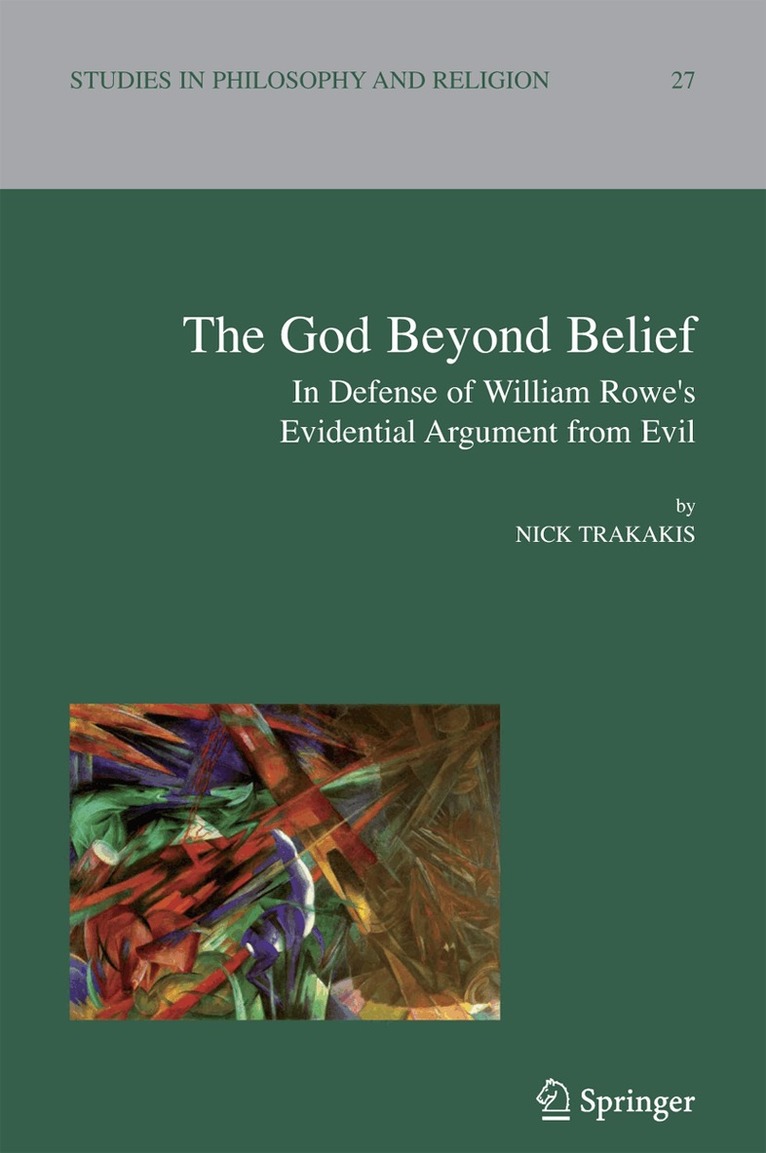
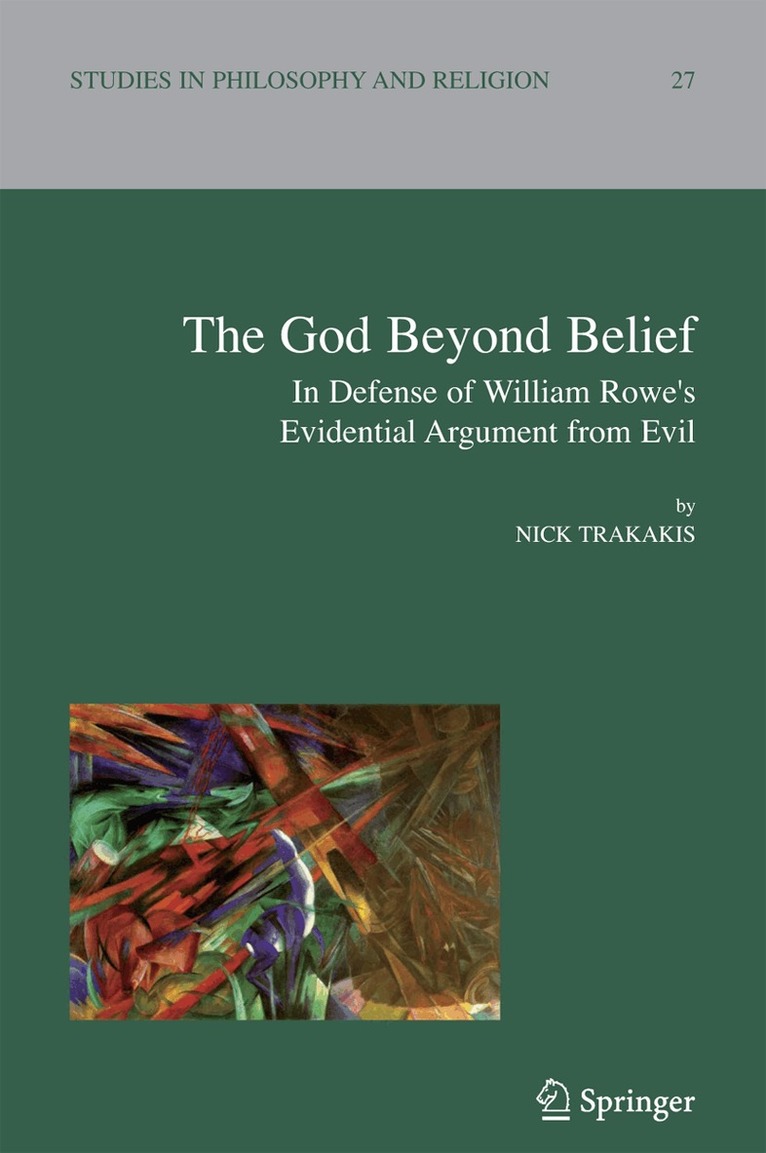
God Beyond Belief
In Defence of William Rowe's Evidential Argument from Evil
Inbunden, 2006
1647 kr
Lägg i varukorg
For quite some time I have corresponded with Nick Trakakis, a very t- ented young philosopher at Monash University in Australia. He was c- pleting a manuscript on the problem of evil. Although we’ve never met, I’ve come to greatly admire his philosophical ability, even, or I hope particularly, when …
God Beyond Belief
In Defence of William Rowe''s Evidential Argument from Evil
E-bok, 2006
2065 kr
Lägg i varukorg
For quite some time I have corresponded with Nick Trakakis, a very t- ented young philosopher at Monash University in Australia. He was c- pleting a manuscript on the problem of evil. Although we’ve never met, I’ve come to greatly admire his philosophical ability, even, or I hope particularly, when …
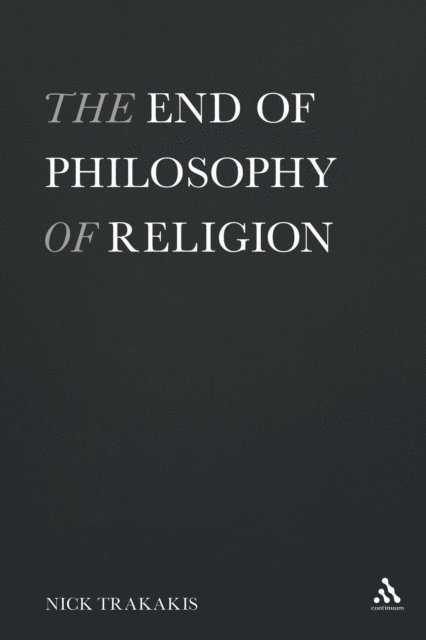
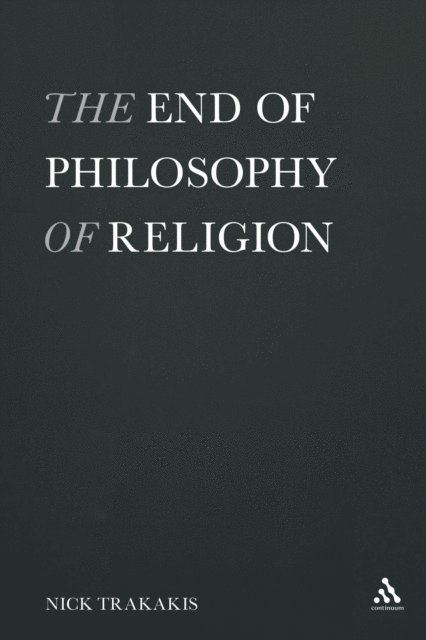
End of Philosophy of Religion
E-bok, 2011
608 kr
Lägg i varukorg
The End of Philosophy of Religion explores the hitherto unchartered waters of the ''meta-philosophy of religion'', that is, the methods and assumptions underlying the divergent ways of writing and studying the philosophy of religion that have emerged over the last century. It is also a first-class …
End of Philosophy of Religion
Häftad, 2011
560 kr
Lägg i varukorg
The End of Philosophy of Religion explores the hitherto unchartered waters of the 'meta-philosophy of religion', that is, the methods and assumptions underlying the divergent ways of writing and studying the philosophy of religion that have emerged over the last century. It is also a first-class …
End of Philosophy of Religion
E-bok, 2008
595 kr
Lägg i varukorg
The End of Philosophy of Religion explores the hitherto unchartered waters of the 'meta-philosophy of religion', that is, the methods and assumptions underlying the divergent ways of writing and studying the philosophy of religion that have emerged over the last century. It is also a first-class …
End of Philosophy of Religion
Inbunden, 2008
1991 kr
Lägg i varukorg
This is an expert examination of the 'meta-philosophy of religion', exposing the limitations of the analytic method and the need to embrace a new continental approach. "The End of Philosophy of Religion" explores the hitherto un-chartered waters of the 'meta-philosophy of religion', that is, the …
God Beyond Belief
In Defence of William Rowe's Evidential Argument from Evil
Häftad, 2010
1643 kr
Lägg i varukorg
For quite some time I have corresponded with Nick Trakakis, a very t- ented young philosopher at Monash University in Australia. He was c- pleting a manuscript on the problem of evil. Although we’ve never met, I’ve come to greatly admire his philosophical ability, even, or I hope particularly, when …