Nickolas J. Themelis – författare
Visar alla böcker från författaren Nickolas J. Themelis. Handla med fri frakt och snabb leverans.
4 produkter
4 produkter
Inbunden, Engelska, 2012
5 426 kr
Skickas inom 10-15 vardagar
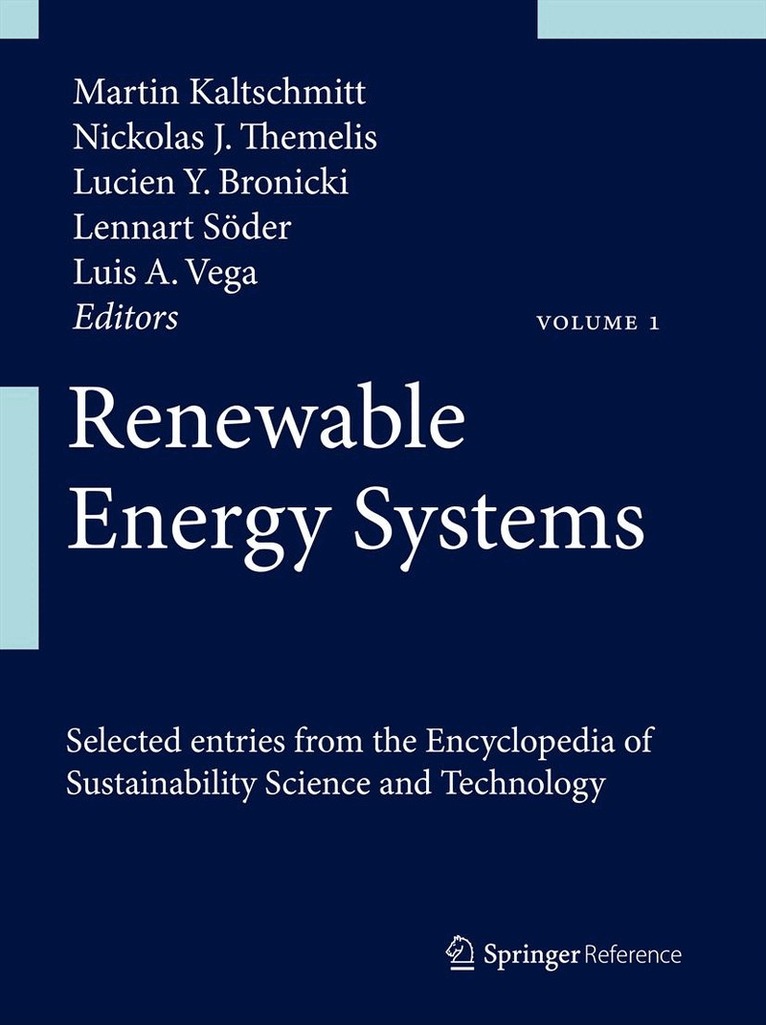
Humanity is facing a steadily diminishing supply of fossil fuels, causing researchers, policy makers, and the population as a whole to turn increasingly to alternative and especially renewable sources of energy to make up this deficit. Gathering over 80 peer-reviewed entries from the Encyclopedia of Sustainability Science and Technologies, Renewable Energy Systems provides an authoritative introduction to a wide variety of renewable energy sources. State-of-the-art coverage includes geothermal power stations, ocean energy, renewable energy from biomass, waste to energy, and wind power. This comprehensive, two-volume work provides an excellent introduction for those entering these fields, as well as new insights for advanced researchers, industry experts, and decision makers.
E-bok
Engelska, 20126 702 kr
Läs direkt efter köp
Humanity is facing a steadily diminishing supply of fossil fuels, causing researchers, policy makers, and the population as a whole to turn increasingly to alternative and especially renewable sources of energy to make up this deficit. Gathering over 80 peer-reviewed entries from the Encyclopedia of Sustainability Science and Technologies, Renewable Energy Systems provides an authoritative introduction to a wide variety of renewable energy sources. State-of-the-art coverage includes geothermal power stations, ocean energy, renewable energy from biomass, waste to energy, and wind power. This comprehensive, two-volume work provides an excellent introduction for those entering these fields, as well as new insights for advanced researchers, industry experts, and decision makers.
Inbunden, Engelska, 2019
3 258 kr
Skickas inom 10-15 vardagar
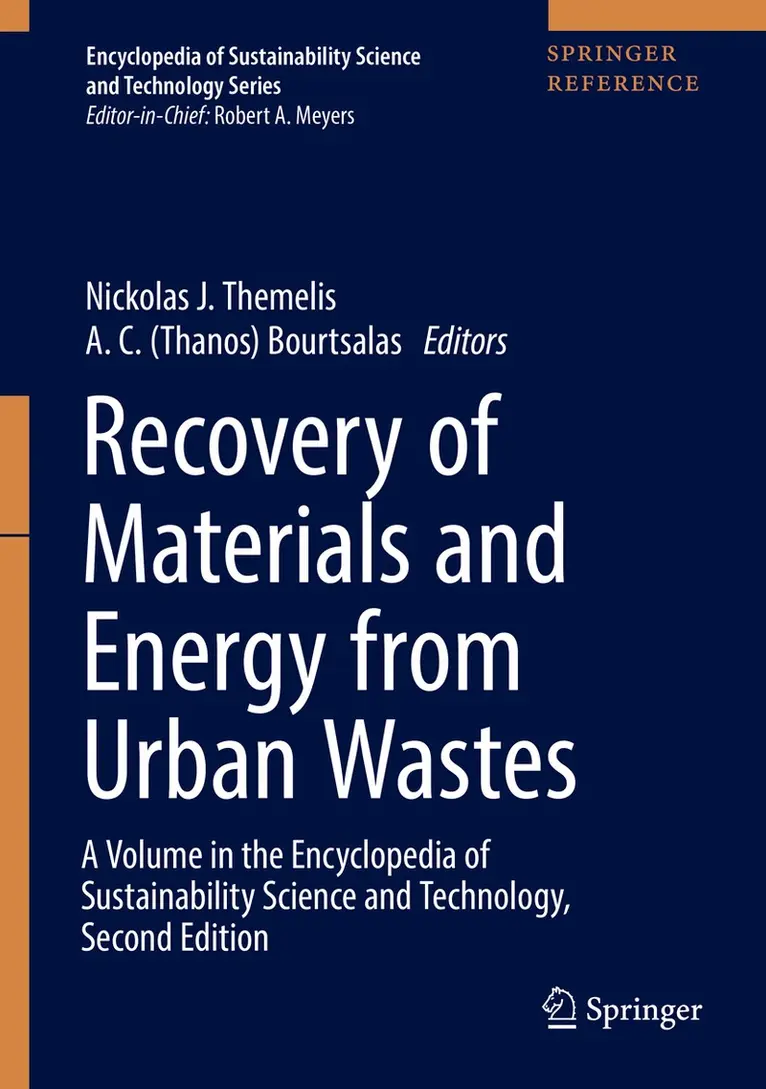
This volume in the Encyclopedia of Sustainability Science and Technology, Second edition, provides a comprehensive overview of complementary strategies for dealing with waste in and around urban areas: Waste-to-energy power plants (WTEs) and recycling. Chapters in this volume describe how these plants can be built within or near cities to transform the non-recycled residues of society into electricity and heat, and the recovery of metals using recycling technology and management techniques. The latter includes resource recovery from construction and demolition and electronic waste streams. With nearly one thousand WTE plants worldwide, waste incineration has become increasingly important as a means of closing the materials life- cycle loop. China leads in the beneficial use of these residues with about 30 new WTEs built in each of the last three years, and with plans for at least another 300 with one or more in each large city. In addition, increasing numbers of cement plants use "waste" materials as alternative fuels. Since currently all of these plants combust less than 20% of the available wastes, and the remainder ends up in landfills or dumps, this sector represents a huge market in the making.This comprehensive reference is suitable for readers just entering the field, but also offers new insights for advanced researchers, industry experts, and decision makers.
E-bok
Engelska, 20193 817 kr
Läs direkt efter köp
This volume in the Encyclopedia of Sustainability Science and Technology, Second edition, provides a comprehensive overview of complementary strategies for dealing with waste in and around urban areas: Waste-to-energy power plants (WTEs) and recycling. Chapters in this volume describe how these plants can be built within or near cities to transform the non-recycled residues of society into electricity and heat, and the recovery of metals using recycling technology and management techniques. The latter includes resource recovery from construction and demolition and electronic waste streams. With nearly one thousand WTE plants worldwide, waste incineration has become increasingly important as a means of closing the materials life- cycle loop. China leads in the beneficial use of these residues with about 30 new WTEs built in each of the last three years, and with plans for at least another 300 with one or more in each large city. In addition, increasing numbers of cement plants use "waste" materials as alternative fuels. Since currently all of these plants combust less than 20% of the available wastes, and the remainder ends up in landfills or dumps, this sector represents a huge market in the making.This comprehensive reference is suitable for readers just entering the field, but also offers new insights for advanced researchers, industry experts, and decision makers.