Niclas Blader – författare
Visar alla böcker från författaren Niclas Blader. Handla med fri frakt och snabb leverans.
4 produkter
4 produkter
Häftad, Engelska, 2012
385 kr
Skickas inom 5-8 vardagar
E-bok
Engelska, 2015390 kr
Läs direkt efter köp
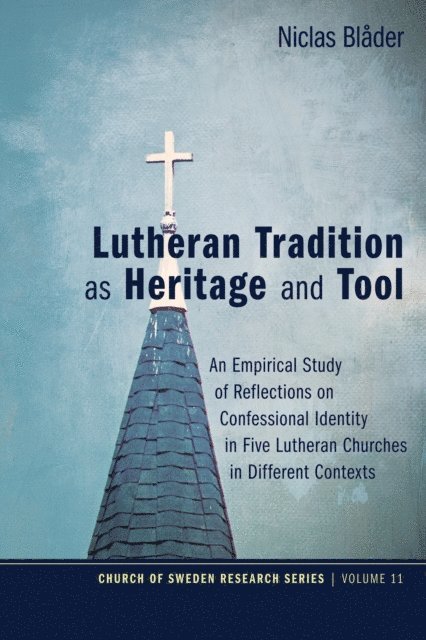
All of the member churches of the Lutheran World Federation (LWF) are related to Lutheran theology in one way or another. However, that does not mean they act similarly or draw the same conclusions about any particular issue. Rather, Lutheran churches around the globe display great diversity. This book has its background in a study of five Lutheran churches: the ILCO in Costa Rica, the IECLB in Brazil, the ELCI in Iceland, the FLM in Madagascar, and the HKBP in Indonesia. It addresses the questions of how the Lutheran heritage today is expressed in different churches and what is the role of Lutheran theology in how they handle their respective situations. The churches in this study share with other churches the need to handle dilemmas such as the relations between "community and pluralism," "openness and particularity," "power and servanthood," and "closeness to culture and being an alternative to culture." In doing this they use their culture and history as well as their Lutheran heritage as tools.
1 006 kr
Läs direkt efter köp
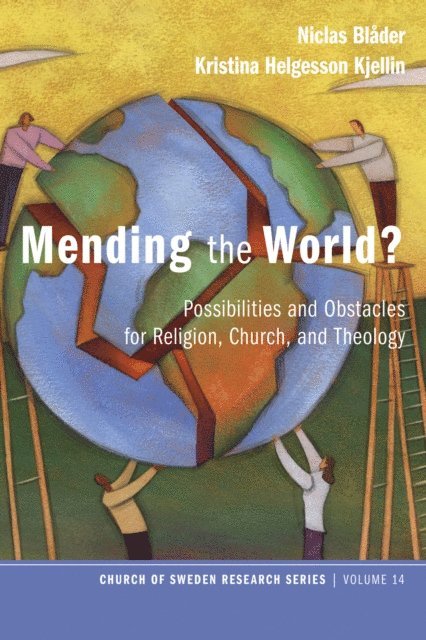
Religion has played a major role in history, affecting the course of events and influencing individuals. Today one frequently hears the expression "the return of religion" but opinions differ as to how this "return" is to be understood. It is clear that modernity and postmodernity have not meant that religion is dead or relegated to society''s backyards. Religion is still of vital importance for many people. It has, to some extent, changed shape but has not lost its legitimacy and attractiveness to broad groups. Religion is public, visible, and has a sought-for voice; but it is also wrestling with extremism, ignorance, and preconceptions. Just like ideologies, religions are capable of activating diametrically opposite traits in humans. It is this dual tension that is implicit in the question mark in this book''s title: Mending the World?This book''s aim is to help explore whether, how, and in what ways religion, church, and theology can contribute constructively to the future of a global society. In thirty-one chapters, researchers from around the world address the relation between religion and society.
E-bok
Engelska, 2012688 kr
Läs direkt efter köp
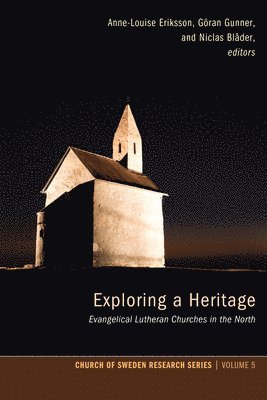
From a historical perspective, similarities among the Lutheran churches in Denmark, Iceland, Norway, and Sweden are easily understood. But these previously homogeneous northern societies, built on a Lutheran tradition with close ties between church and state, are now considered to be among the most secular in the world, as well as being impacted by a growing presence of other religions. These changes present a major challenge to the churches concerning how to relate to the state and how to be a "folk church."The goal of this volume is to explore how Lutheran identity presently shapes churches in the north. What are the burning issues engaging these churches at the beginning of the third millennium? Are there signs that they are affected by the global emergence of a theology and practice commonly known as Neo-Pentecostal or Charismatic? What is the situation for women in these churches embedded in societies ranked among the world''s most egalitarian? In what ways does their Lutheran heritage influence how these churches shape themselves today?The point of departure for this study is not a predetermined, normative understanding of what a Lutheran church is or should be, but the fact that the churches presented here represent what "Lutheranism" is today in this part of the world.Contributors include Anne-Louise Eriksson, Steinunn Arnthrudur Bjornsdottir, Solveig Anna Boasdottir, Niclas Blader, Carl Reinhold Brakenhielm, Thomas Ekstrand, Arnfriður Guðmundsdottir, Goran Gunner, Harald Hegstad, Hjalti Hugason, Roger Jensen, Halvard Johannessen, Peter Lodberg, Benedicte Hammer Præstholm, Karin Sarja, Ulrika Svalfors, Merete Thomassen, Marie Thomsen, Marie Vejrup Nielsen, and Else Marie Wiberg Pedersen.