Nico Baumbach - Böcker
Visar alla böcker från författaren Nico Baumbach. Handla med fri frakt och snabb leverans.
3 produkter
3 produkter
1 098 kr
Skickas inom 7-10 vardagar
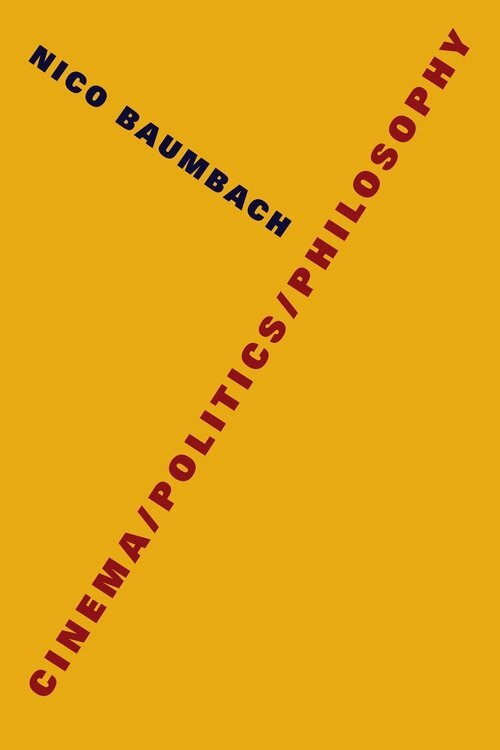
Almost fifty years ago, Jean-Louis Comolli and Jean Narboni published the manifesto “Cinema/Ideology/Criticism,” helping to set the agenda for a generation of film theory that used cinema as a means of critiquing capitalist ideology. In recent decades, film studies has moved away from politicized theory, abandoning the productive ways in which theory understands the relationship between cinema, politics, and art. In Cinema/Politics/Philosophy, Nico Baumbach revisits the much-maligned tradition of seventies film theory to reconsider: What does it mean to call cinema political?In this concise and provocative book, Baumbach argues that we need a new philosophical approach that sees cinema as both a mode of thought and a form of politics. Through close readings of the writings on cinema by the contemporary continental philosophers Jacques Rancière, Alain Badiou, and Giorgio Agamben, he asks us to rethink both the legacy of ideology critique and Deleuzian film-philosophy. He explores how cinema can condition philosophy through its own means, challenging received ideas about what is seeable, sayable, and doable. Cinema/Politics/Philosophy offers fundamental new ways to think about cinema as thought, art, and politics.
276 kr
Skickas inom 7-10 vardagar
Almost fifty years ago, Jean-Louis Comolli and Jean Narboni published the manifesto “Cinema/Ideology/Criticism,” helping to set the agenda for a generation of film theory that used cinema as a means of critiquing capitalist ideology. In recent decades, film studies has moved away from politicized theory, abandoning the productive ways in which theory understands the relationship between cinema, politics, and art. In Cinema/Politics/Philosophy, Nico Baumbach revisits the much-maligned tradition of seventies film theory to reconsider: What does it mean to call cinema political?In this concise and provocative book, Baumbach argues that we need a new philosophical approach that sees cinema as both a mode of thought and a form of politics. Through close readings of the writings on cinema by the contemporary continental philosophers Jacques Rancière, Alain Badiou, and Giorgio Agamben, he asks us to rethink both the legacy of ideology critique and Deleuzian film-philosophy. He explores how cinema can condition philosophy through its own means, challenging received ideas about what is seeable, sayable, and doable. Cinema/Politics/Philosophy offers fundamental new ways to think about cinema as thought, art, and politics.
175 kr
Skickas inom 7-10 vardagar
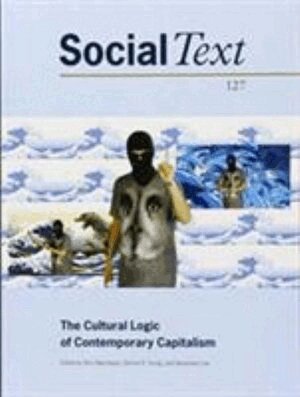
In 1984 Fredric Jameson wrote that “everything in our social life-from economic value and state power to practices and to the very structure of the psyche itself-can be said to have become ‘cultural’ in some original and yet untheorized sense.” The essays in this special issue track the status of this claim some thirty years later, inquiring into the relationship of art, aesthetics, and cultural production to political economy today. At a moment when interpretation (including “ideology critique” and “symptomatic reading”) has been variously supplanted by descriptivism, empiricism, and the return of metaphysics, contributors here pursue the possibilities for an engaged cultural criticism that is attentive to form while rejecting a depoliticized formalism. Spanning a wide range of cultural sites-from recent Hollywood cinema to post-broadcast television, manufactured landscape photography, contemporary West African art, and “new materialism” in philosophy-they ask what the “formal tendencies” of contemporary cultural production (including theory itself) can tell us about the cultural logic of contemporary capitalism. The collection includes a new interview with Jameson conducted by the editors.Contributors: Jennifer Bajorek, Nico Baumbach, Jonathan Beller, Alexander R. Galloway, Fredric Jameson, Sulgi Lie, Alberto Toscano, Amy Villarejo, Damon R. Young, Genevieve Yue