Nicolas Levrat – författare
Visar alla böcker från författaren Nicolas Levrat. Handla med fri frakt och snabb leverans.
6 produkter
EU and its Member States’ Joint Participation in International Agreements
Av Nicolas Levrat, Yuliya Kaspiarovich m. fl.
Inbunden, 2022
1432 kr
Lägg i varukorg
EU law has developed a unique and complex system under which the Union and its Member States can both act under international law, separately, jointly or in parallel. International law was not set up to deal with such complex and hybrid arrangements, which raise questions under both international …
EU and its Member States’ Joint Participation in International Agreements
Av Nicolas Levrat, Yuliya Kaspiarovich m. fl.
E-bok, 2022
717 kr
Lägg i varukorg
EU law has developed a unique and complex system under which the Union and its Member States can both act under international law, separately, jointly or in parallel. International law was not set up to deal with such complex and hybrid arrangements, which raise questions under both international …
EU and its Member States’ Joint Participation in International Agreements
Av Nicolas Levrat, Yuliya Kaspiarovich m. fl.
E-bok, 2022
702 kr
Lägg i varukorg
EU law has developed a unique and complex system under which the Union and its Member States can both act under international law, separately, jointly or in parallel. International law was not set up to deal with such complex and hybrid arrangements, which raise questions under both international …
EU and its Member States’ Joint Participation in International Agreements
Av Nicolas Levrat, Yuliya Kaspiarovich m. fl.
Häftad, 2023
654 kr
Lägg i varukorg
EU law has developed a unique and complex system under which the Union and its Member States can both act under international law, separately, jointly or in parallel. International law was not set up to deal with such complex and hybrid arrangements, which raise questions under both international …
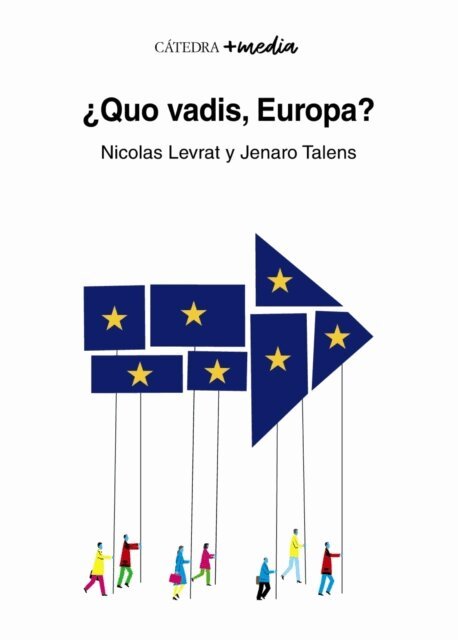
Quo vadis, Europa?
Av Jenaro Talens, Nicolas Levrat
E-bok, 2021
83 kr
Lägg i varukorg
La pregunta "Quo vadis?" tiene un significado especial en el proceso de integración europea. La razón es simple: a diferencia de las agrupaciones políticas nacionales que hunden sus raíces en mitos y valores fundacionales (un pueblo, un destino, unos acontecimientos históricos de carácter …
L'Europe et ses collectivités territoriales
Réflexions sur l'organisation et l'exercice du pouvoir territorial dans un monde glob
Häftad, 2008
708 kr
Lägg i varukorg
L’étude de la place et du rôle des collectivités territoriales en Europe est révélatrice d’enjeux majeurs dans l’organisation du pouvoir. Deux modèles coexistent : le premier est celui de la subsidiarité, fondé sur la division des fonctions selon différents niveaux ; le second, analysé selon le …