Nicole Rallis - Böcker
Visar alla böcker från författaren Nicole Rallis. Handla med fri frakt och snabb leverans.
2 produkter
2 produkter
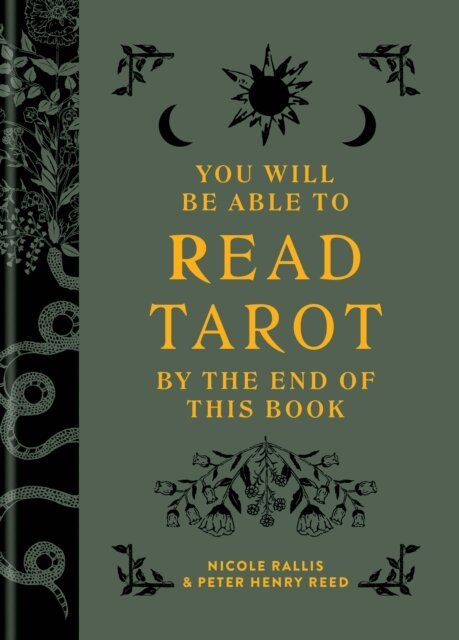
You Will Be Able to Read Tarot by the End of This Book
The illustrated guidebook to unlock your journey through the cards
Inbunden, Engelska, 2025
208 kr
Skickas inom 7-10 vardagar
Incorporating beautiful botanical illustrations of all the cards in the major and minor arcana, alongside the Rider-Waite-Smith deck, this is a straightforward guide to everything you need to know about reading tarot, from a basic understanding of what each card means, all the way through to detailed readings to enrich your everyday life. Using flowers as an accessible, engaging starting point into tarot makes this the perfect handbook for navigating this centuries-old practice.Chapter breakdown:Introduction: Why tarot is important and how flowers offer the most accessible introduction to tarotSection I: Seed - How to pull cards in a tarot spreadSection II: Sprout - How to read the cards of the Major ArcanaSection III: Bloom - How to read the cards of the Minor ArcanaSection IV: Harvest - How to read the tarot in full and renew growth with others
1 542 kr
Skickas
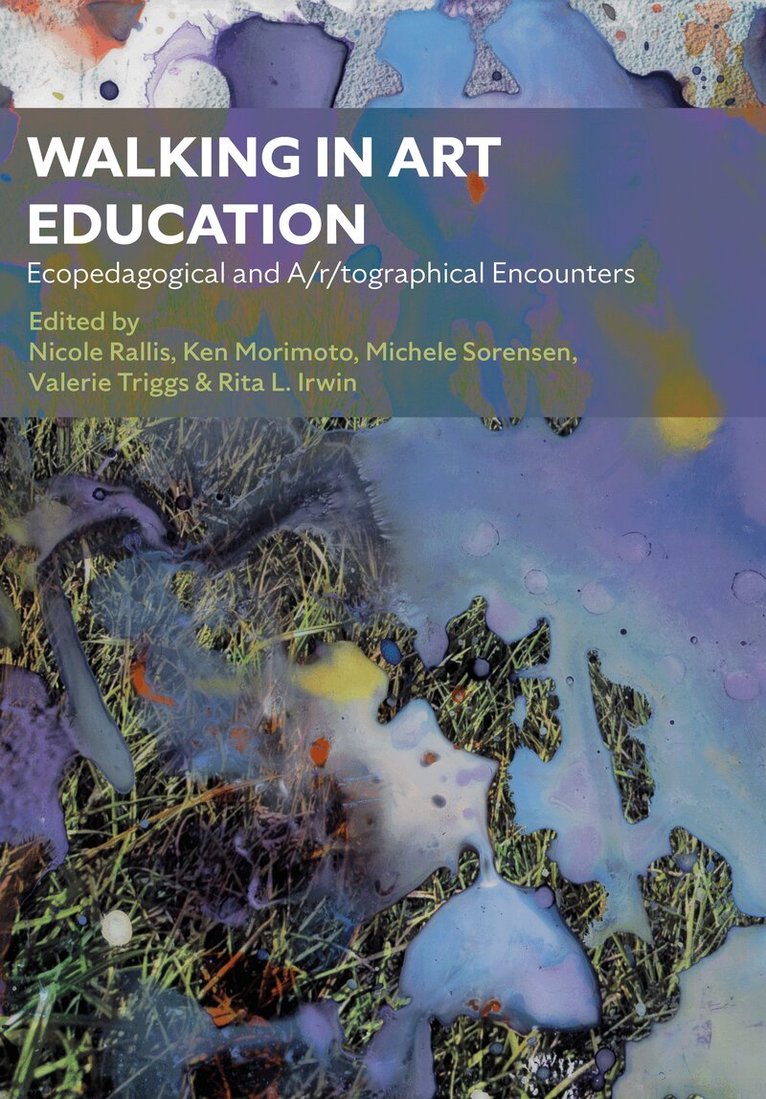
This edited collection highlights ways that arts-educators have taken up important questions around learning with the land through walking practices across spatial, temporal and cultural differences. These walking practices serve as ecopedagogical moments that attune us to human-land and more-than-human relationships, while also moving past Western-centric understandings of land and place. Yet it is also more than this as the book situates this work in a/r/tographic practices taking up walking as one method for engagement.Authors explore walking and a/r/tography in their local contexts. As a result, the book finds that kinship and relationality are significant themes that permeate across a/r/tographic practices focused on ecopedagogy and learning with the land.Unique to this collection is the weaving of groundings that both guide each chapter and emphasize the philosophical commitment of the book. Each grounding is written by scholars or artists with Indigenous backgrounds to Turtle Island (North America) or are scholars who are Indigenous to other countries and places who are now working in Canadian university settings. Many are Elders, cultural stewards, knowledge keepers, and stewards of the land who find themselves immersed in practices that are artful, ecological, and in many instances, involve the practice of walking. Each grounding offers an important lesson or prompt for readers to consider as they engage with the chapters, as well as offering a conceptual re-centring and grounding to the land and the traditional knowledges from the territories on which this collection is being produced and edited.Anishnaabe kwe scholar and artist Anna-Leah King reflects on the teachings of Alfred Manitopeyes, a Saulteaux Elder from Muskcowekwun, Pimosatamowin, who shares that good walking and good talking is more than just a metaphor.Ojibwa scholar and artist Natalie Owl troubles the dictionary definition of anecdotal in relation to walking in the world as an Indigenous woman.Mukwa Musayett, Shelly Johnson, reflects on her relationship to the natural elements, revealing how the winds have helped her learn emotional intimacy- from feelings of grief, frustration, anger, respect, power, love and gratitude. Metis scholar and artist Shannon Leddy invites the reader to a time-travelling walk, tracing the colonial legacies of the land where she now lives in Vancouver, Musqueam Territory, going back to ancient Greece and engaging with Greek mythology, and bringing us to creation itself, as we gestate in our mother’s womb.Cathy Rocke invites readers to her favourite walking path where she focuses her attention to the reciprocal relationships found in nature and considers how they can help us better understand healthy human relationships.Gloria Ramirez reflects on her homeland in the Andean Mountains and how her body is intimately tied to the places she has walked. In a poetic grounding story, Shauneen Pete reflects on the traditional teachings shared by her grandfather from Little Pine First Nation about living and learning with the land.Sheila Blackstock, member of the Gitxsan First Nation, invites readers to join her on a walk along the lakeshore in early springtime, as she reflects on her walking practices that have taught her how to learn from nature. She describes her movements and senses as “a heart catalogue of understanding how to be in nature”.In this grounding lesson from Peter Cole and Pat O’Riley, the characters of Coyote and Raven invite readers to the Kichwa-Lamista of the High Amazon and the Quechua Andeans in the Sacred Valley of the Incas in Peru. Through story they talk about returning to the land in an era of climate change and learning about traditional lifeways of Indigenous relations that emphasize preserving, maintain, repairing, caring and sharing.In her grounding poem, Yasmin Dean attunes to and shows gratitude to the Earth, as she thoughtfully considers how to open and walk through the gate that leads to the sacred.