Nicos P. Mouzelis – författare
Visar alla böcker från författaren Nicos P. Mouzelis. Handla med fri frakt och snabb leverans.
14 produkter
14 produkter
679 kr
Skickas inom 10-15 vardagar
The American Journal of Sociology says of this book "Mouzelis knows and handles the literature well and accurately brings the reader up to the early sixties. A summarizer, synthesizer, and historian of modern theories, he serves his novice well. The more initiated student of formal organizations will appreciate the critiques of his favorite theorists: Mouzelis cuts clean and bold. Along with order, he does add critical insight to his borrowed materials."This book is a carefully integrated and very straightforward guide to the labyrinth of theory on organizational phenomena, and surveys the most important approaches to the study of organizations and the manner in which these approaches are interrelated. The author's interest is in showing the successive stages of theory generation and development in the two major traditions of thought on this subject, thereby providing a coherent overview of the field, a method for systematically investigating it, and an unusually broadening supplement to the standard treatment of organizations in undergraduate and graduate courses.The author discusses the writings of such theorists as Marx, Weber, and Michels who, from a very wide perspective, tried to assess the impact of large-scale bureaucracy on the power structure of modern society. He also examines the other tradition of organizational writings that starts with Taylor and the movement of scientific management. Finally, an analysis is made of recent theoretical trends that indicate a certain convergence of the bureaucracy and the managerial lines of thought.In emphasizing the conceptual frameworks that underlie organization theory and in showing the dynamics of theory progression, the author provides students with invaluable assistance in understanding the levels of theoretical analysis, the variables to be taken into consideration, and the manner in which these variables may be accounted for in a systematic manner.
553 kr
Skickas inom 10-15 vardagar
304 kr
Skickas inom 10-15 vardagar
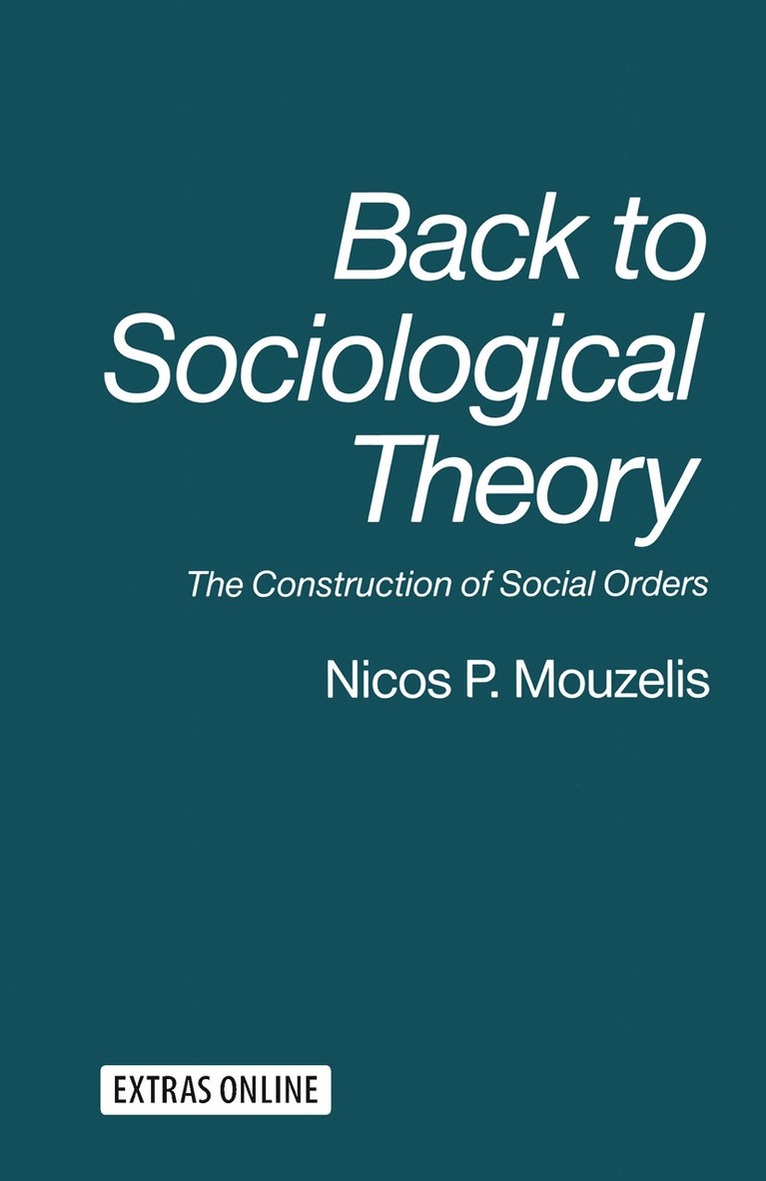
Nicos Mouzelis puts forward a post-Marxist conceptual framework which overcomes economic reductionism while at the same time retaining some distinctive features of the Marxist paradigm - features which, when radically restructured, are indispensable for macrohistorical comparisons and more generally, for an examination of how whole social orders are constituted, maintained and transformed. The author demonstrates the utility of the conceptual framework proposed by showing how it can overcome some typical theoretical dilemmas and research difficulties that Marxists are facing in their analysis of late industrializing societies. More specifically, the limitations of Marxist analysis and ways to overcome them are demonstrated by looking in depth at a single case: the complex political and economic developments leading to the 1909 "bourgeois revolution" in Greece.
272 kr
Skickas inom 10-15 vardagar
This volume argues against a marked tendency in present-day sociology to conflate philosophy and sociological theory. In trying to demonstrate the relative autonomy and specific logic of sociological theorizing, the book draws from a variety of theoretical traditions in order to construct a set of interrelated concepts useful for bridging the gulf between macro and micro sociologies. Drawing examples from the sociology of development and from the theory of organizations, Nicos Mouzelis shows how the conceptual framework proposed can help the researcher to avoid both the reification of macro institutional structures and their reduction to the intersubjective understandings of micro actors. Other works by Nicos Mouzelis include "Organization and Bureaucracy: An Analysis of Modern Theories", "Modern Greece: Facets of Underdevelopment", "Politics in the Semi-Periphery: Early Parliamentarism and Late Industrialization in the Balkans and Latin America" and "Post-Marxist Alternatives: The Construction of Social Orders".
825 kr
Skickas inom 10-15 vardagar
First published in 1998. This is Volume VIII of the eighteen in the Sociology of Work and Organization series and offers an analysis of modern theories in relation to organisation and bureaucracy. The present study tries to provide some guidance which may help students to orient themselves with greater ease in the labyrinth of organisational writings. More specifically, it tries to identify and examine critically some of the major approaches to the study of organisations, and the ways in which such approaches are linked with each other.
336 kr
Skickas inom 10-15 vardagar
First published in 1998. This is Volume VIII of the eighteen in the Sociology of Work and Organization series and offers an analysis of modern theories in relation to organisation and bureaucracy. The present study tries to provide some guidance which may help students to orient themselves with greater ease in the labyrinth of organisational writings. More specifically, it tries to identify and examine critically some of the major approaches to the study of organisations, and the ways in which such approaches are linked with each other.
884 kr
Skickas inom 7-10 vardagar
There is a growing conflict between modern and postmodern social theorists. The latter reject modern approaches as economistic, essentialist and often leading to authoritarian policies. Modernists criticize postmodern approaches for their rejection of holistic conceptual frameworks which facilitate an overall picture of how social wholes (organizations, communities, nation-states, etc.) are constituted, reproduced and transformed. They believe the rejection of holistic methodologies leads to social myopia - a refusal to explore critically the type of broad problems that classical sociology deals with. This book attempts to bridge the divide between these two conflicting perspectives and proposes a novel holistic framework which is neither reductionist/economistic nor essentialist. Modern and Postmodern Social Theorizing will appeal to scholars and students of social theory and of social sciences in general.
458 kr
Skickas inom 7-10 vardagar
There is a growing conflict between modern and postmodern social theorists. The latter reject modern approaches as economistic, essentialist and often leading to authoritarian policies. Modernists criticize postmodern approaches for their rejection of holistic conceptual frameworks which facilitate an overall picture of how social wholes (organizations, communities, nation-states, etc.) are constituted, reproduced and transformed. They believe the rejection of holistic methodologies leads to social myopia - a refusal to explore critically the type of broad problems that classical sociology deals with. This book attempts to bridge the divide between these two conflicting perspectives and proposes a novel holistic framework which is neither reductionist/economistic nor essentialist. Modern and Postmodern Social Theorizing will appeal to scholars and students of social theory and of social sciences in general.
2 134 kr
Skickas inom 10-15 vardagar
The American Journal of Sociology says of this book "Mouzelis knows and handles the literature well and accurately brings the reader up to the early sixties. A summarizer, synthesizer, and historian of modern theories, he serves his novice well. The more initiated student of formal organizations will appreciate the critiques of his favorite theorists: Mouzelis cuts clean and bold. Along with order, he does add critical insight to his borrowed materials."This book is a carefully integrated and very straightforward guide to the labyrinth of theory on organizational phenomena, and surveys the most important approaches to the study of organizations and the manner in which these approaches are interrelated. The author's interest is in showing the successive stages of theory generation and development in the two major traditions of thought on this subject, thereby providing a coherent overview of the field, a method for systematically investigating it, and an unusually broadening supplement to the standard treatment of organizations in undergraduate and graduate courses.The author discusses the writings of such theorists as Marx, Weber, and Michels who, from a very wide perspective, tried to assess the impact of large-scale bureaucracy on the power structure of modern society. He also examines the other tradition of organizational writings that starts with Taylor and the movement of scientific management. Finally, an analysis is made of recent theoretical trends that indicate a certain convergence of the bureaucracy and the managerial lines of thought.In emphasizing the conceptual frameworks that underlie organization theory and in showing the dynamics of theory progression, the author provides students with invaluable assistance in understanding the levels of theoretical analysis, the variables to be taken into consideration, and the manner in which these variables may be accounted for in a systematic manner.
2 409 kr
Skickas inom 10-15 vardagar
Organizational Pathology draws an extended metaphor that the life cycle of an organization is akin to the biological life cycle. Like all living things, organizations will encounter problems that lead to decline and eventual failure. This work discusses the basic problems and life threatening diseases responsible for organizations' failure and death, including organizational politics, organizational corruption, and organizational crime. The book also contains a critical look at crises and fixations; failure and survival; and processes of disbandment and closure of dying organizations.The consideration of these issues follows a diagnostic model of failure. Yitzhak Samuel argues that if the problems that lead to failure can be predicted or diagnosed early, their severity can be assessed and possible remedies can be implemented to avoid escalating crises. At the very least, an understanding of why and how decline happens can be gained from this analysis. This book offers facts about the causes and consequences of organizational downfall and clues about diagnoses of certain symptoms of abnormal behavior, and how to identify early signs of decline or failure. In order to illustrate these abstract arguments and concepts, Samuel uses various real-life examples of events that have occurred in cross-country contexts. In this way, Organizational Pathology: Life and Death of Organizations should serve a variety of readers.Although primarily intended for students and scholars in the social and behavioral sciences who are familiar with the study and the practice of organizations, this book's informal style makes it easily accessible to a wide range of readers. Just as Samuel's previous book on organizational politics led to new lines of research and theory, this book will encourage similar studies in organizational pathology and institutional malaise.
379 kr
Skickas inom 10-15 vardagar
Nicos Mouzelis argues against a marked tendency in present- day sociology to conflate philosophy and sociological theory.
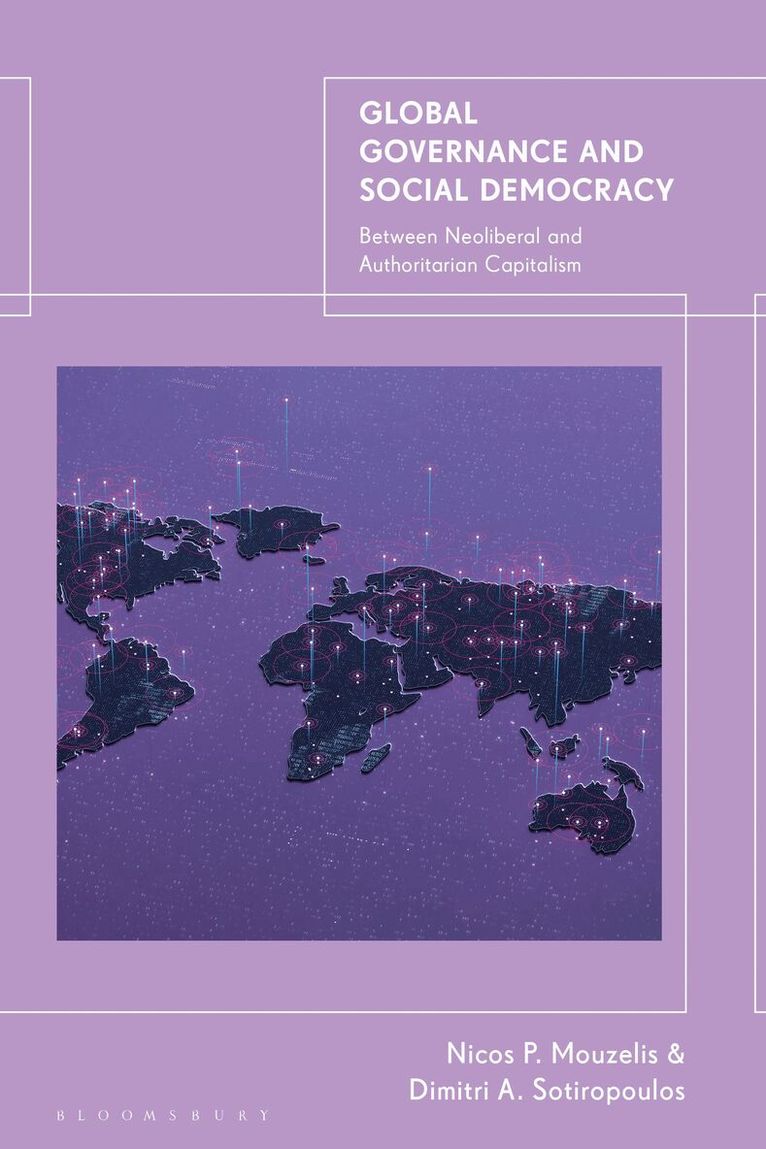
Global Governance and Social Democracy
Between Neoliberal and Authoritarian Capitalism
Inbunden, Engelska, 2024
1 219 kr
Skickas inom 10-15 vardagar
How can we understand social democracy today? This ambitious book offers a global perspective on the nature of capitalism; its past and future possibilities of survival; the differentiation between neoliberal, authoritarian and social democratic systems, exemplified by the United States, China, and the EU; and the conflict relationships between them.Reflecting on urgent global risks, such as climate change, pandemics and nuclear confrontation - Mouzelis & Sotiropoulos explore why these risks can only be dealt with by the cooperation of these three major players in the global arena. They explore how the model of social democracy, which in the previous century tamed unfettered capitalism in some national contexts, can help contain the excesses of global capitalism now. In clear, compelling and coherent terms, the authors demonstrate how unchecked antagonism among these three major players has the potential to spill-over into inertia or reluctance to manage these urgent risks, to the detriment of humanity as a whole.
Global Governance and Social Democracy
Between Neoliberal and Authoritarian Capitalism
Häftad, Engelska, 2026
398 kr
Skickas inom 10-15 vardagar
How can we understand social democracy today? This ambitious book offers a global perspective on the nature of capitalism; its past and future possibilities of survival; the differentiation between neoliberal, authoritarian and social democratic systems, exemplified by the United States, China, and the EU; and the conflict relationships between them.Reflecting on urgent global risks, such as climate change, pandemics and nuclear confrontation - Mouzelis & Sotiropoulos explore why these risks can only be dealt with by the cooperation of these three major players in the global arena. They explore how the model of social democracy, which in the previous century tamed unfettered capitalism in some national contexts, can help contain the excesses of global capitalism now. In clear, compelling and coherent terms, the authors demonstrate how unchecked antagonism among these three major players has the potential to spill-over into inertia or reluctance to manage these urgent risks, to the detriment of humanity as a whole.
728 kr
Skickas inom 10-15 vardagar
Organizational Pathology draws an extended metaphor that the life cycle of an organization is akin to the biological life cycle. Like all living things, organizations will encounter problems that lead to decline and eventual failure. This work discusses the basic problems and life threatening diseases responsible for organizations' failure and death, including organizational politics, organizational corruption, and organizational crime. The book also contains a critical look at crises and fixations; failure and survival; and processes of disbandment and closure of dying organizations.The consideration of these issues follows a diagnostic model of failure. Yitzhak Samuel argues that if the problems that lead to failure can be predicted or diagnosed early, their severity can be assessed and possible remedies can be implemented to avoid escalating crises. At the very least, an understanding of why and how decline happens can be gained from this analysis. This book offers facts about the causes and consequences of organizational downfall and clues about diagnoses of certain symptoms of abnormal behavior, and how to identify early signs of decline or failure. In order to illustrate these abstract arguments and concepts, Samuel uses various real-life examples of events that have occurred in cross-country contexts. In this way, Organizational Pathology: Life and Death of Organizations should serve a variety of readers.Although primarily intended for students and scholars in the social and behavioral sciences who are familiar with the study and the practice of organizations, this book's informal style makes it easily accessible to a wide range of readers. Just as Samuel's previous book on organizational politics led to new lines of research and theory, this book will encourage similar studies in organizational pathology and institutional malaise.