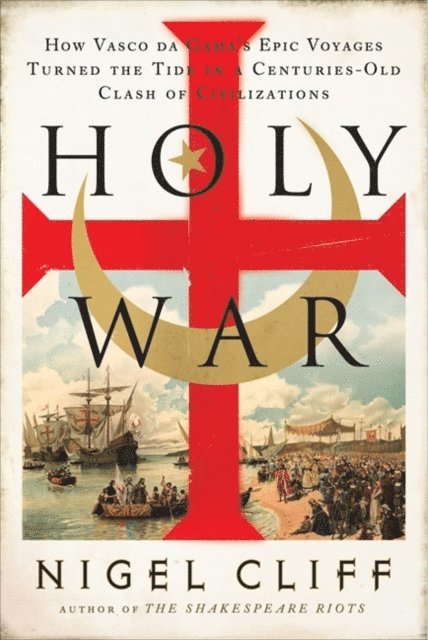
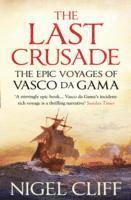
A radical reinterpretation of da Gama''s pioneering voyages, revealing their role as a decisive turning point in the struggle between Christianity & Islam.In 1498 a young captain sailed from Portugal, circumnavigated Africa, crossed the Indian Ocean, and discovered the sea route to the Indies and, with it, access to the fabled wealth of the East. It was the longest voyage known in history. The little ships were pushed beyond their limits, and their crews were racked by storms and devastated by disease. However, their greatest enemy was neither nature nor even the sheer dread of venturing into unknown worlds that existed on maps populated by coiled, toothy sea monsters. With bloodred Crusader crosses emblazoned on their sails, the explorers arrived in the heart of the Muslim East at a time when the old hostilities between Christianity and Islam had risen to a new level of intensity. In two voyages that spanned six years, Vasco da Gama would fight a running sea battle that would ultimately change the fate of three continents.An epic tale of spies, intrigue, and treachery; of bravado, brinkmanship, and confused and often comical collisions between cultures encountering one another for the first time; Holy War also offers a surprising new interpretation of the broad sweep of history. Identifying Vasco da Gama''s arrival in the East as a turning point in the centuries-old struggle between Islam and Christianity—one that continues to shape our world—Holy War reveals the unexpected truth that both Vasco da Gama and his archrival, Christopher Columbus, set sail with the clear purpose of launching a Crusade whose objective was to reach the Indies; seize control of its markets in spices, silks, and precious gems from Muslim traders; and claim for Portugal or Spain, respectively, all the territories they discovered. Vasco da Gama triumphed in his mission and drew a dividing line between the Muslim and Christian eras of history—what we in the West call the medieval and the modern ages. Now that the world is once again tipping back East, Holy War offers a key to understanding age-old religious and cultural rivalries resurgent today.
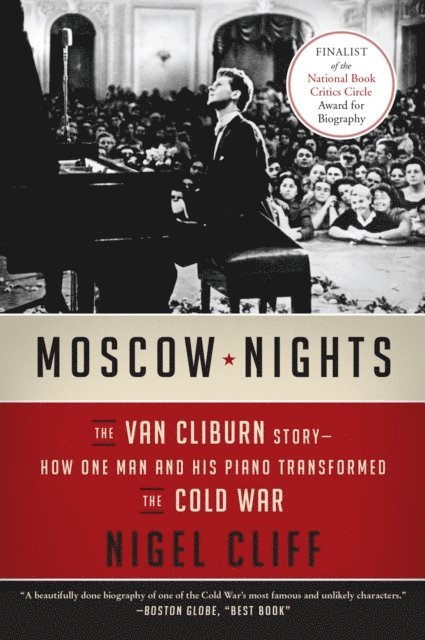
"A rousing, well-researched biography" of the Texan piano prodigy who crossed the Iron Curtain at the height of the Cold War (Kirkus, starred review).A National Book Critic''s Circle FinalistIn 1958, an unheralded young pianist named Van Cliburn traveled to Moscow to compete in the First International Tchaikovsky Competition. The Soviets had no intention of bestowing their coveted prize on an unknown American; a Russian pianist had already been chosen to win. Yet when the gangly Texan with the shy grin began to play, he instantly captivated an entire nation.The Soviet people were charmed by Van Cliburn''s extraordinary talent, but it was his palpable love for the music that earned their devotion; for many, he played more like a Russian than their own musicians. As enraptured crowds mobbed Cliburn''s performances, pressure mounted to award him the competition prize. "Is he the best?" Soviet Premier Nikita Khrushchev demanded of the judges. "In that case . . . give him the prize!"Adored by millions in the USSR, Cliburn returned to a hero''s welcome in the USA and became, for a time, an ambassador of hope. In this thrilling, impeccably researched account, Nigel Cliff recreates the drama and tension of the Cold War era, and brings into focus the gifted musician whose music would temporarily bridge the divide between two dangerously hostile powers.
In 1498 a young captain sailed from Portugal, circumnavigated Africa, crossed the Indian Ocean, and discovered the sea route to the Indies, opening up access to the fabled wealth of the East. It was the longest voyage known to history; the ships were pushed to their limits, their crews were racked by storms and devastated by disease. However, the greatest enemy was neither nature nor the fear of venturing into unknown worlds. With blood-red Crusader crosses emblazoned on their sails, the explorers arrived in the heart of the Muslim East at a time when the old hostilities between Christianity and Islam had intensified. In two voyages that spanned six years, Vasco da Gama would fight a running sea battle that would ultimately change the fate of three continents. The Last Crusade is an epic tale of spies, intrigue, and treachery; of bravado, brinkmanship, and confused - often comical collisions - between cultures encountering one another for the first time. With the world once again tipping back East, The Last Crusade offers a key to understanding age-old religious and cultural rivalries resurgent today.