Nikhil K. Singha – författare
Visar alla böcker från författaren Nikhil K. Singha. Handla med fri frakt och snabb leverans.
8 produkter
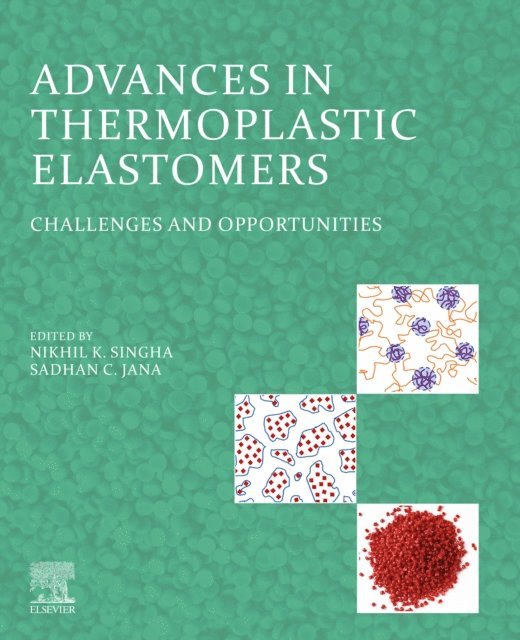
Advances in Thermoplastic Elastomers
Challenges and Opportunities
Av Nikhil K. Singha, Sadhan C. Jana
Häftad, 2024
2702 kr
Lägg i varukorg
Advances in Thermoplastic Elastomers: Challenges and Opportunities brings together the state-of-the-art in thermoplastic elastomers (TPEs), covering innovative materials, synthesis techniques, processing methods and sustainability. Sections outline thermoplastic elastomers, rubber elastic, and …
Advances in Thermoplastic Elastomers
Challenges and Opportunities
Av Sadhan C. Jana, Nikhil K. Singha
E-bok, 2024
3850 kr
Lägg i varukorg
Advances in Thermoplastic Elastomers: Challenges and Opportunities brings together the state-of-the-art in thermoplastic elastomers (TPEs), covering innovative materials, synthesis techniques, processing methods and sustainability. Sections outline thermoplastic elastomers, rubber elastic, and …
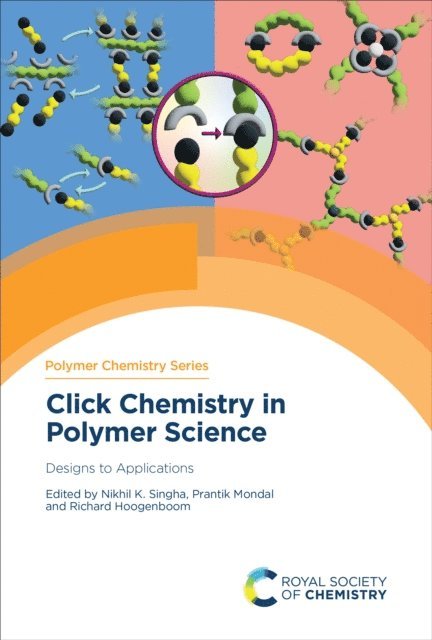
Click Chemistry in Polymer Science
Designs to Applications
Av Nikhil K Singha, Prantik Mondal m. fl.
Inbunden, 2024
3899 kr
Lägg i varukorg
‘Click’ reactions are a unique class of versatile synthetic tools used in organic and polymer chemistry to develop new materials. The high efficiency of the click reactions, combined with their easy and straightforward execution, have made them an inevitable tool for the development of a variety of …
Click Chemistry in Polymer Science
Designs to Applications
Av Richard Hoogenboom, Prantik Mondal m. fl.
E-bok, 2024
3465 kr
Lägg i varukorg
‘Click’ reactions are a unique class of versatile synthetic tools used in organic and polymer chemistry to develop new materials. The high efficiency of the click reactions, combined with their easy and straightforward execution, have made them an inevitable tool for the development of a variety of …
Click Chemistry in Polymer Science
Designs to Applications
Av Richard Hoogenboom, Prantik Mondal m. fl.
E-bok, 2024
3492 kr
Lägg i varukorg
‘Click’ reactions are a unique class of versatile synthetic tools used in organic and polymer chemistry to develop new materials. The high efficiency of the click reactions, combined with their easy and straightforward execution, have made them an inevitable tool for the development of a variety of …
Reversible Deactivation Radical Polymerization
Synthesis and Applications of Functional Polymers
Av TBD, Nikhil K. Singha m. fl.
Inbunden, 2020
2321 kr
Lägg i varukorg
This book describes strategies and mechanism of reversible deactivation radical polymerization (RDRP) to synthesize functional polymers. Several approaches such as atom transfer radical polymerization and the combination of click chemistry and RDRP are summarized. Contributors from …
Reversible Deactivation Radical Polymerization
Synthesis and Applications of Functional Polymers
Av Jimmy Mays, Nikhil K. Singha
E-bok, 2020
2346 kr
Lägg i varukorg
This book describes strategies and mechanism of reversible deactivation radical polymerization (RDRP) to synthesize functional polymers. Several approaches such as atom transfer radical polymerization and the combination of click chemistry and RDRP are summarized. Contributors from …
Reversible Deactivation Radical Polymerization
Synthesis and Applications of Functional Polymers
Av Jimmy Mays, Nikhil K. Singha
E-bok, 2020
2346 kr
Lägg i varukorg
This book describes strategies and mechanism of reversible deactivation radical polymerization (RDRP) to synthesize functional polymers. Several approaches such as atom transfer radical polymerization and the combination of click chemistry and RDRP are summarized. Contributors from …