Niklas H. Rossbach - Böcker
Visar alla böcker från författaren Niklas H. Rossbach. Handla med fri frakt och snabb leverans.
3 produkter
3 produkter
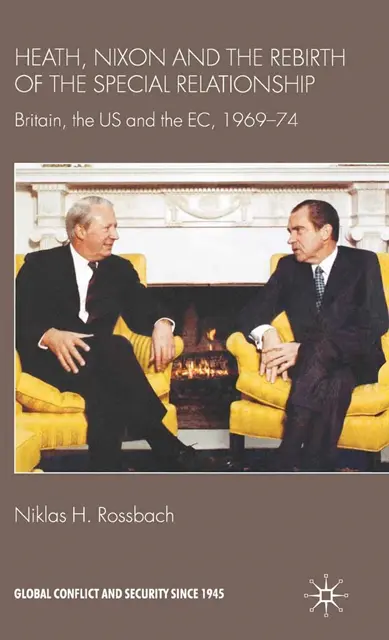
Heath, Nixon and the Rebirth of the Special Relationship
Britain, the US and the EC, 1969–74
Inbunden, Engelska, 2009
549 kr
Skickas inom 10-15 vardagar
This book reveals that 1969-74 was a crucial period for the special relationship. The Heath Government attempted to reverse Britain's decline as a great power by forging an American-European special relationship out of the Anglo-American relationship. Simultaneously the Nixon Administration tried to recoup the global position of the United States.
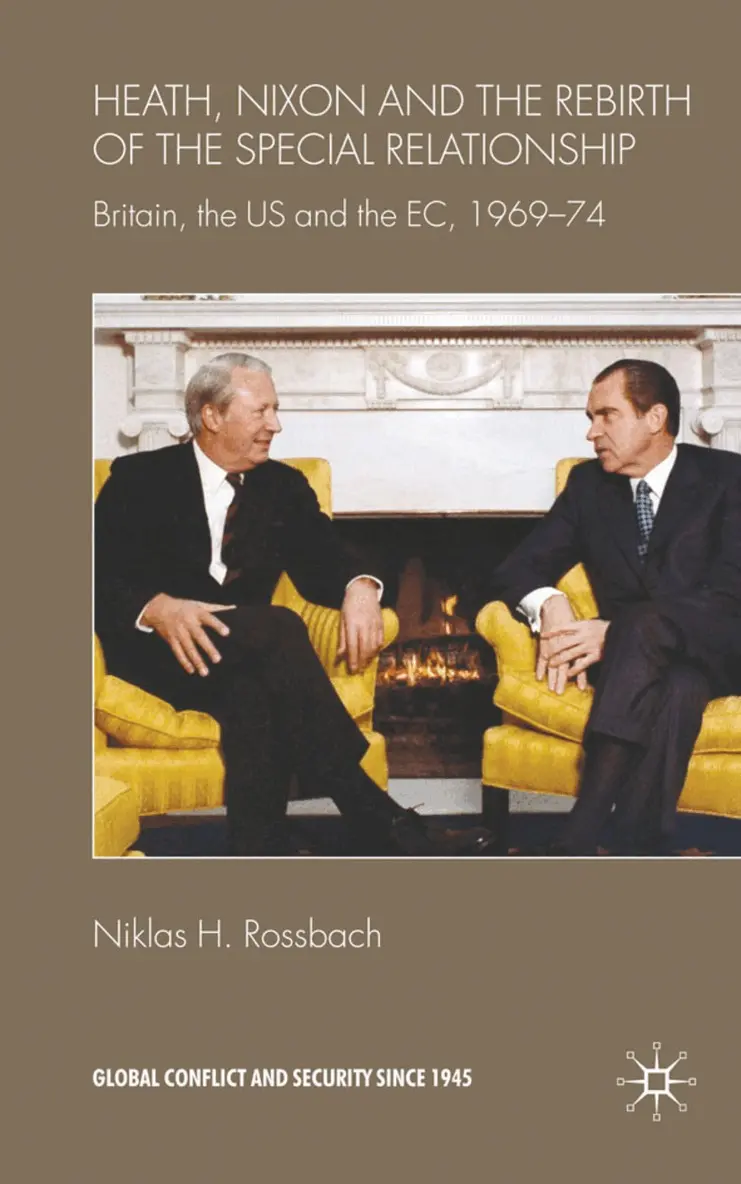
Heath, Nixon and the Rebirth of the Special Relationship
Britain, the US and the EC, 1969–74
Häftad, Engelska, 2009
549 kr
Skickas inom 10-15 vardagar
This book reveals that 1969-74 was a crucial period for the special relationship. The Heath Government attempted to reverse Britain's decline as a great power by forging an American-European special relationship out of the Anglo-American relationship. Simultaneously the Nixon Administration tried to recoup the global position of the United States.
189 kr
Skickas inom 5-8 vardagar
How to deal with propaganda and disinformation is not a new challenge. This book shows how Sweden, during the early Cold War, managed to establish an asymmetrical counter measure, the Swedish Preparedness Board for Psychological Defence. The book also analyses what lessons can be learnt from that experience. While Sweden was not invaded during the Second World War the country needed to protect itself against foreign propaganda during the war. After the war Sweden remained non-aligned and had to be prepared to counter psychological warfare from the Soviet Union. Sweden's response to the risk of being engulfed in a global conflict after the 1940s was its new total defence effort. Sweden's psychological defence became a vital part of that effort. Apart from figuring out how to convince the Swedish people that defence made sense against a potential enemy armed with nuclear weapons, the new agency had t? circumvent several political problems. Sweden's new psychological defence agency had to avoid being seen as a domestic propaganda machine, but it had to learn from the discredited handling of foreign propaganda during the Second World War. It also had to charter a course between Sweden's claim of being neutral and the country's secret ties to the West during the Cold War. Fighting Propaganda reveals how the new psychological defence agency dealt with the difficulties facing an open and free society, which sought to protect itself from psychological warfare. Within a decade the psychological defence effort became an integral part of Sweden's defence. But how could it not have been? Without psychological defence no other part of the defence effort would have made sense, since no one would had been convinced that defence was possible. NIKLAS H. ROSSBACH holds a Ph.D in History from the European University Institute, and works on international security. This book is the result of his research as a Visiting Fellow at the Changing Character of War Centre at the University of Oxford.