Nikolai V. Brilliantov – författare
Visar alla böcker från författaren Nikolai V. Brilliantov. Handla med fri frakt och snabb leverans.
5 produkter
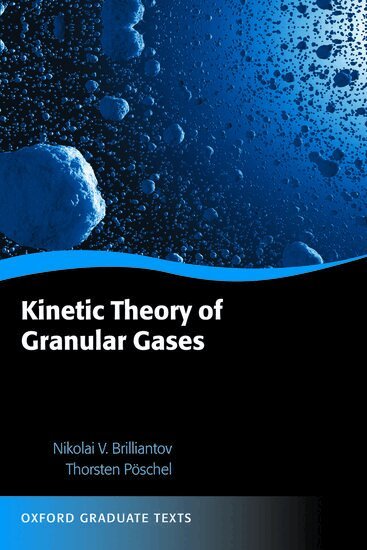
Kinetic Theory of Granular Gases
Av Thorsten Poschel, Nikolai V. Brilliantov
E-bok, 2004
377 kr
Lägg i varukorg
"Kinetic Theory of Granular Gases" provides an introduction to the rapidly developing theory of dissipative gas dynamics - a theory which has mainly evolved over the last decade. The book is aimed at readers from the advanced undergraduate level upwards and leads on to the present state of …
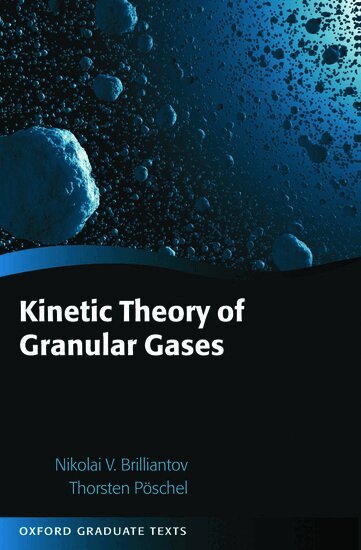
Kinetic Theory of Granular Gases
Av Nikolai V. Brilliantov, Thorsten Pöschel
Inbunden, 2004
2260 kr
Lägg i varukorg
"Kinetic Theory of Granular Gases" provides an introduction to the rapidly developing theory of dissipative gas dynamics - a theory which has mainly evolved over the last decade. The book is aimed at readers from the advanced undergraduate level upwards and leads on to the present state of …
Kinetic Theory of Granular Gases
Av Nikolai V. Brilliantov, Thorsten Pöschel
Häftad, 2010
1096 kr
Lägg i varukorg
"Kinetic Theory of Granular Gases" provides an introduction to the rapidly developing theory of dissipative gas dynamics - a theory which has mainly evolved over the last decade. The book is aimed at readers from the advanced undergraduate level upwards and leads on to the present state of …
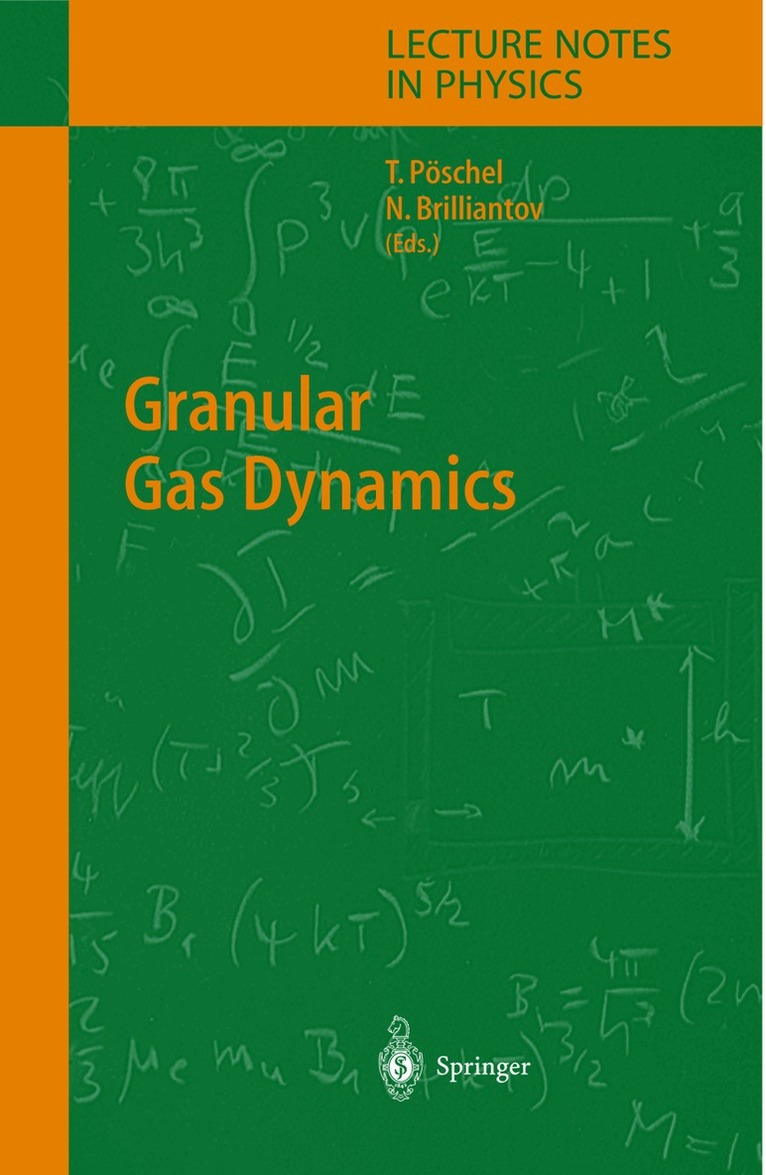
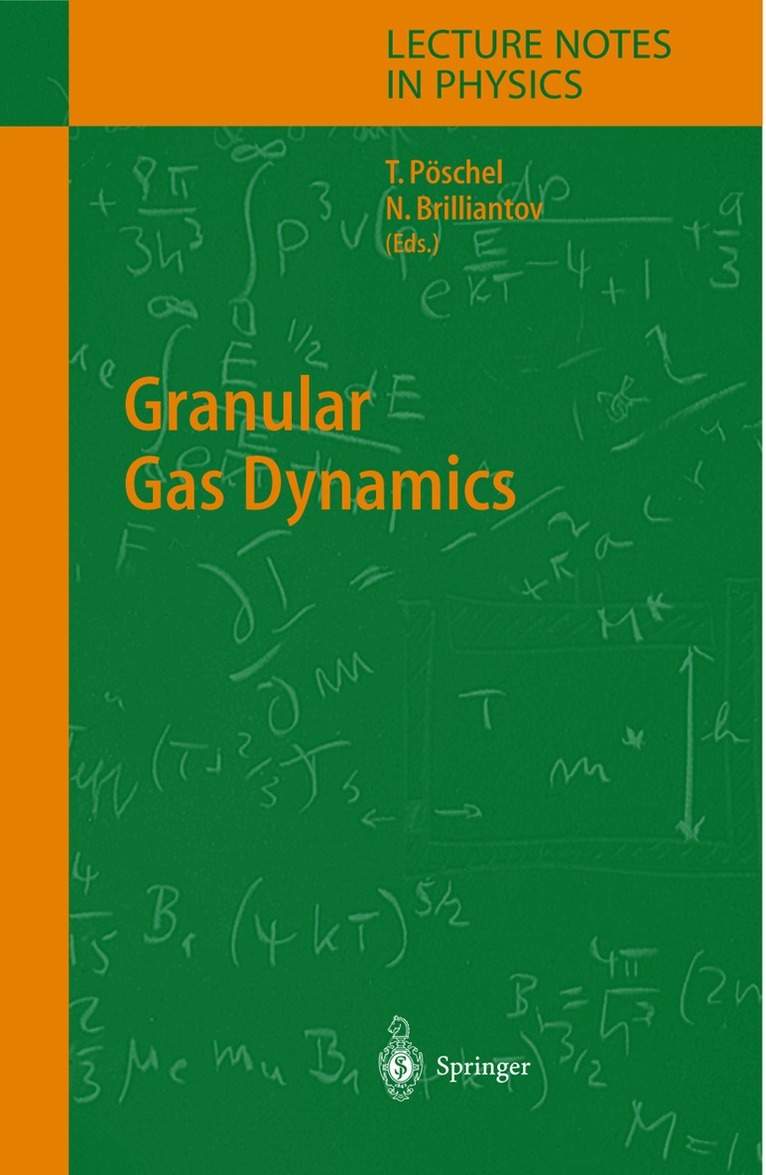
Granular Gas Dynamics
Av Thorsten Pöschel, Nikolai V. Brilliantov
Inbunden, 2003
1096 kr
Lägg i varukorg
While there is not yet any general theory for granular materials, significant progress has been achieved for dilute systems, also called granular gases. The contributions in this book address both the kinetic approach one using the Boltzmann equation for dissipative gases as well as the less …
Granular Gas Dynamics
Av Thorsten Pöschel, Nikolai V. Brilliantov
Häftad, 2010
1096 kr
Lägg i varukorg
While there is not yet any general theory for granular materials, significant progress has been achieved for dilute systems, also called granular gases. The contributions in this book address both the kinetic approach one using the Boltzmann equation for dissipative gases as well as the less …