Nina Gunde-Cimerman - Böcker
Visar alla böcker från författaren Nina Gunde-Cimerman. Handla med fri frakt och snabb leverans.
2 produkter
2 produkter
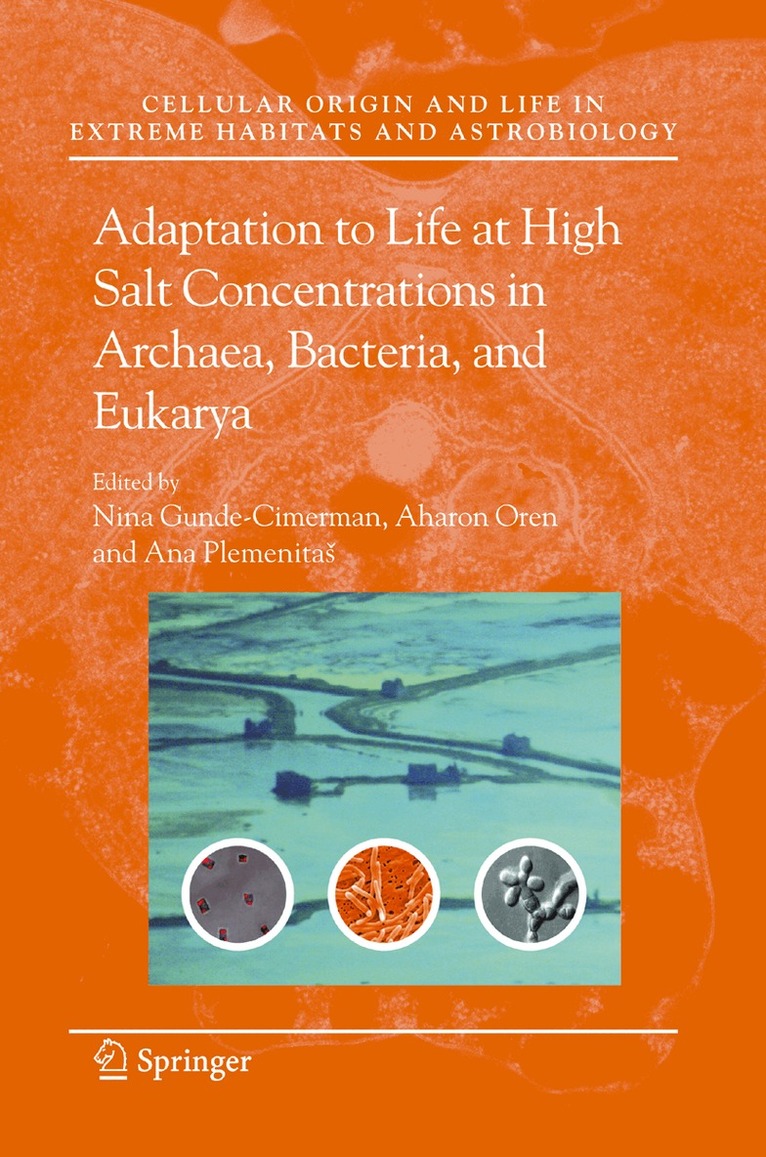
Adaptation to Life at High Salt Concentrations in Archaea, Bacteria, and Eukarya
Inbunden, Engelska, 2005
3 149 kr
Skickas inom 10-15 vardagar
Salt is an essential requirement of life. Already from ancient times (e. g. , see the books of the Bible) its importance in human life has been known. For example, salt symbolizes destruction (as in Sodom and Gomorra), but on the other hand it has been an ingredient of every sacrifice during the Holy Temple periods. Microbial life in concentrated salt solutions has fascinated scientists since its discovery. Recently there have been several international meetings and books devoted entirely to halophiles. This book includes the proceedings of the “Halophiles 2004” conference held in Ljubljana, Slovenia, in September 2004 (www. u- lj. si/~bfbhaloph/index. html). This meeting was attended by 120 participants from 25 countries. The editors have selected presentations given at the meeting for this volume, and have also invited a number of contributions from experts who had not been present in Ljubljana. This book complements “Halophilic Microorganisms”, edited by A. Ventosa and published by Springer-Verlag (2004), “Halophilic Microorganism and their Environments” by A. Oren (2002), published by Kluwer Academic Publishers as volume 5 of “Cellular Origins, Life in Extreme Habitats and Astrobiology” (COLE), and “Microbiology and Biogeochemistry of Hypersaline Environments” edited by A. Oren, and published by CRC Press, Boca Raton (1999). Salt-loving (halophilic) microorganisms grow in salt solutions above seawater salinity (~3. 5% salt) up to saturation ranges (i. e. , around 35% salt). High concentrations of salt occur in natural environments (e. g.
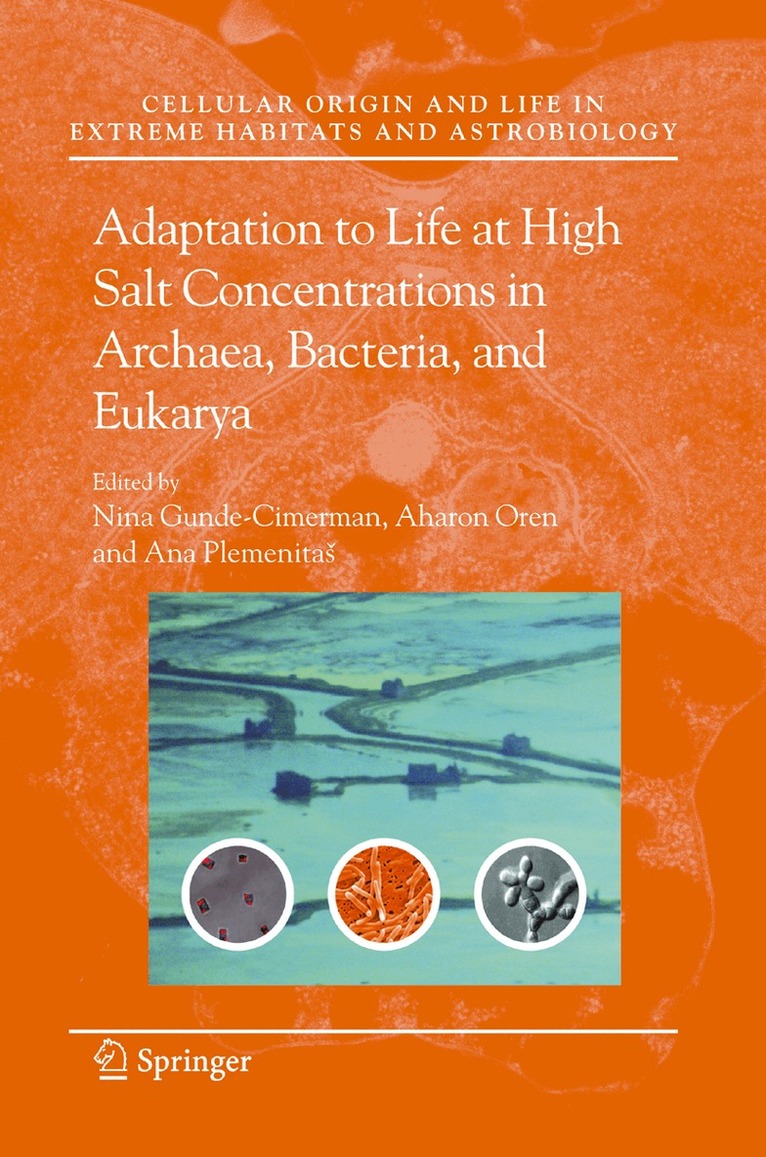
Adaptation to Life at High Salt Concentrations in Archaea, Bacteria, and Eukarya
Häftad, Engelska, 2010
3 178 kr
Skickas inom 10-15 vardagar
This book intends to provide an overview of current research on halophilic microorganisms, highlighting the diversity of life forms adapted to tolerate high salt concentrations and low water activities. Most of the 35 chapters are based on lectures presented during the international symposium "Halophiles 2004", held in Ljubljana, Slovenia, in September 2004. Descriptions of the diverse high-salt environments in which halophiles are found are followed by sections devoted to the properties of halophilic Archaea, of halophilic and halotolerant Bacteria, and of different groups of salt-loving Eukarya, including fungi, algae and protozoa. Extensive information is provided about fungi adapted to life at high salt concentrations, a group that was poorly known until very recently. This volume is intended for researchers and students interested in a wide range of disciplines in the life sciences: from microbial ecology and adaptation of microorganisms to life in extreme environments to genomics, biotechnology, and astrobiology.