Nina Norgaard – författare
858 kr
Läs direkt efter köp
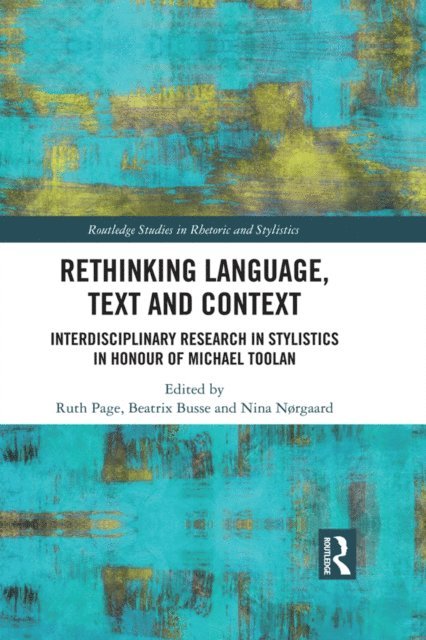
This collection of original research highlights the legacy of Michael Toolan’s pioneering contributions to the field of stylistics and in so doing provides a critical overview of the ways in which language, text, and context are analyzed in the field and its related disciplines. Featuring work from an international range of contributors, the book illustrates how the field of stylistics has evolved in the 25 years since the publication of Toolan’s seminal Language, Text and Context, which laid the foundation for the analysis of the language and style in literary texts. The volume demonstrates how technological innovations and the development of new interdisciplinary methodologies, including those from corpus, cognitive, and multimodal stylistics, point to the greater degree of interplay between language, text, and context exemplified in current research and how this dynamic relationship can be understood by featuring examples from a variety of texts and media. Underscoring the significance of Michael Toolan’s extensive work in the field in the evolution of literary linguistic research, this volume is key reading for students and researchers in stylistics, discourse studies, corpus linguistics, and interdisciplinary literary studies.
858 kr
Läs direkt efter köp
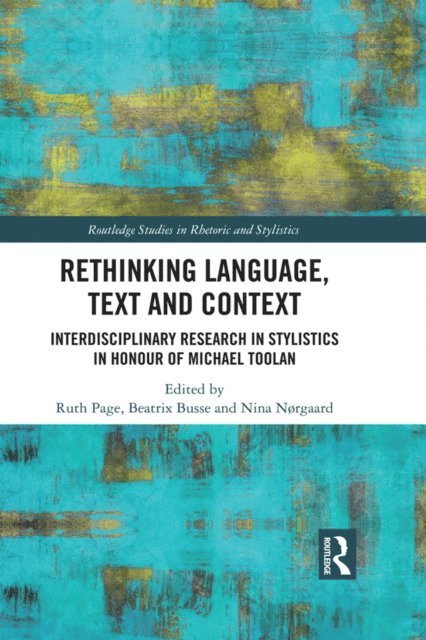
This collection of original research highlights the legacy of Michael Toolan’s pioneering contributions to the field of stylistics and in so doing provides a critical overview of the ways in which language, text, and context are analyzed in the field and its related disciplines. Featuring work from an international range of contributors, the book illustrates how the field of stylistics has evolved in the 25 years since the publication of Toolan’s seminal Language, Text and Context, which laid the foundation for the analysis of the language and style in literary texts. The volume demonstrates how technological innovations and the development of new interdisciplinary methodologies, including those from corpus, cognitive, and multimodal stylistics, point to the greater degree of interplay between language, text, and context exemplified in current research and how this dynamic relationship can be understood by featuring examples from a variety of texts and media. Underscoring the significance of Michael Toolan’s extensive work in the field in the evolution of literary linguistic research, this volume is key reading for students and researchers in stylistics, discourse studies, corpus linguistics, and interdisciplinary literary studies.
858 kr
Läs direkt efter köp
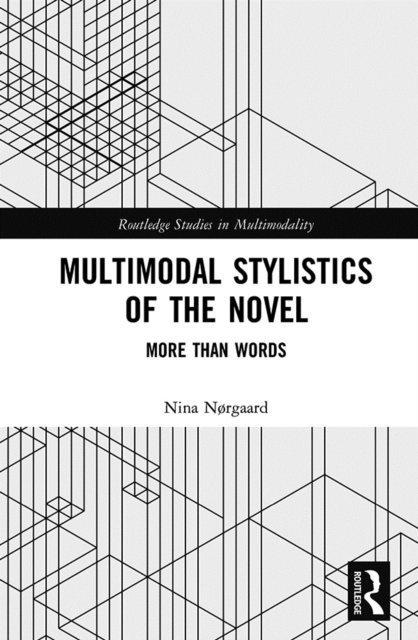
This book advocates for a new analytical framework that extends our understanding of multimodal meaning-making in the novel. Integrating theoretical traditions from stylistics and the influential social semiotic approach to multimodal communication developed by Kress and van Leeuwen, Nørgaard applies this method of analysis in order to build on existing stylistic practices that look at linguistic features in the novel to encompass other semiotic resources found in the form, such as typography, layout, images, paper and book-cover design. The volume grounds the discussion with supporting examples from novels that feature experimentation with multiple semiotic resources as well as more traditional novels, furthering the argument that all novels are inherently multimodal. Offering new insights and tools for unpacking multimodal meaning-making in this critical literary genre, this volume is an indispensable resource for graduate students and researchers in multimodality, stylistics and literary studies.
858 kr
Läs direkt efter köp
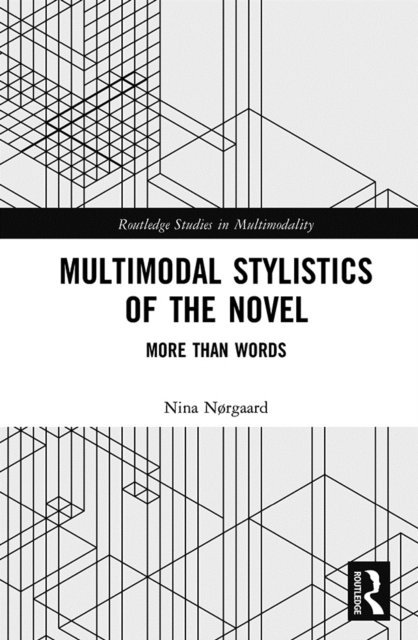
This book advocates for a new analytical framework that extends our understanding of multimodal meaning-making in the novel. Integrating theoretical traditions from stylistics and the influential social semiotic approach to multimodal communication developed by Kress and van Leeuwen, Nørgaard applies this method of analysis in order to build on existing stylistic practices that look at linguistic features in the novel to encompass other semiotic resources found in the form, such as typography, layout, images, paper and book-cover design. The volume grounds the discussion with supporting examples from novels that feature experimentation with multiple semiotic resources as well as more traditional novels, furthering the argument that all novels are inherently multimodal. Offering new insights and tools for unpacking multimodal meaning-making in this critical literary genre, this volume is an indispensable resource for graduate students and researchers in multimodality, stylistics and literary studies.