Ninik Suhartini - Böcker
Visar alla böcker från författaren Ninik Suhartini. Handla med fri frakt och snabb leverans.
4 produkter
4 produkter
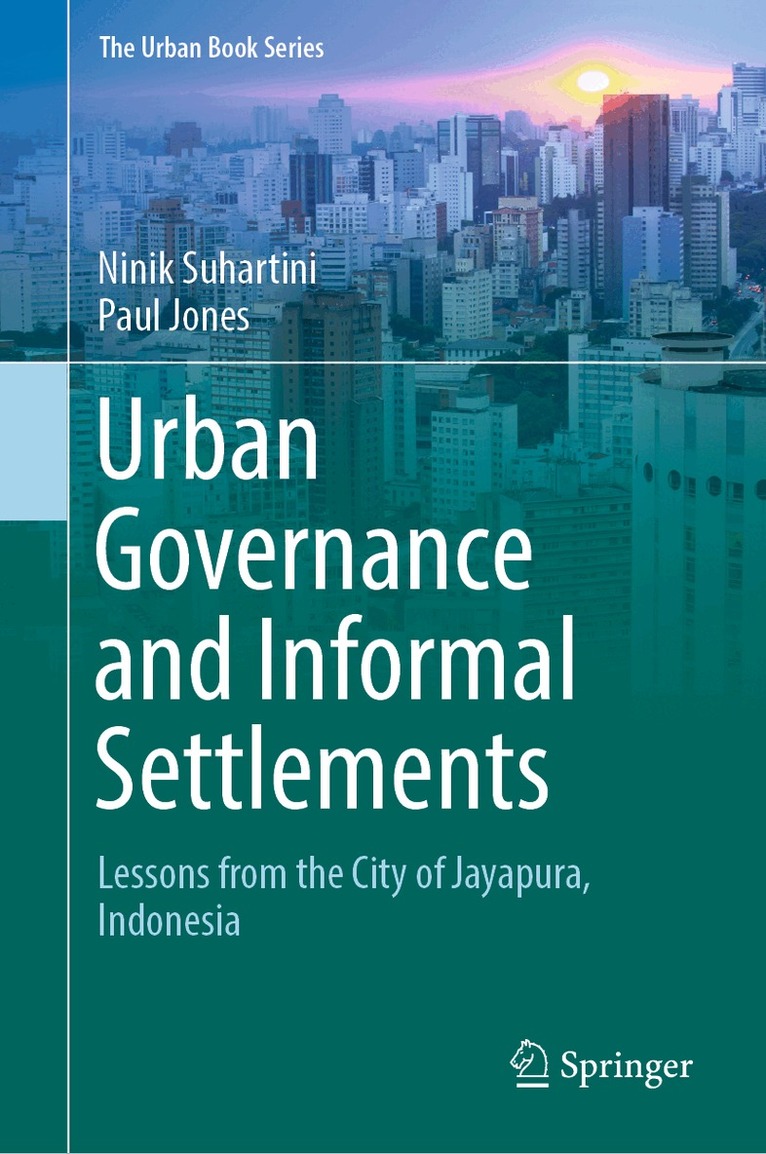
Urban Governance and Informal Settlements
Lessons from the City of Jayapura, Indonesia
Inbunden, Engelska, 2019
1 064 kr
Skickas inom 10-15 vardagar
The objective of this book is to better understand the nature of urban governance regarding the provision of basic urban services in rapidly growing mid-sized towns and cities in developing countries. Set within the context of understanding urban planning and management within the wider city setting, the study focuses on the provision of the basic urban services of housing, water and sanitation especially within informal settlements. Using the case study of the mid-sized city of Jayapura, Papua, Indonesia, the publication explores: (i) the types, processes, and stakeholders that constitute formal urban governance in the provision of basic urban services; (ii) understanding how stakeholders gain and benefit from ‘on the ground’ formal service arrangements, and why; and (iii) for those who do not directly benefit from the formal arrangements, how individuals, groups and communities organize and access governance to meet their basic urban needs. The methods employed to better understand the nature of urban governance and its relationship to the provision of basic urban services comprised primary (face-to-face household surveys interviewing 448 respondents, ground mapping at a plot size level in four informal settlements, and semi-structured interviews with 12 stakeholders) and secondary data regarding urban governance, planning and management. The study reveals that urban governance arrangements in fast growing mid-sized cities have emerged both formally and informally to cope with basic urban service needs across a range of settlement types and socio-cultural groups. The major modes of governance arrangements in the informal settlements consist of traditional, formal and informal, and hybrid governance which co-evolve as their boundaries overlap and intersect through time at varying levels of ‘equilibrium’. The ‘governance equilibrium’ represents a ‘balance’ at a specific point and place in time in how stakeholders utilize and share resources,and access various contributions.
1 381 kr
Skickas inom 10-15 vardagar
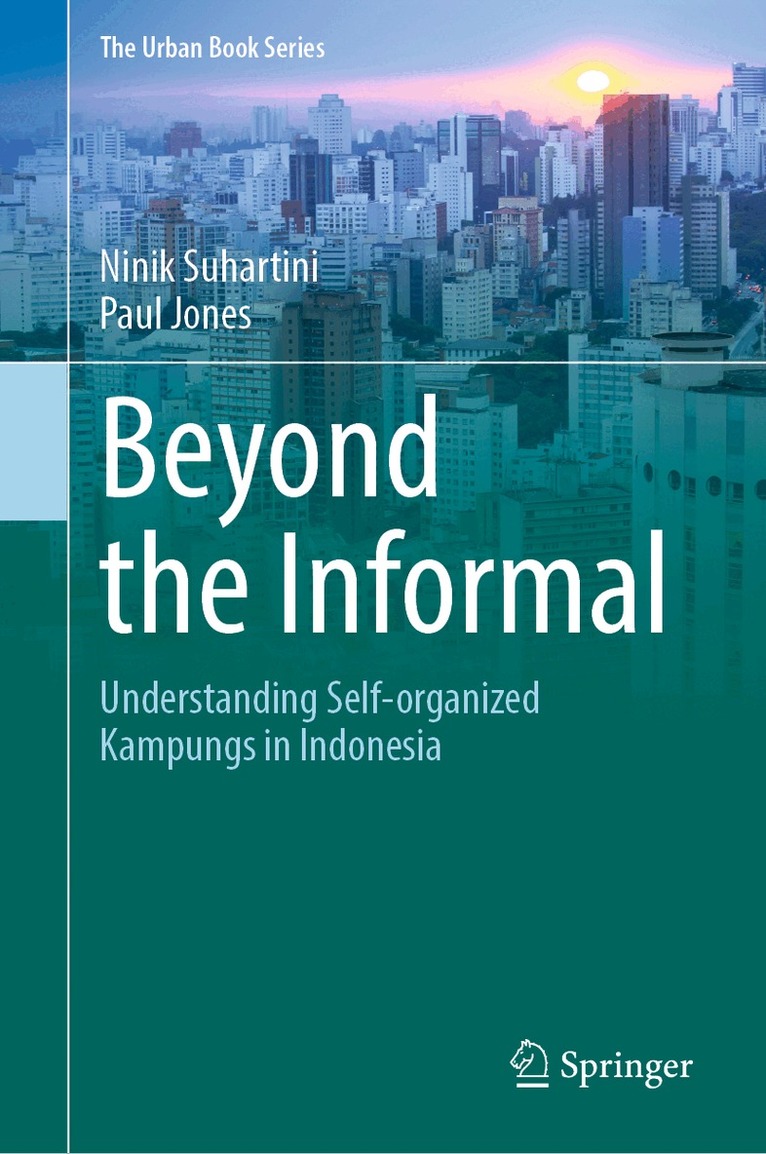
This book provides a much-needed analysis of the pivotal role of the urban kampung in Indonesia’s urbanization process and importantly, provides a deeper understanding of how these communities create their complex socio-physical environments through self-organization. The book challenges the current formal approaches and practices to modern planning in Indonesia where many kampungs are classed as illegal and excluded from city plans. Beyond informality unpacks via three case studies the self-generated planning and development arrangements and mechanisms which occur parallel to processes of formal exclusion, adaptation, negotiation and modification. Kampungs are posited as inseparable urban entities contributing to the complex assemblage of the city and the dynamics of contemporary urban planning and design.In the context of planning and design practice, this book provides a better understanding on how one needs to consider human-scale urbanism to achieve more effective and efficient planning plans and policies in the self-organized city. Even though self-organization by residents comes with its challenges as outlined in the book, formal planning in both Indonesia and other developing countries has much to learn from understanding self-organized settlements (kampung) and informal settlements ‘as they are’.
613 kr
Skickas inom 5-8 vardagar
1 381 kr
Skickas inom 10-15 vardagar
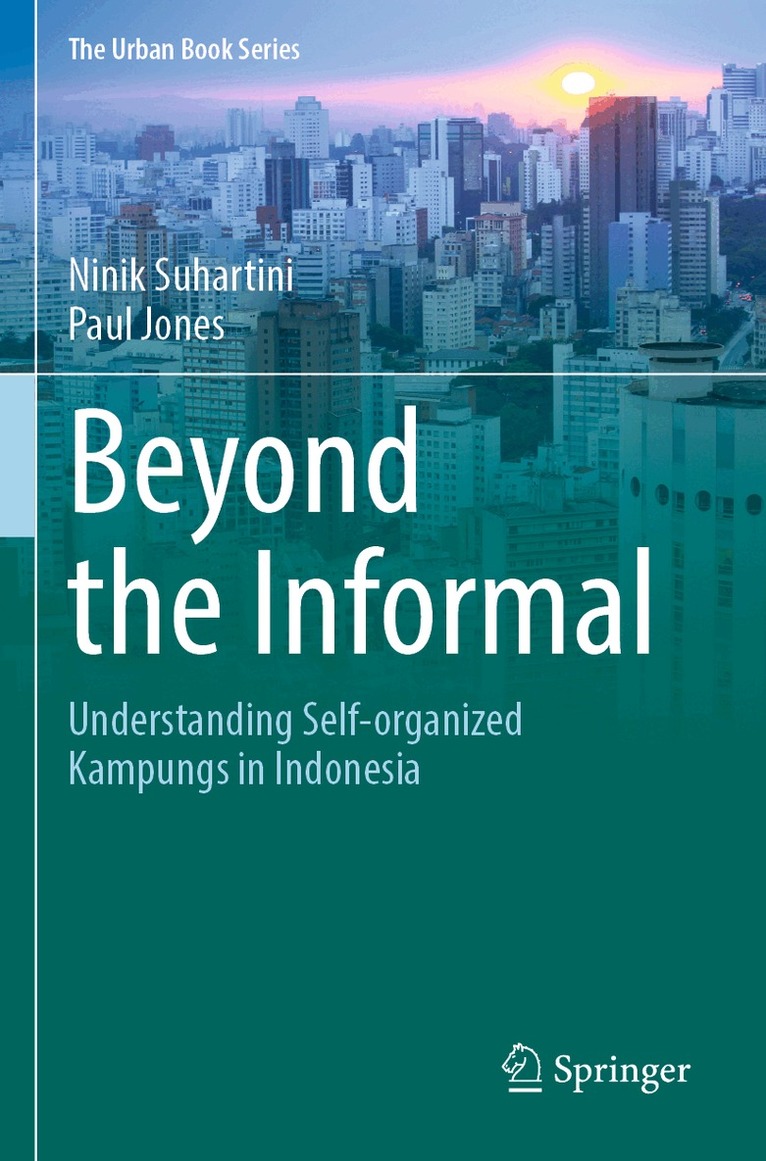
This book provides a much-needed analysis of the pivotal role of the urban kampung in Indonesia’s urbanization process and importantly, provides a deeper understanding of how these communities create their complex socio-physical environments through self-organization. The book challenges the current formal approaches and practices to modern planning in Indonesia where many kampungs are classed as illegal and excluded from city plans. Beyond informality unpacks via three case studies the self-generated planning and development arrangements and mechanisms which occur parallel to processes of formal exclusion, adaptation, negotiation and modification. Kampungs are posited as inseparable urban entities contributing to the complex assemblage of the city and the dynamics of contemporary urban planning and design.In the context of planning and design practice, this book provides a better understanding on how one needs to consider human-scale urbanism to achieve more effective and efficient planning plans and policies in the self-organized city. Even though self-organization by residents comes with its challenges as outlined in the book, formal planning in both Indonesia and other developing countries has much to learn from understanding self-organized settlements (kampung) and informal settlements ‘as they are’.